Marketplace Regolith
Your investment opportunities


Artefactum
Artefactum
Rare Paleontological Assets
Updated on 11 Nov 2026
Updated on 11 Nov 2026
Description
How does investing in dinosaur bones and skeletons work?
Artefactum Gallery founder Andrey introduces a joint project with Regolith: acquiring rare paleontological specimens, restoring them and preparing them for sale to collectors, galleries and museums.
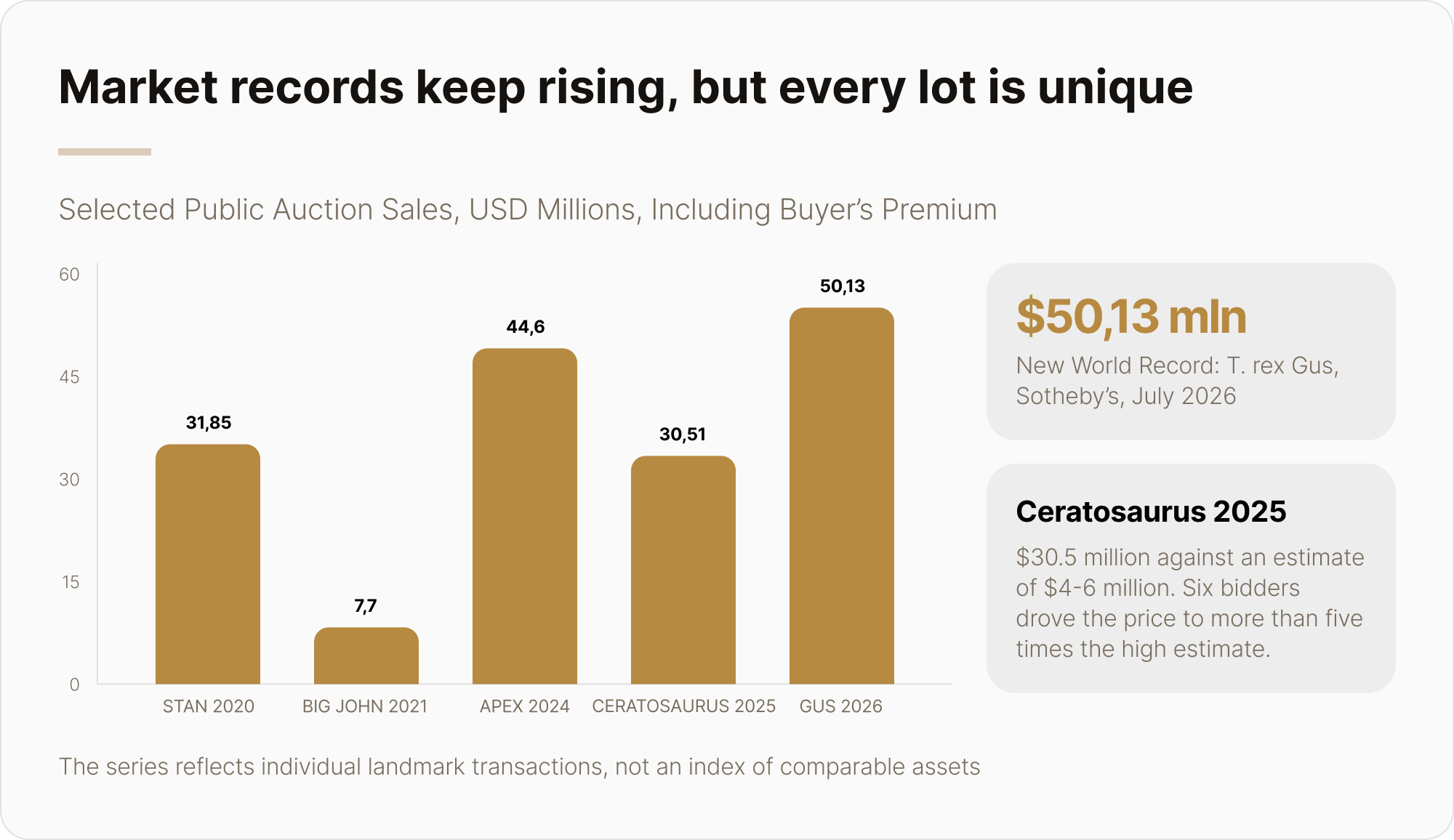
In July 2026, a Tyrannosaurus rex skeleton named Gus sold at Sotheby’s in New York for $50.13 million, setting a new auction record for a fossil specimen.
We offer the opportunity to invest in rare bones, skulls and skeletons of dinosaurs and other prehistoric animals. We select and acquire specimens, carry out any necessary restoration, and prepare them for sale to collectors, galleries and museums. Investors’ returns come from the difference between the purchase and sale prices, after expenses.
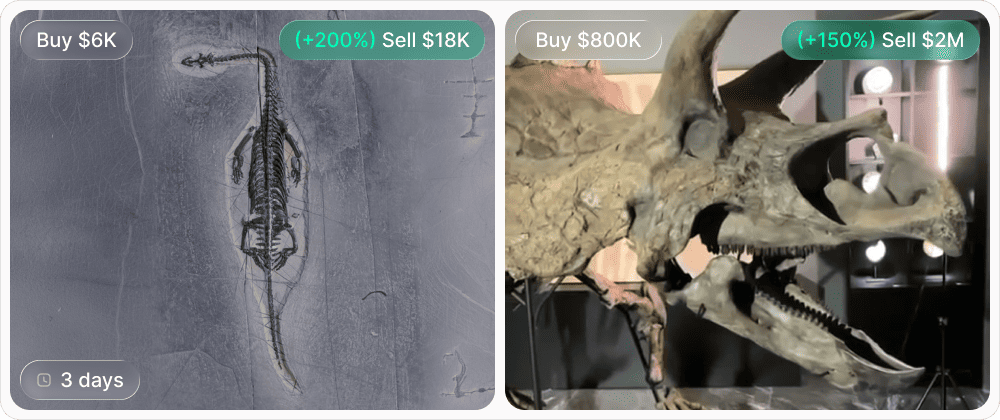
In the project’s completed deals, specimen values increased by 110% to 775%, with completion times ranging from 3 days to 1.5 years. Below are our case studies with purchase and sale prices.
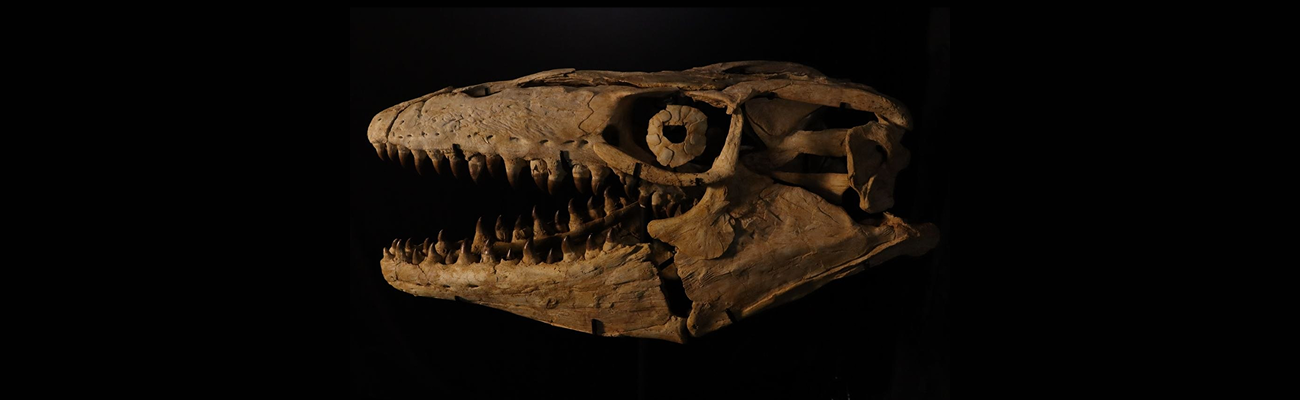
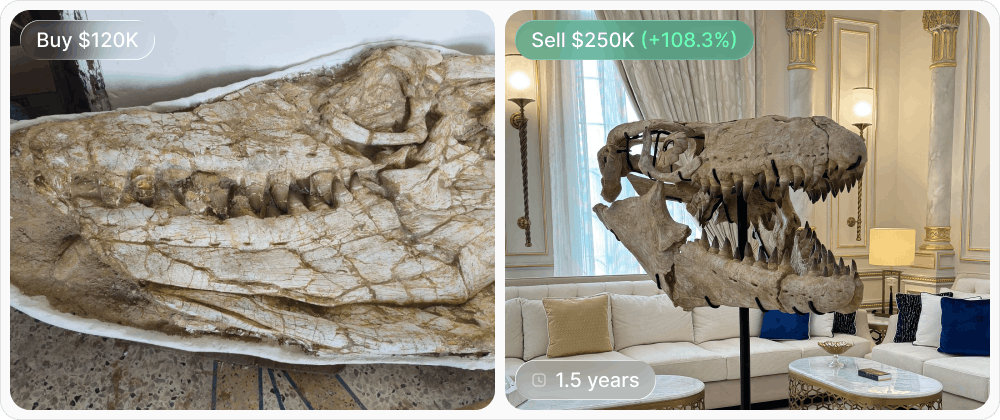
Mosasaur
The specimen was purchased for $120,000 and sold after 1.5 years for $250,000. Its value increased by more than 100%.
Keichousaurus
The specimen was purchased for $6,000 and sold after 3 days for $18,000. Its value increased by 200%.
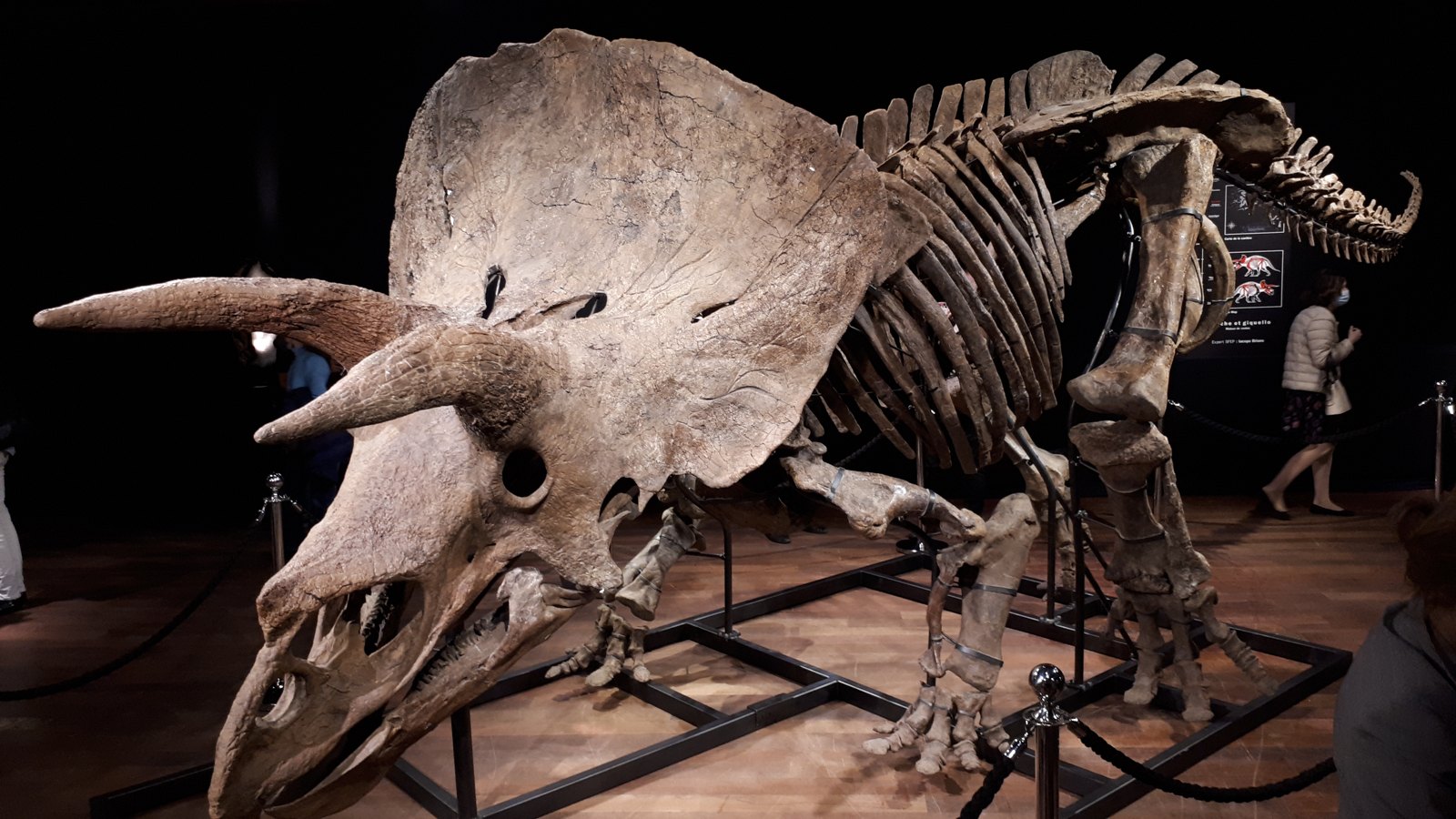
Triceratops
The specimen was purchased for $800,000 and sold for $2 million. Its value increased by 150%.
Trilobite Slab
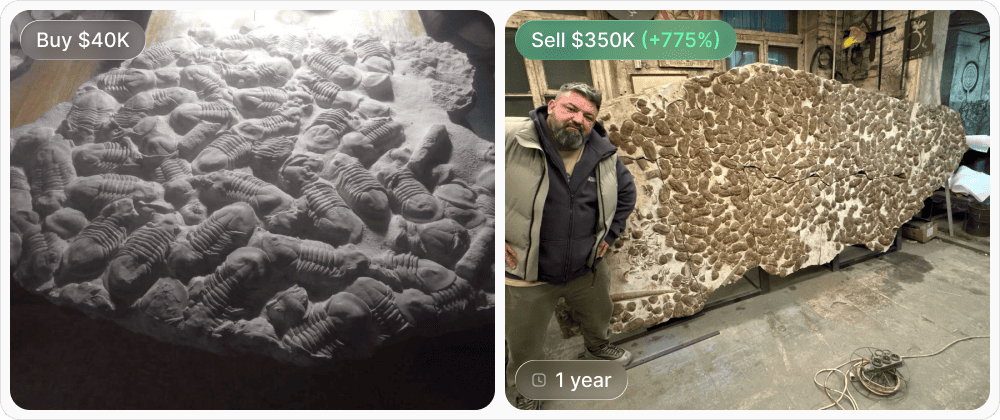
Trilobites were ancient marine arthropods with hard exoskeletons that lived long before dinosaurs. Preparation of the 4.2 × 1.8 m slab took about 1 year. The specimen’s total cost was $40,000, and it sold for $350,000.
Available Specimens
We currently offer the opportunity to invest in two specimens with a combined value of $572,000: a plesiosaur skeleton and a Triceratops skull.
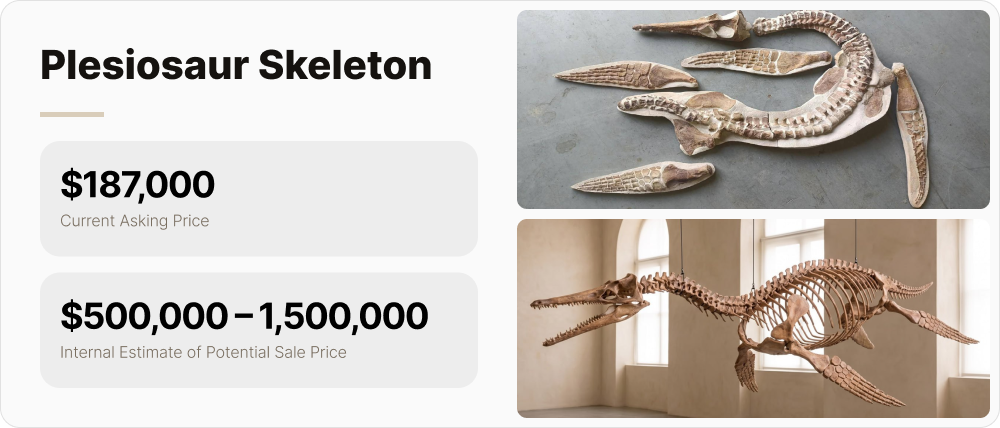
Plesiosaur Skeleton – $187,000
Plesiosaurs were prehistoric marine reptiles with four flippers and elongated skulls. The skeleton offered here is approximately 2.5 m long. It will undergo the necessary restoration and mounting before being offered for sale to collectors, galleries or museums.
The internal estimate of the potential sale price is $500,000–1,500,000. This estimate is based on the Artefactum team’s experience.
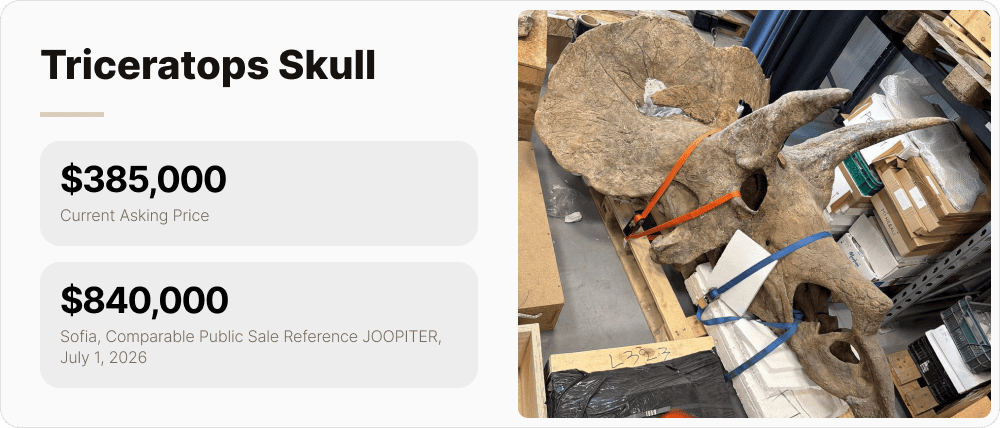
Triceratops Skull – $385,000
Triceratops is one of the most recognizable dinosaurs. It lived in North America around 66 million years ago and is known for its massive skull with three horns and a large bony frill.
For comparison, the skull of a young Triceratops named Sofia sold for $840,000 on July 1, 2026, against a presale estimate of $600,000–800,000.
Benefits for Regolith Investors
Investments of $500 or More – Artefactum Gallery Tour
Visit the gallery in Dubai and explore its collection of rare paleontological specimens. Visits are by prior appointment.
Investments of $25,000 or More – Paleontological Expedition to Morocco (First 10 Investors)
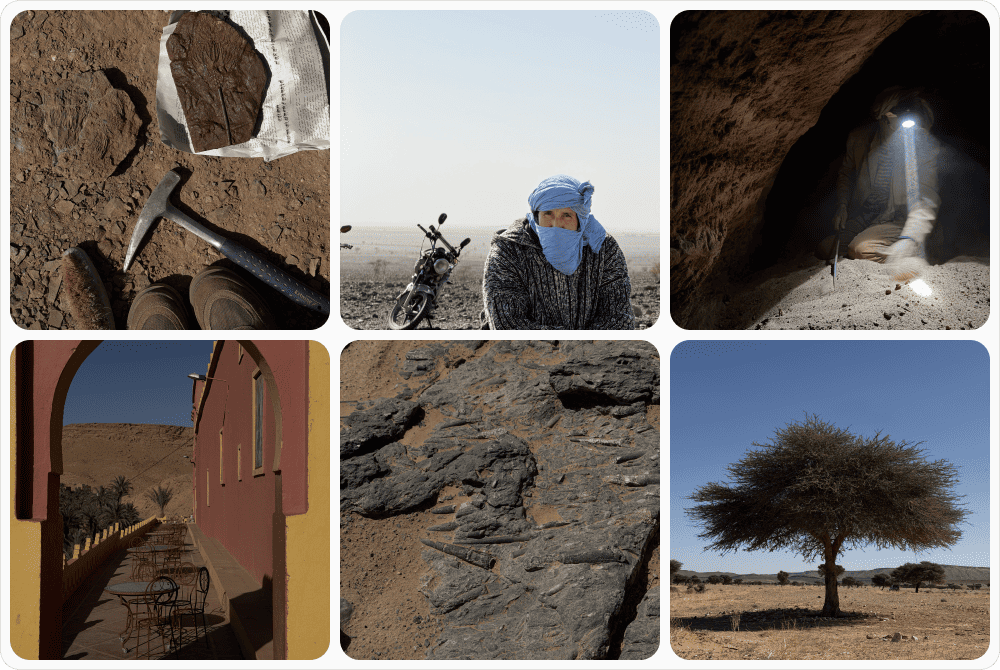
A 7-day trip with the project team to fossil sites in Morocco. Participants will visit the Erfoud, Aoufous and Jebel Issoumour areas, where the remains of ancient marine animals have been preserved.
Working alongside local specialists, participants will be able to search for fossils, take part in field excavations, and learn how specimens are extracted from rock and identified. Most of the program focuses on trilobites, ancient marine arthropods.
Participation in the expedition and excursions on the itinerary are included. Investors pay for their own international flights and hotel accommodation.
About Artefactum Gallery
Artefactum Gallery is a gallery of rare collectibles founded in Dubai in 2022. Its collection includes fossils, prehistoric animal skeletons, meteorites, minerals, archaeological objects and other rare exhibits.
As well as exhibiting specimens, the gallery sells them to private collectors and sources rare pieces to meet individual requests. Artefactum’s catalog features more than 120 fossils and paleontological specimens.
Specimens undergo authenticity checks, and fossils come with certificates and the necessary documentation. This is particularly important for rare paleontological finds, whose value depends directly on provenance, condition, completeness and the history of the individual specimen.
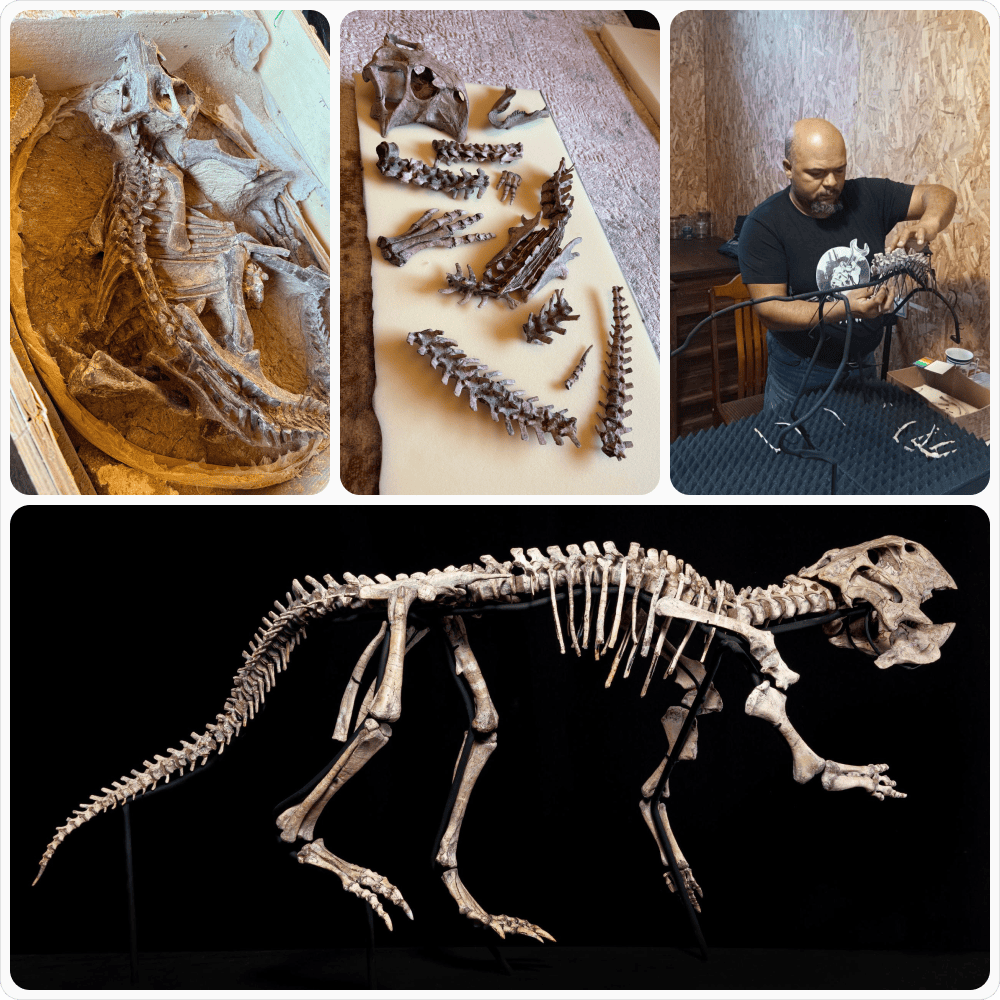
Preparing a Psittacosaurus skeleton for display involves removing the fossil bones from the surrounding rock, restoring them, and assembling them on a supporting frame to create the finished exhibit.
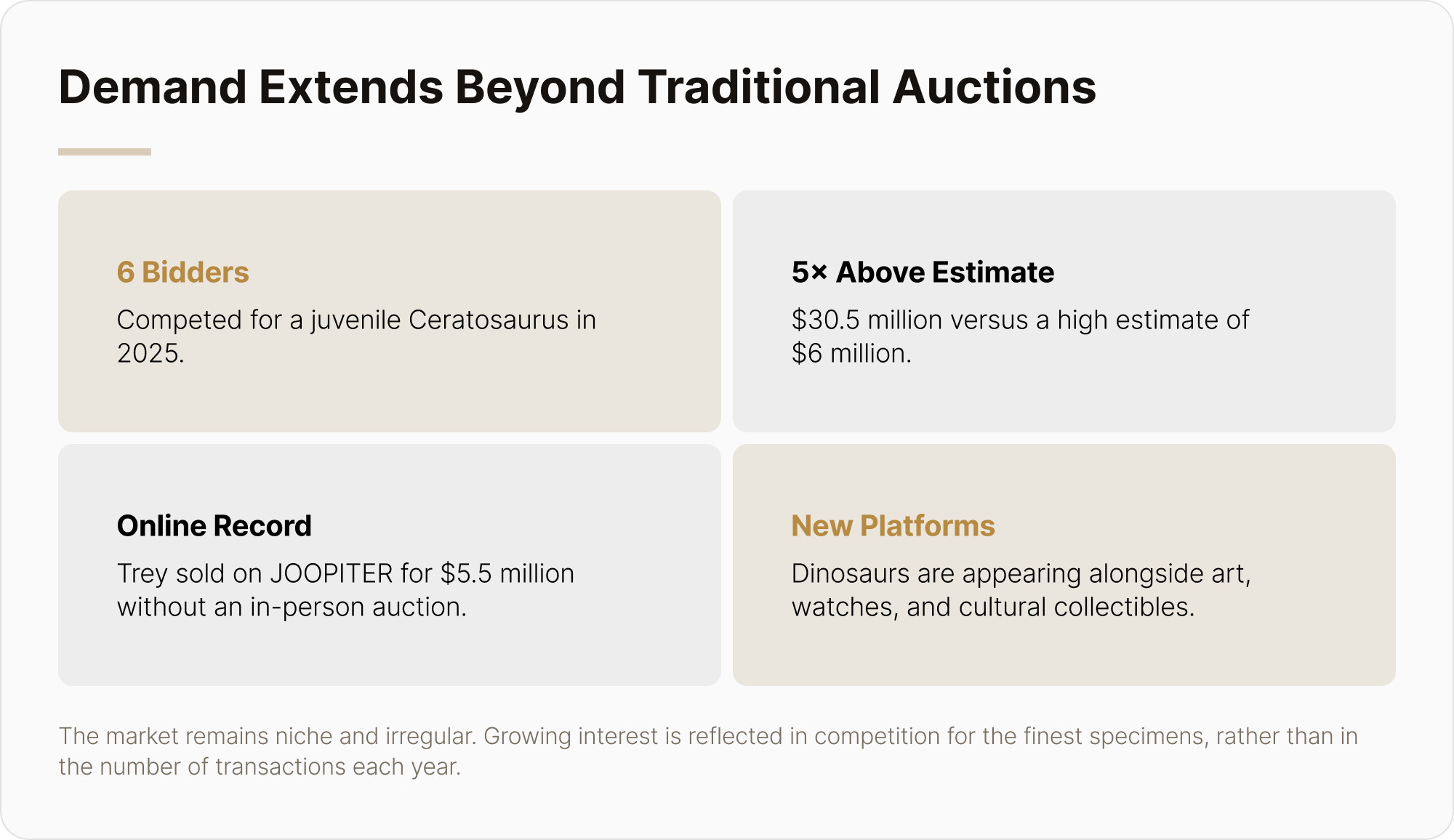
Rare paleontological specimens are sold through major international auction houses. Sotheby’s, for example, has a dedicated Natural History department offering dinosaur skeletons, fossils, meteorites and minerals. These objects are also sold through specialized online platforms for rare collectibles, such as JOOPITER.
Collectors buy both complete specimens and individual elements, including horns, bones and teeth. Some specialize in particular species or geological periods. The most recognizable dinosaurs, including Tyrannosaurus rex and Velociraptor, attract particular interest, partly because of their prominence in popular culture.
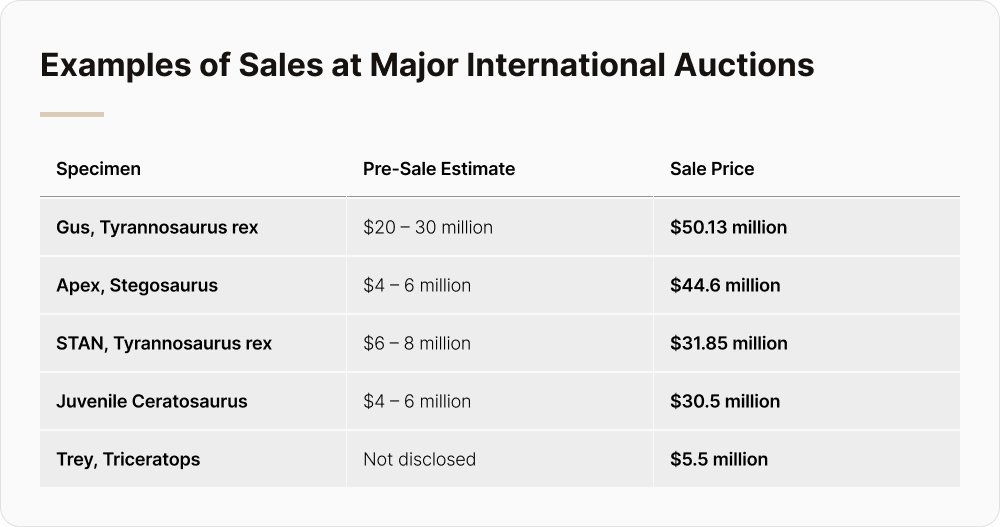
Gus, T. rex – $50.13 Million, Sotheby’s, July 2026
This approximately 67-million-year-old skeleton was discovered in South Dakota and is considered one of the largest and most complete T. rex specimens ever offered at auction. It measures approximately 11.6 m in length, with original bones accounting for around 61% of the skeleton by element count and 75–80% by mass. Sotheby’s estimated Gus at $20–30 million, but after ten minutes of bidding among seven participants, the final price reached $50.13 million. The sale set a new world auction record for a dinosaur.
Apex, Stegosaurus – $44.6 Million, Sotheby’s, July 2024
One of the most complete large Stegosaurus specimens known, Apex consists of 254 original bone elements out of approximately 319. With a presale estimate of $4–6 million, it attracted seven bidders, who competed for more than 15 minutes. Apex sold for $44.6 million, more than 11 times the low estimate. Until the sale of Gus, Apex held the world auction record for a fossil.
STAN, T. rex – $31.85 Million, Christie’s, October 2020
One of the most complete Tyrannosaurus rex skeletons known, STAN sold at Christie’s in New York for $31.847 million against a presale estimate of $6–8 million. At the time, it set a world auction record for a dinosaur skeleton. It was later revealed that STAN had been acquired by Abu Dhabi’s Department of Culture and Tourism. It is now on display at the Natural History Museum Abu Dhabi.
Juvenile Ceratosaurus – $30.5 Million, Sotheby’s, July 2025
This is one of four known Ceratosaurus skeletons and the only known juvenile specimen. It includes 139 original bone elements and a nearly complete skull. Estimated at $4–6 million, it sold for $30.5 million after six minutes of bidding among six participants. The buyer stated an intention to lend the specimen to an institution for display.
Trey, Triceratops – $5.5 Million, JOOPITER, March 2026
The approximately 66-million-year-old skeleton had been exhibited at the Wyoming Dinosaur Center for almost three decades and consists of more than 70% original fossil material. It sold for $5.5 million in an entirely online auction through JOOPITER. At the time, this was a record price for a dinosaur sold at an online auction.
5
Large paleontological specimens remain among the rarest objects in private collections. Museum-quality specimens come to market infrequently: preservation of more than half a skeleton is already considered significant, and finds with documented provenance are especially valued. Today, such specimens belong to both museums and private collectors, although ownership remains exceptional.
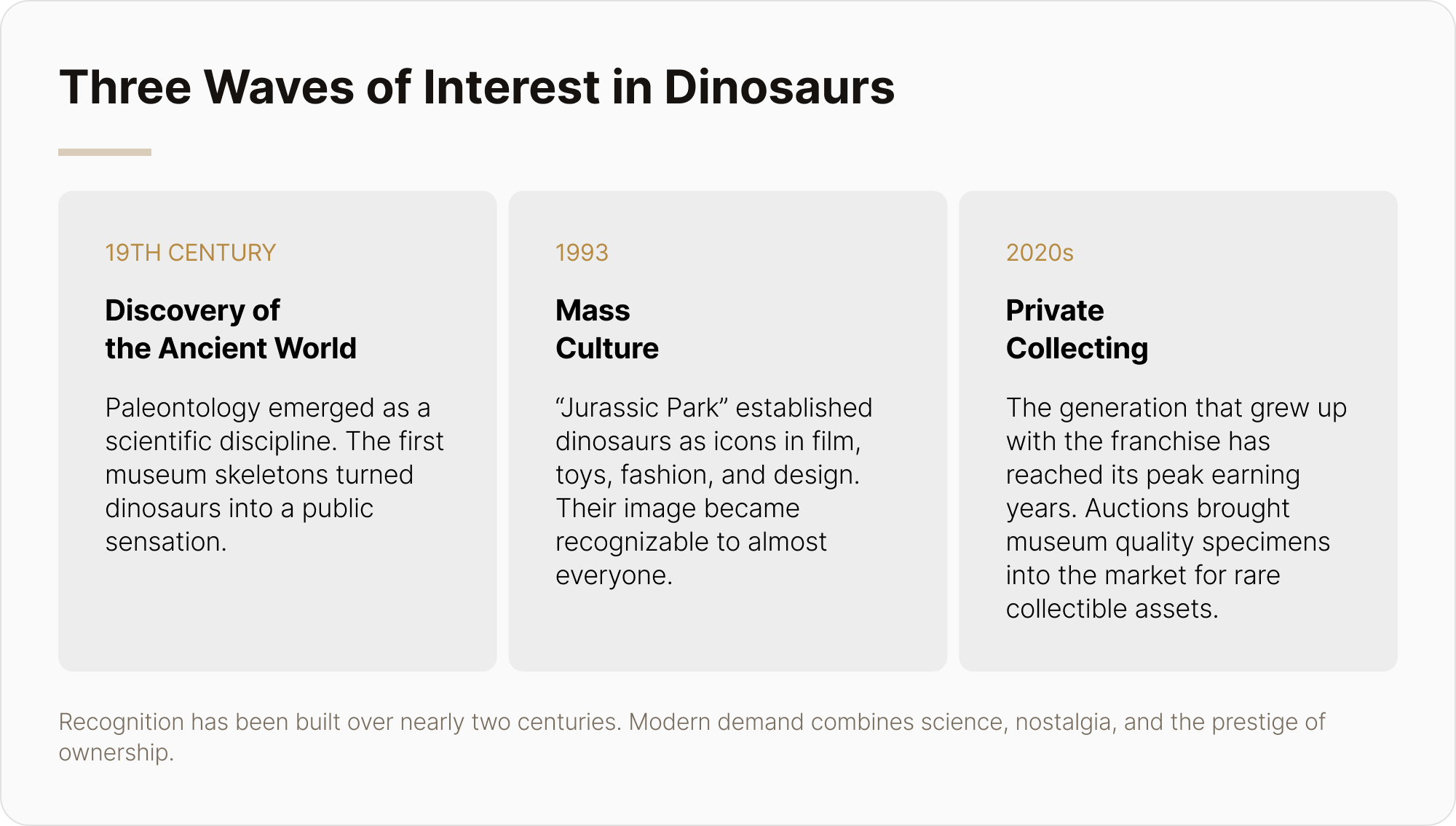
Dinosaurs as Collectible Assets
The fossil market is shaped by three key factors: rarity, cultural recognition and limited supply. Each specimen is unique and cannot be replicated. The most significant finds often remain in museum and institutional collections and rarely return to the market, further limiting the supply of high-quality specimens. For example, Trey the Triceratops was exhibited at the Wyoming Dinosaur Center for almost 30 years.
What Gives These Specimens Their Value?
Paleontological specimens combine several characteristics valued by collectors. Their value depends on their age, uniqueness, condition, provenance and suitability for a private or public collection.
Uniqueness. No two fossils are exactly alike. Every specimen has its own provenance, completeness, condition and discovery history, so even specimens of the same species can differ substantially in value.
A physical asset. A fossil is a tangible object. It can be held in a private collection, displayed, used in museum and exhibition projects, or transferred to another owner.
Cultural recognition. Dinosaurs have become part of popular culture far beyond the scientific community. Rare specimens therefore attract interest from specialists as well as private collectors and owners of prestigious collections.
A specimen’s final value also depends on lawful provenance, completeness and the proportion of original bone, scientific identification, preparation and mounting quality, exhibition history, documentation and preservation. Together, these factors determine its appeal to collectors.
How the Project Works
The project identifies and selects rare paleontological specimens, verifies and acquires them, and prepares them for resale. Before purchasing any specimen, the team checks:
- lawful provenance;
- completeness and the proportion of original material;
- scientific identification;
- preparation and restoration quality;
- exhibition history;
- documentation and condition.
The project has professional sourcing contacts in the United States, Morocco, China and Russia. Preparation includes condition assessment, removal of rock from the bones, conservation and restoration, museum-quality mounting, lighting and a specimen record. The team works only with specimens whose lawful provenance and eligibility for export have been verified.
Frequently Asked Questions About Artefactum (FAQ)
1. How does Artefactum select specimens to purchase?
Each specimen is assessed individually. The team considers its rarity, completeness, proportion of original material, condition, provenance, scientific identification, preparation quality and comparable market sales. Some specimens may also undergo an independent expert assessment.
2. How is the potential sale price determined?
Artefactum analyzes the characteristics of each specimen and compares it with similar public sales. The assessment considers species and size, preservation, completeness, provenance, preparation quality and the specimen’s history. Two specimens of the same species can therefore differ substantially in value.
3. Who might buy a specimen?
Potential buyers include private collectors, galleries, museums and other participants in the rare collectibles market. Sales may be made directly to buyers, through specialized platforms or at international auctions.
4. What happens to a specimen after purchase?
Depending on its condition, a specimen may undergo additional preparation, conservation, restoration and museum-quality mounting. A specimen record and supporting documentation are also prepared. This work makes it possible to present the find as a finished collectible.
5. How are authenticity and provenance verified?
The team checks the specimen’s scientific identification, provenance, ownership documents and eligibility for lawful export. The project works only with specimens whose lawful provenance and eligibility for export have been verified.
6. How long can a deal take?
Timing depends on specimen preparation and finding a buyer. The project’s completed deals have taken between three days and 18 months. The planned term for the current investment is up to two years.
7. What determines the final outcome of a deal?
The main factors are the specimen’s purchase and sale prices. Expenses for expert assessment, preparation, storage, transport and sale also affect the outcome. Rarer, higher-quality specimens may attract greater interest from collectors.
8. What are the risks of these investments?
Paleontological specimens are alternative collectible assets. Their prices can change, and finding a buyer can take time. Key risks include liquidity, the quality of expert assessments, provenance and export regulations in different countries.
9. Is the future sale price guaranteed?
Public auction results and internal estimates serve as reference points. The final price is determined by the market when the individual specimen is sold.
Famous Collectors
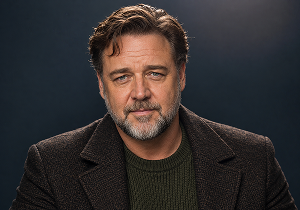

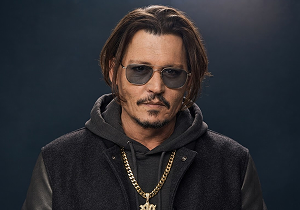
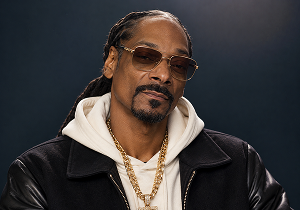
Details
Available Allocation
$572,000Plesiosaur Skeleton (Round 1)
$187,000Triceratops Skull (Round 2)
$385,000Investment Term
Up to 2 yearsDeal Terms
Deal Fee
0%Carried Interest
20%Risk Level
Low