
 Русский
 Marketplace Regolith
Your investment opportunities


Cardinal Infrastructure
Cardinal Infrastructure
Infrastructure full-cycle service
Updated on 18 Dec 2025
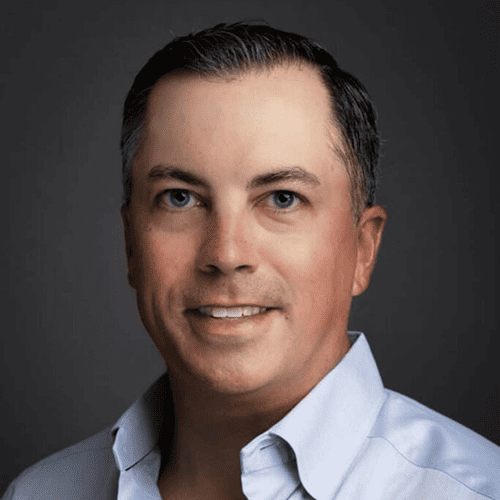
Jeremy Spivey
CEO
“Our mission isn’t just to build projects – it’s to create an environment where cities, businesses, and people can grow faster.”
Updated on 18 Dec 2025
Why Cardinal Infrastructure Is a Must-Have in Your Portfolio
Cardinal Infrastructure Group is one of the fastest-growing infrastructure service providers in the Southeastern United States, operating across residential, commercial, municipal and industrial construction markets. The company delivers full-cycle capabilities from water, sewer and stormwater installation to grading, land clearing, drilling and blasting, paving and turnkey site-development services. Founded in 2013 by Jeremy Spivey, Cardinal has evolved from a niche utilities contractor into a comprehensive, integrated platform serving key metropolitan areas across North Carolina.
Cardinal Infrastructure Group plans to raise up to $291 million through its IPO (based on the midpoint of the $20–22 price range). Underwriters include Stifel, William Blair, D.A. Davidson & Co. and others.
The company demonstrates strong momentum: in the first nine months of 2025, revenue reached $310 million, with a $646 million backlog. Cardinal continues to expand its geographic footprint and technical capabilities through strategic acquisitions—six completed since 2013—solidifying its presence in the Raleigh, Charlotte and Greensboro markets. Against a backdrop of rising housing demand, commercial development and the modernization of critical infrastructure, Cardinal is viewed as one of the most notable infrastructure IPOs of the year.
Exclusive Participation Terms
Cardinal Infrastructure Group is set to list on Nasdaq under the ticker CDNL with a price range of $20–22, aiming to raise up to $290.95 million by offering 11.5 million shares. The IPO comes amid rising infrastructure spending in the U.S. and accelerated residential and industrial development across the Southeast.
Investor interest is fueled by the highly fragmented nature of the sector, sustained demand for full-service contractors and Cardinal’s ability to execute complex, capital-intensive projects with minimal reliance on subcontractors. Its integrated model, proprietary fleet of heavy equipment and a series of successful M&A transactions strengthen the company’s competitive position and enable scaling significantly faster than the broader market.
Supported by a strong order backlog, rapid regional growth and nationwide infrastructure renewal initiatives, Cardinal Infrastructure Group is viewed as one of the standout infrastructure IPOs of the season.
Application deadline — December 9, 18:00 (UAE).
Key Facts Investors Should Know
• Ownership: Cardinal Infrastructure Group was founded in 2013 by Jeremy Spivey. Ahead of the IPO, ownership includes the founder, key members of the management team, and investors who supported the company’s acquisitions of regional contractors. The governance model is built around consolidating local players and integrating them into a unified operational platform.
• Market Position: One of the fastest-growing turnkey infrastructure services providers in North Carolina, operating across residential, commercial, industrial, and municipal construction. The company holds strong positions in high-growth markets such as Raleigh, Charlotte, and Greensboro, where population expansion and active development continue to drive demand for full-cycle site preparation and utility services.
• Financial Performance: For the nine months ended September 30, 2025, revenue reached $310.2 million, up from $230.3 million the prior year, while backlog grew to $646 million. Growth is supported by both organic expansion and strategic M&A, which account for approximately 27% of cumulative expansion since 2013.
• Risks: High capital intensity of equipment, dependence on regional construction activity, competition with large national contractors, integration risks tied to acquired companies, and margin pressure from labor and input costs.
• IPO Objective: To fund additional acquisitions, strengthen working capital, expand the equipment fleet, accelerate integration across operating markets, and reinforce the company’s position in high-growth infrastructure hubs across the Southeastern United States.
The Founding and Growth of Cardinal Infrastructure
Cardinal Infrastructure Group emerged in response to the growing demand in the United States for contractors capable of delivering full-cycle infrastructure solutions from site preparation and utility installation to final grading and paving. Founded in 2013 by Jeremy Spivey in Raleigh, North Carolina, the company quickly evolved from a small wet-utilities installer into one of the fastest-growing infrastructure service providers in the Southeastern region.
In its early years, Cardinal focused narrowly on installing water, sewer and stormwater systems. But the market increasingly required broader capabilities and a single contractor able to handle the entire site-development cycle. This shift became a turning point: the company began expanding its service lines and executing strategic acquisitions, gradually transforming into a comprehensive platform for complex infrastructure projects.
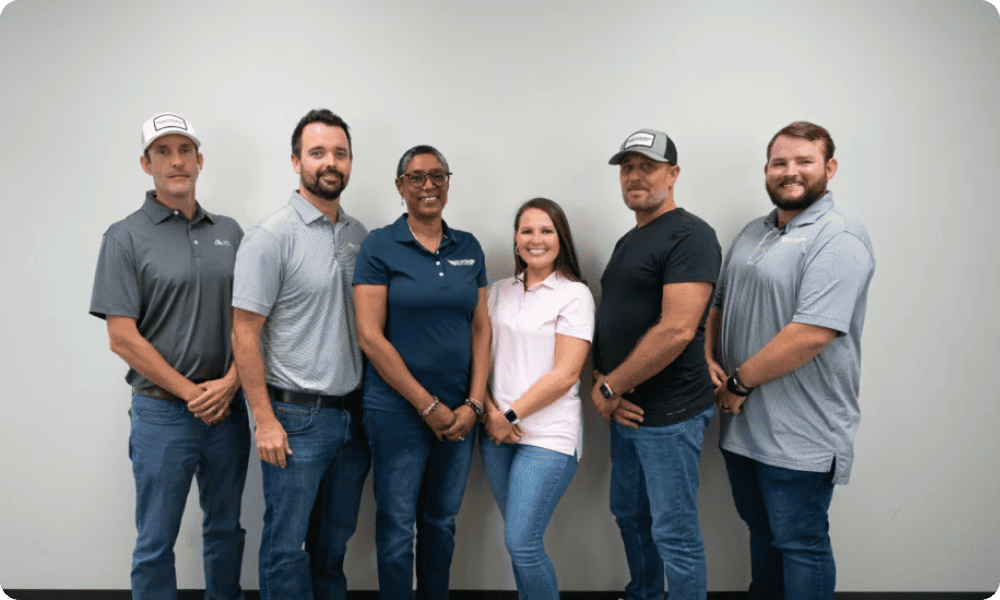
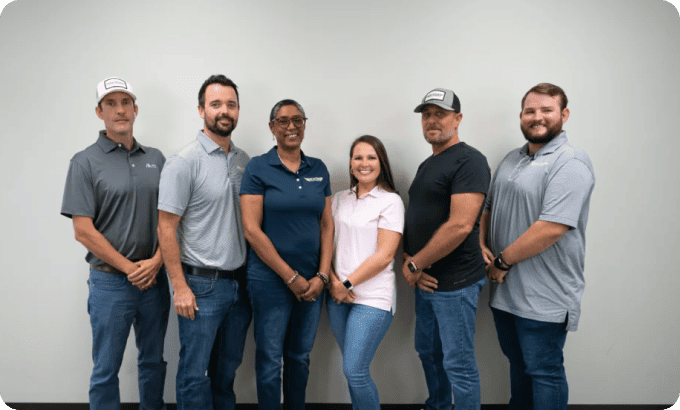
Over time, Cardinal built a model that integrates in-house crews, a fleet of specialized equipment and acquired capabilities. Its portfolio now spans land clearing, erosion control, drilling and blasting, asphalt paving, soil stabilization and full site-development services for residential, commercial and public-sector projects. A series of targeted M&A transactions across Raleigh, Charlotte and Greensboro enabled the company to become a true turnkey provider, reducing reliance on subcontractors and accelerating project delivery.
Technology upgrades and standardized operating processes became essential to the company’s growth, allowing Cardinal to manage large-scale, technically demanding projects while maintaining strong productivity and quality. This operational maturity helped Cardinal scale its regional footprint and secure work with major builders and general contractors.
Today, Cardinal Infrastructure Group employs more than a thousand people, executes projects worth hundreds of millions of dollars and maintains a substantial backlog. The company is preparing to list on Nasdaq at an estimated valuation of about $805.3 million, aiming to strengthen its balance sheet, support further expansion and continue building an infrastructure platform that accelerates development across rapidly growing regions.
Cardinal exemplifies how engineering expertise, integrated operations and strategic acquisitions can turn a local contractor into a key regional infrastructure player.
Frequently Asked Questions (FAQ)
— What is an IPO?
An IPO (Initial Public Offering) is when a private company lists its shares on a stock exchange for the first time to raise capital from investors. From that point onward, the company’s shares can be freely bought and sold on the open market.
— Where are IPOs conducted?
IPOs take place on the world’s largest stock exchanges. In the U.S., the primary venues are the NYSE (New York Stock Exchange) and NASDAQ. Once a company goes public, its shares are freely traded on these exchanges, and the market price is established after the offering.
— What is allocation?
Allocation (from “allocation” — distribution) refers to the process of distributing resources, assets, or capital for maximum efficiency. In investing, allocation usually means distributing the available amount of shares among investors in an IPO or private placement.
— How much allocation does an investor receive?
The allocation size is determined by the terms of each specific offering and typically ranges from 2% to 30% of the submitted application amount. In some cases, the allocation may reach 100%. In rare instances, no allocation may be granted — in that case, the full amount of the application is returned to the investor’s account and becomes available for reinvestment or withdrawal. Information on the actual allocation volume is usually provided about one day before the IPO, approximately six hours prior to the transaction.
Example — Bullish IPO (Aug 13, 2025):
An investor placed an order for $10,000. The allocation was 29.6%, meaning $2,960 was invested in the IPO. The remaining $7,040, including the purchase commission, was refunded to the balance and became available for withdrawal.Klarna IPO (Sept 10, 2025):
An investor placed an order for $10,000. The allocation was 14%, meaning $1,400 was invested in the IPO. The remaining $8,600, including the purchase commission, was refunded to the balance and became available for withdrawal.Figure IPO (Sept 11, 2025):
An investor placed an order for $10,000. The allocation was 16%, meaning $1,600 was invested in the IPO. The remaining $8,400, including the purchase commission, was refunded to the balance and became available for withdrawal.Gemini IPO (Sept 12, 2025):
An investor placed an order for $10,000. The allocation was 29%, meaning $2,900 was invested in the IPO. The remaining $7,100, including the purchase commission, was refunded to the balance and became available for withdrawal.Legence IPO (Sept 12, 2025):
An investor placed an order for $10,000. The allocation was 78%, meaning $7,800 was invested in the IPO. The remaining $2,200, including the purchase commission, was refunded to the balance and became available for withdrawal.Black Rock Coffee Bar IPO (Sept 12, 2025):
An investor placed an order for $10,000. The allocation was 68%, meaning $6,800 was invested in the IPO. The remaining $3,200, including the purchase commission, was refunded to the balance and became available for withdrawal.
— Why do companies go public?
To raise growth capital, increase brand visibility, and provide early investors and employees with an opportunity to sell part of their shares.
— How is participating in an IPO different from buying shares on the exchange?
When you participate in an IPO, you buy shares before they start trading publicly. This provides an opportunity to purchase at the fixed offering price but also carries the risk that the price may drop once trading begins.
— What do I get by participating in an IPO through Regolith?
You become an investor in the company at the IPO stage via our U.S. partner infrastructure. After the transaction is completed and the lock-up period expires, profits from the share sale are distributed among investors proportionally to their stake in the deal.
— What is a lock-up period and how long does it last?
A lock-up period is a timeframe set by the issuer and underwriters during which shares cannot be sold. For IPOs offered through our platform, this period is 93 days. Once it ends, the shares are sold on the exchange and proceeds are distributed among investors.
— How is participating through the platform different from buying shares independently?
To buy independently, you would need access to a U.S. broker, a significant investment amount, and approval from underwriters. The platform pools capital from investors, providing access to IPOs that are otherwise unavailable to most individuals.
— Through whom is IPO participation carried out?
We operate through a U.S.-based structure that works with a licensed broker in the U.S. Our partner selects promising IPOs and participates in the offering under its own name.
— How is the deal structured legally?
An investor signs an agreement/offer to participate in the investment product. Regolith then transfers funds to its partner entity — Wealthy Labs Limited (the provider), which enters into a forward contract with the broker and executes all operational activities. The provider delivers the financial outcome to Regolith, which then distributes proceeds among investors.
— Is there a minimum investment amount?
Yes. Each IPO has a defined minimum entry threshold, shown on the offering page. On average, Regolith provides access starting from $500.
— Do I receive shares into my personal brokerage account?
No. Shares are purchased and held in the partner’s brokerage account. After the lock-up period, the broker sells the shares and transfers proceeds for distribution among investors.
— Can shares be transferred directly to my brokerage account?
No. Participation is structured via a forward contract with the partner’s brokerage infrastructure. The deal is executed on behalf of the partner, and settlements with investors are carried out through the platform.
— How can I sell my shares after the IPO?
Sales are processed automatically: once the lock-up expires, the partner broker sells the shares on the exchange, and proceeds are distributed proportionally among investors.
— What are the risks of investing in IPOs?
IPOs are high-risk investments. While they may offer high returns, they also carry significant volatility. Share prices on the first trading day — and after the lock-up — can fluctuate sharply. There is a risk that the market price will fall below the offering price. In addition, macroeconomic and sector-specific factors can affect outcomes.
— Can I know in advance how much I will earn?
IPO returns are not guaranteed. The final result depends on the share price at the time of sale after the lock-up, overall market conditions, and the company’s performance.
— How can I verify that Regolith participates in IPOs?
We publish all available deal information in the client dashboard. Additionally, we provide an agreement disclosing the infrastructure used for transactions. Broker and partner documents are not shared, as they contain confidential data protected by contractual obligations.
Jeremy Spivey
CEO
“Our mission isn’t just to build projects – it’s to create an environment where cities, businesses, and people can grow faster.”
Details
Ticker
CDNLExchange
NASDAQ Global SelectIPO Price Range
$20-22Offering Size
$290.95MIPO Valuation
$805.3MShares Offered
$11.5MUnderwriters
Stifel, William Blair, D.A. Davidson & Co. and othersIPO Date
10 Dec 2025Submit by
9 Dec 2025, 6:00 PM (UAE)Terms
Deal Fee
5%Carried Interest
30%Risk potentinal
Very HighLock-up period
93 days
Cardinal Infrastructure
Infrastructure full-cycle service
Updated on 18 Dec 2025
Jeremy Spivey
CEO
“Our mission isn’t just to build projects – it’s to create an environment where cities, businesses, and people can grow faster.”
