
 Русский
 Marketplace Regolith
Your investment opportunities


Grayscale
Grayscale
Largest digital asset manager
Updated on 5 Feb 2026

Peter Mintzberg
CEO
“We are building a bridge between traditional finance and digital assets, making this new market clearer, more transparent, and accessible to every investor.”
Updated on 5 Feb 2026
Why Grayscale Is a Must-Have in Your Portfolio
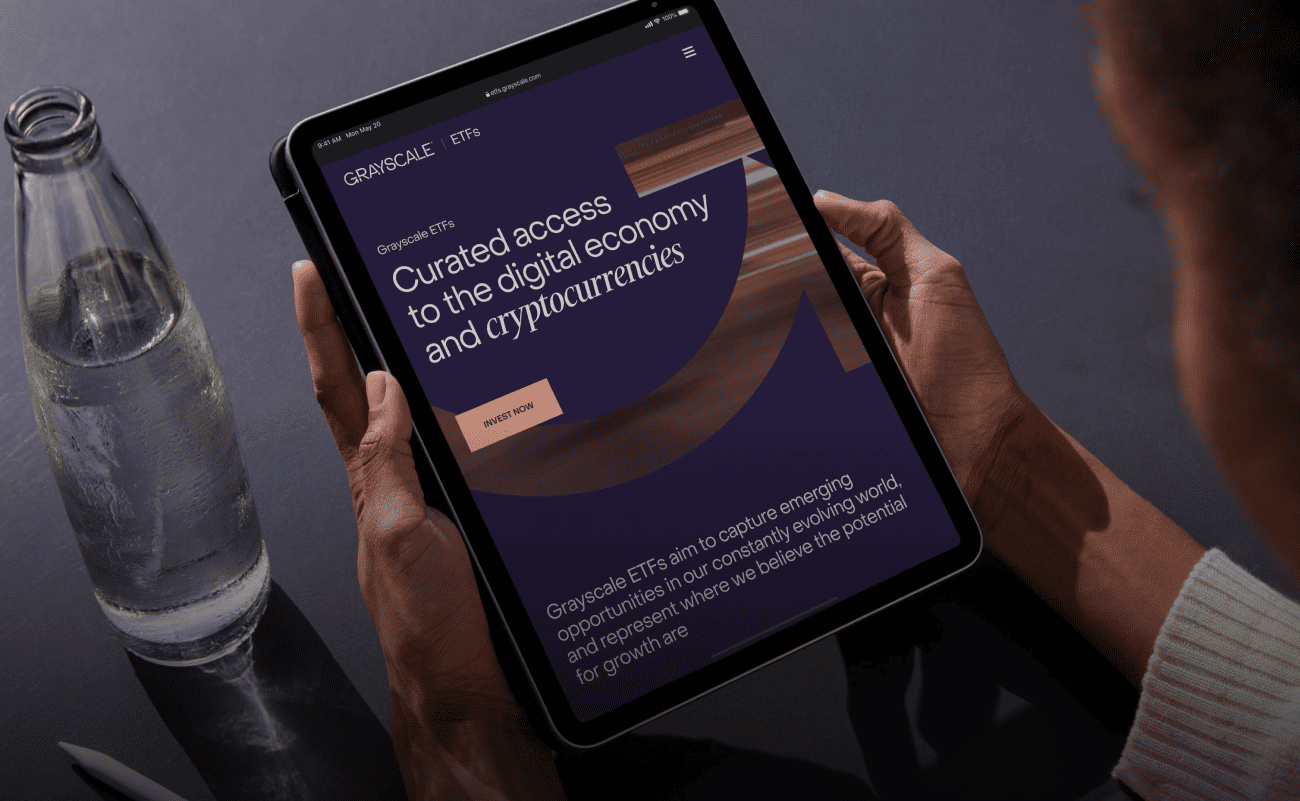
Grayscale was founded in 2013 and is the world’s largest digital asset manager. The company became one of the first players to offer institutional investors regulated and transparent tools for gaining exposure to cryptocurrencies. Through trust structures and ETFs, Grayscale provided access to digital assets without the need for direct ownership, playing a key role in the development of the institutional crypto market.
The company’s financial results reflect the scale of its business: for the first nine months of 2024, Grayscale generated $397.9 million in revenue with $223.7 million in net income. For the first nine months of 2025, revenue reached $318.7 million with net income of $203.3 million. With approximately $35 billion in assets under management, Grayscale remains one of the largest players in the digital investment products segment.
Grayscale has filed an S-1 registration statement and is preparing for a listing on the NYSE under the ticker GRAY. While IPO terms have not yet been disclosed, the offering is already attracting attention as one of the most notable events for the digital asset industry.
Grayscale’s business model is based on asset management and fee-based revenue. The company relies on strong brand recognition, a broad suite of investment products, and its central role in market infrastructure. Its scalable model and solid institutional reputation provide stable cash flows and a competitive advantage amid growing interest in digital assets.
Institutional demand for crypto investment products continues to rise, and Grayscale is strengthening its position as the leader in this segment. For investors, it represents an opportunity to access one of the core infrastructure-level companies at the center of the institutional digital asset market.
Participation Terms
Participation is available through a booking format, as the exact parameters of the Grayscale IPO have not yet been announced. You reserve your allocation in advance, and the purchase of shares takes place once the company is listed, at the actual offering price that will be announced on the day of the transaction.
Once the offering is confirmed and an allocation is granted, the booking is automatically converted into a share purchase at the IPO price. If the offering does not take place or an allocation is not provided, the booking is canceled and the funds are returned to your account.
This format allows you to secure early access to one of the most anticipated IPOs of a leading digital-asset infrastructure player without waiting for the final offering parameters to be announced.
Key Facts Investors Should Know
• Business scale: Grayscale manages approximately $35 billion in digital assets, remaining one of the largest players in the market for crypto investment products.
• Broad product lineup: The company offers 40+ products including trust structures, crypto ETPs, and ETFs providing institutional exposure to major digital assets without direct ownership.
• Infrastructure solutions: Grayscale has built an ecosystem of regulated investment vehicles with custody provided by Qualified Custodians, enhanced asset protection, and transparent reporting for investors.
• Financial resilience: For the first 9 months of 2024, revenue reached $397.9 million with net income of $223.7 million. For the first 9 months of 2025, revenue totaled $318.7 million and net income $203.3 million, reflecting a mature, high-margin business model.
• Reputation and trust: The Grayscale brand remains one of the most recognized in the crypto industry. The company is trusted by institutional investors and plays a key role in shaping the crypto ETF market.
• Market trend: Demand for regulated digital-asset investment products continues to grow. Grayscale holds a strong position in the sector and maintains long-term growth potential as the crypto market becomes increasingly institutionalized.
The Founding and Growth of Grayscale
Grayscale emerged in 2013, at a time when the digital asset market was still taking shape and remained largely retail-driven. Institutional tools were almost nonexistent, and professional investors had no reliable or regulated way to gain exposure to cryptocurrencies. Grayscale introduced a new model: investment products backed by digital assets but without requiring direct custody or operational management from investors.
The turning point was the creation of the industry’s first regulated vehicle for Bitcoin exposure through traditional market infrastructure – the Grayscale Bitcoin Trust. This product became a bridge between crypto markets and classic finance, enabling investors to enter digital assets the same way they accessed equities or commodities. The lineup later expanded with products on Ethereum, multi-asset baskets, and eventually contributed to the emergence of the first spot crypto ETFs.


Grayscale played a key role in legitimizing digital assets for institutional investors. The company systematically built processes for reporting, transparency, and regulatory alignment, attracting hedge funds, family offices, asset managers, and public companies. For many of these participants, Grayscale products were the first gateway into digital assets.
This approach turned Grayscale into not just a provider of investment vehicles but an important infrastructural pillar of the industry. The company influenced standards in custody, settlement, disclosure, and product management, setting the bar for the broader digital asset investment ecosystem.
Today, Grayscale continues to act as a system-level institution shaping both new investment products and the evolution of public digital asset markets. Filing its S-1 and preparing for an IPO on the NYSE positions Grayscale as one of the most anticipated public listings in the digital asset sector. For investors, it represents an opportunity to gain exposure to the largest digital asset manager at the center of institutional crypto adoption and market development.
Frequently Asked Questions (FAQ)
— What is an IPO?
An IPO (Initial Public Offering) is when a private company lists its shares on a stock exchange for the first time to raise capital from investors. From that point onward, the company’s shares can be freely bought and sold on the open market.
— Where are IPOs conducted?
IPOs take place on the world’s largest stock exchanges. In the U.S., the primary venues are the NYSE (New York Stock Exchange) and NASDAQ. Once a company goes public, its shares are freely traded on these exchanges, and the market price is established after the offering.
— What is allocation?
Allocation (from “allocation” — distribution) refers to the process of distributing resources, assets, or capital for maximum efficiency. In investing, allocation usually means distributing the available amount of shares among investors in an IPO or private placement.
— How much allocation does an investor receive?
The allocation size depends on the specific deal and typically ranges from 2% to 30% of the submitted order. In rare cases, allocation may reach up to 100%. Information about the actual IPO volume and share price we entered at becomes available roughly one day before the offering, approximately six hours prior to the trade.
Example — Bullish IPO (Aug 13, 2025):
An investor placed an order for $10,000. The allocation was 29.6%, meaning $2,960 was invested in the IPO. The remaining $7,040, including the purchase commission, was refunded to the balance and became available for withdrawal.Klarna IPO (Sept 10, 2025):
An investor placed an order for $10,000. The allocation was 14%, meaning $1,400 was invested in the IPO. The remaining $8,600, including the purchase commission, was refunded to the balance and became available for withdrawal.Figure IPO (Sept 11, 2025):
An investor placed an order for $10,000. The allocation was 16%, meaning $1,600 was invested in the IPO. The remaining $8,400, including the purchase commission, was refunded to the balance and became available for withdrawal.Gemini IPO (Sept 12, 2025):
An investor placed an order for $10,000. The allocation was 29%, meaning $2,900 was invested in the IPO. The remaining $7,100, including the purchase commission, was refunded to the balance and became available for withdrawal.Legence IPO (Sept 12, 2025):
An investor placed an order for $10,000. The allocation was 78%, meaning $7,800 was invested in the IPO. The remaining $2,200, including the purchase commission, was refunded to the balance and became available for withdrawal.Black Rock Coffee Bar IPO (Sept 12, 2025):
An investor placed an order for $10,000. The allocation was 68%, meaning $6,800 was invested in the IPO. The remaining $3,200, including the purchase commission, was refunded to the balance and became available for withdrawal.
— Why do companies go public?
To raise growth capital, increase brand visibility, and provide early investors and employees with an opportunity to sell part of their shares.
— How is participating in an IPO different from buying shares on the exchange?
When you participate in an IPO, you buy shares before they start trading publicly. This provides an opportunity to purchase at the fixed offering price but also carries the risk that the price may drop once trading begins.
— What do I get by participating in an IPO through Regolith?
You become an investor in the company at the IPO stage via our U.S. partner infrastructure. After the transaction is completed and the lock-up period expires, profits from the share sale are distributed among investors proportionally to their stake in the deal.
— What is a lock-up period and how long does it last?
A lock-up period is a timeframe set by the issuer and underwriters during which shares cannot be sold. For IPOs offered through our platform, this period is 93 days. Once it ends, the shares are sold on the exchange and proceeds are distributed among investors.
— How is participating through the platform different from buying shares independently?
To buy independently, you would need access to a U.S. broker, a significant investment amount, and approval from underwriters. The platform pools capital from investors, providing access to IPOs that are otherwise unavailable to most individuals.
— Through whom is IPO participation carried out?
We operate through a U.S.-based structure that works with a licensed broker in the U.S. Our partner selects promising IPOs and participates in the offering under its own name.
— How is the deal structured legally?
An investor signs an agreement/offer to participate in the investment product. Regolith then transfers funds to its partner entity — Wealthy Labs Limited (the provider), which enters into a forward contract with the broker and executes all operational activities. The provider delivers the financial outcome to Regolith, which then distributes proceeds among investors.
— Is there a minimum investment amount?
Yes. Each IPO has a defined minimum entry threshold, shown on the offering page. On average, Regolith provides access starting from $500.
— Do I receive shares into my personal brokerage account?
No. Shares are purchased and held in the partner’s brokerage account. After the lock-up period, the broker sells the shares and transfers proceeds for distribution among investors.
— Can shares be transferred directly to my brokerage account?
No. Participation is structured via a forward contract with the partner’s brokerage infrastructure. The deal is executed on behalf of the partner, and settlements with investors are carried out through the platform.
— How can I sell my shares after the IPO?
Sales are processed automatically: once the lock-up expires, the partner broker sells the shares on the exchange, and proceeds are distributed proportionally among investors.
— What are the risks of investing in IPOs?
IPOs are high-risk investments. While they may offer high returns, they also carry significant volatility. Share prices on the first trading day — and after the lock-up — can fluctuate sharply. There is a risk that the market price will fall below the offering price. In addition, macroeconomic and sector-specific factors can affect outcomes.
— Can I know in advance how much I will earn?
IPO returns are not guaranteed. The final result depends on the share price at the time of sale after the lock-up, overall market conditions, and the company’s performance.
— How can I verify that Regolith participates in IPOs?
We publish all available deal information in the client dashboard. Additionally, we provide an agreement disclosing the infrastructure used for transactions. Broker and partner documents are not shared, as they contain confidential data protected by contractual obligations.
Peter Mintzberg
CEO
“We are building a bridge between traditional finance and digital assets, making this new market clearer, more transparent, and accessible to every investor.”
Details
Ticker
GRAYExchange
NYSECompany valuation
$2.5BRevenue for 9M 2024
$397.9MNet income for 9M 2024
$223.7MRevenue for 9M 2025
$318.7MNet income for 9M 2025
$203.3MAssets under management
$35BIPO status
Form S-1 filedTerms
Participation format
BookingDeal Fee
5%Carried Interest
30%Risk potentinal
Very HighLock-up period
93 days from the IPO date
