


How Two Siblings Left OpenAI and Built Anthropic
In late 2020, Dario and Daniela Amodei left OpenAI with five colleagues. They had already helped develop advanced AI models, but wanted to decide for themselves how to study the risks and make decisions about releasing them. In early 2021, the team founded Anthropic in San Francisco. Five years later, the company behind Claude went public on Nasdaq.
Along the way, the small research lab attracted investment from Amazon and Google, built a competitor to ChatGPT and turned down an offer to return to OpenAI through a merger. Debates about the future of AI now come with the demands of public markets. Investors must assess whether rapidly growing demand for Claude can justify enormous spending on computing.
Anthropic’s founders
Anthropic’s founders brought different backgrounds to the business. Dario earned a PhD at Princeton, worked in research and held roles at Baidu and Google before joining OpenAI in 2016. He became vice president of research and helped develop GPT-2 and GPT-3. Released in 2020, GPT-3 demonstrated how larger models, more data and greater computing power could substantially improve language capabilities.
Daniela studied English literature and worked in politics and at payments company Stripe. At OpenAI, she was vice president of safety and policy. At Anthropic, her brother became CEO and she became president. Dario leads the scientific and strategic direction, while Daniela helps organize the business and its leadership.
That division of responsibilities mattered for a lab that had to develop models, recruit researchers, secure funding and bring a product to market at the same time. Scientific credentials could attract the first investment. Continued growth required turning research into a service customers would pay for regularly.
Why they left OpenAI
The disagreements concerned how to manage the development of increasingly powerful AI. The Amodeis and their colleagues wanted safety research, an understanding of model behavior and the ability to control AI systems to shape decisions across the organization. According to Reuters, disputes over AI safety and governance prompted Anthropic’s future founders to leave.
The team saw considerable potential in language models. At the same time, researchers understood that a convincing answer could contain an error, while the ability to follow complex instructions could create opportunities for misuse. Building more capable models and examining how people would use them needed to advance together.
In interviews about Anthropic’s launch, the founders described the decision as a chance to focus on a shared research agenda with a small team that agreed on an approach to AI. During the pandemic in early 2021, they discussed their plans outdoors and in backyards, wearing masks and keeping their distance. Most had already worked together, so the new company began with a team familiar with one another’s research.
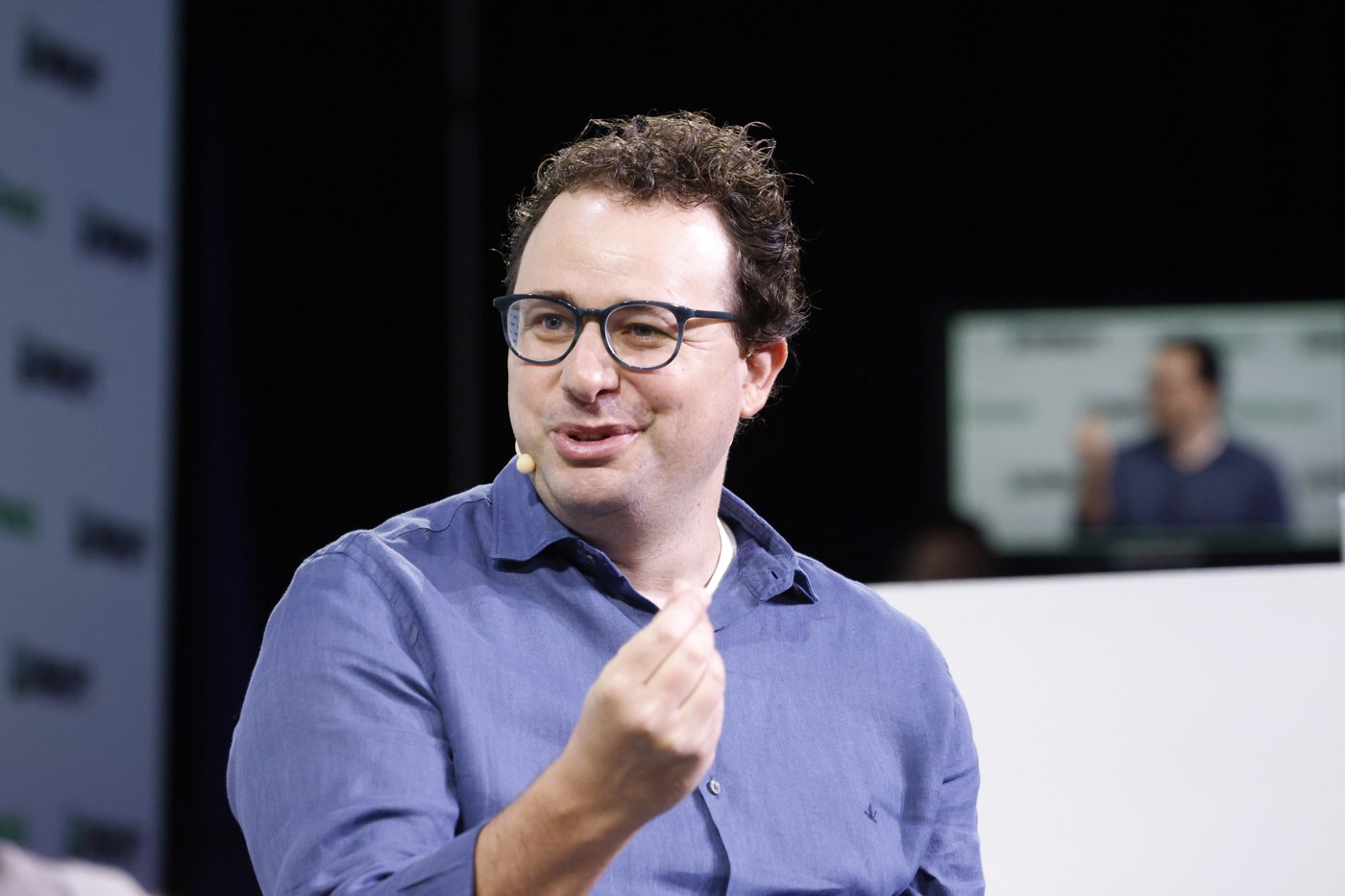
Anthropic co-founder and CEO Dario Amodei at TechCrunch Disrupt in San Francisco. Photo: Kimberly White / Getty Images for TechCrunch. CC BY 2.0.
Funding before Claude
On May 28, 2021, Anthropic announced its first funding round of $124 million, led by Skype co-founder Jaan Tallinn. Participants included Dustin Moskovitz, Eric Schmidt and other investors. Claude’s public introduction was still almost two years away.
Initially, investors were backing the team and its research agenda. In the funding announcement, Anthropic explicitly said it intended to focus on research in the near term. The money would support computationally intensive experiments, large models and tools to better understand their behavior.
The team’s experience with GPT-3 helped explain why it could take on the challenge. Its future product had no mass audience, but its creators had already produced results in the field for which they were raising capital. Anthropic’s next task was to demonstrate that scientific advances could support an independent business.

Jaan Tallinn at a seminar on Europe’s digital policy. In 2021, the Skype co-founder led Anthropic’s first funding round. Photo: Valdek Laur / EU2017EE Estonian Presidency. CC BY 2.0.
Claude’s launch
On March 14, 2023, Anthropic introduced Claude. The AI assistant could summarize documents, answer questions and help with writing, research and programming. Alongside direct conversations with users, the company offered API access so developers could integrate the model into their applications.
One distinguishing feature was Constitutional AI, an approach Anthropic researchers described in December 2022. During training, the model uses a set of principles to evaluate and revise its answers. AI also generates some of the feedback used in training. This made it possible to scale assessments of model behavior while reducing the amount of manual review.
In May 2023, Anthropic published the principles guiding Claude. They included respect for privacy, honesty and refusing to assist with harmful activities. The company continued to revise the document as the product evolved, introducing a new version of Claude’s constitution in January 2026.
Claude gradually developed into a range of workplace tools. Claude Code helps developers understand codebases and complete programming tasks. Cowork extends the assistant to other workflows. For Anthropic, this creates opportunities to sell AI where its value can be measured in completed tasks and employee time saved.
Amazon and Google fuel growth
As Anthropic grew, it needed substantially more computing capacity. Training new models requires large computing clusters, and handling each user request also consumes resources. Access to hardware and cloud infrastructure is a condition for growth in this business.
In November 2024, Anthropic said Amazon’s total investment would reach $8 billion. AWS became its primary cloud provider and training partner. The collaboration included the use of Trainium and Inferentia chips. Google’s investments and infrastructure provided another source of capital and computing power.
Cloud platforms also helped sell Claude to corporate customers. Businesses could access the model through infrastructure they already used, allowing Anthropic to serve demand beyond its own application. By May 2026, Claude was available on AWS, Google Cloud and Microsoft Azure.
That month, Anthropic raised $65 billion in a Series H round at a $965 billion post-money valuation. Altimeter Capital, Dragoneer, Greenoaks and Sequoia Capital led the round. Five years separated its first $124 million in research funding and this financing.
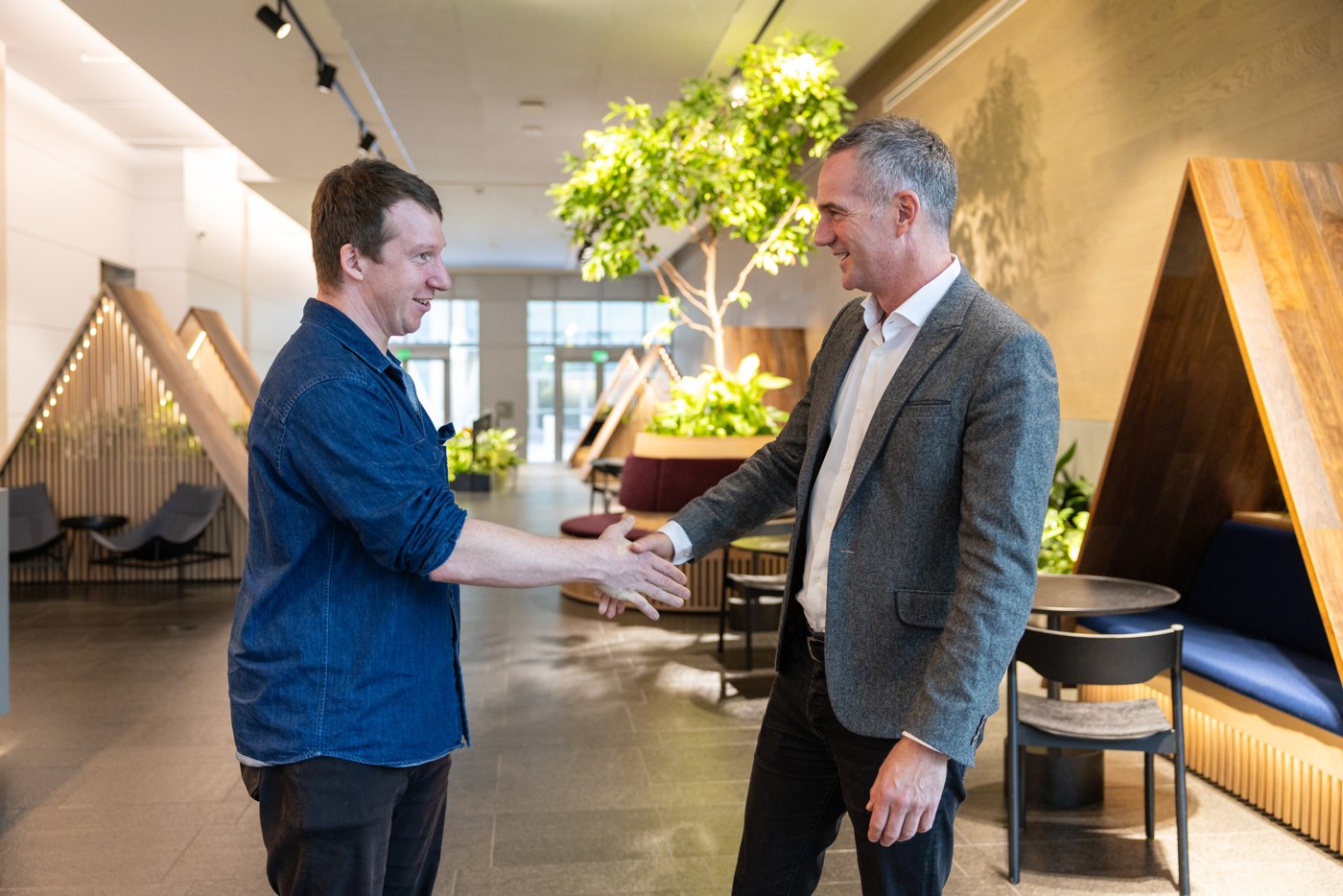
UK Secretary of State for Science, Innovation and Technology Peter Kyle visiting Anthropic in San Francisco. Photo: Alecsandra Dragoi / Department for Science, Innovation and Technology. CC BY 2.0.
An offer to return
In November 2023, the story could have taken a different turn. After Sam Altman was removed, OpenAI’s board approached Dario Amodei about leading the company. Reuters, citing two people familiar with the matter, reported that a possible merger with Anthropic was also discussed.
Amodei declined both proposals. By then, Anthropic had its own product, investors and development strategy. It remained independent and continued competing with the organization its founders had left.
Safety in corporate governance
The founders sought to reflect their views on AI in the company’s structure. Anthropic operates as a Public Benefit Corporation. This status allows its board to consider public benefit alongside shareholders’ financial interests. Its stated purpose is the responsible development and maintenance of advanced AI for the long-term benefit of humanity.
In 2023, Anthropic also introduced the Long-Term Benefit Trust. Independent trustees received the right to appoint and remove some directors, with those powers intended to expand to a majority of the board. The company wanted its mission to continue influencing management after major investors came on board.
The Responsible Scaling Policy played a similar role in research. It linked increases in model capabilities to stronger safeguards. For example, if a system improved at tasks that could help create dangerous weapons, protections against misuse and theft of the model would need to strengthen.
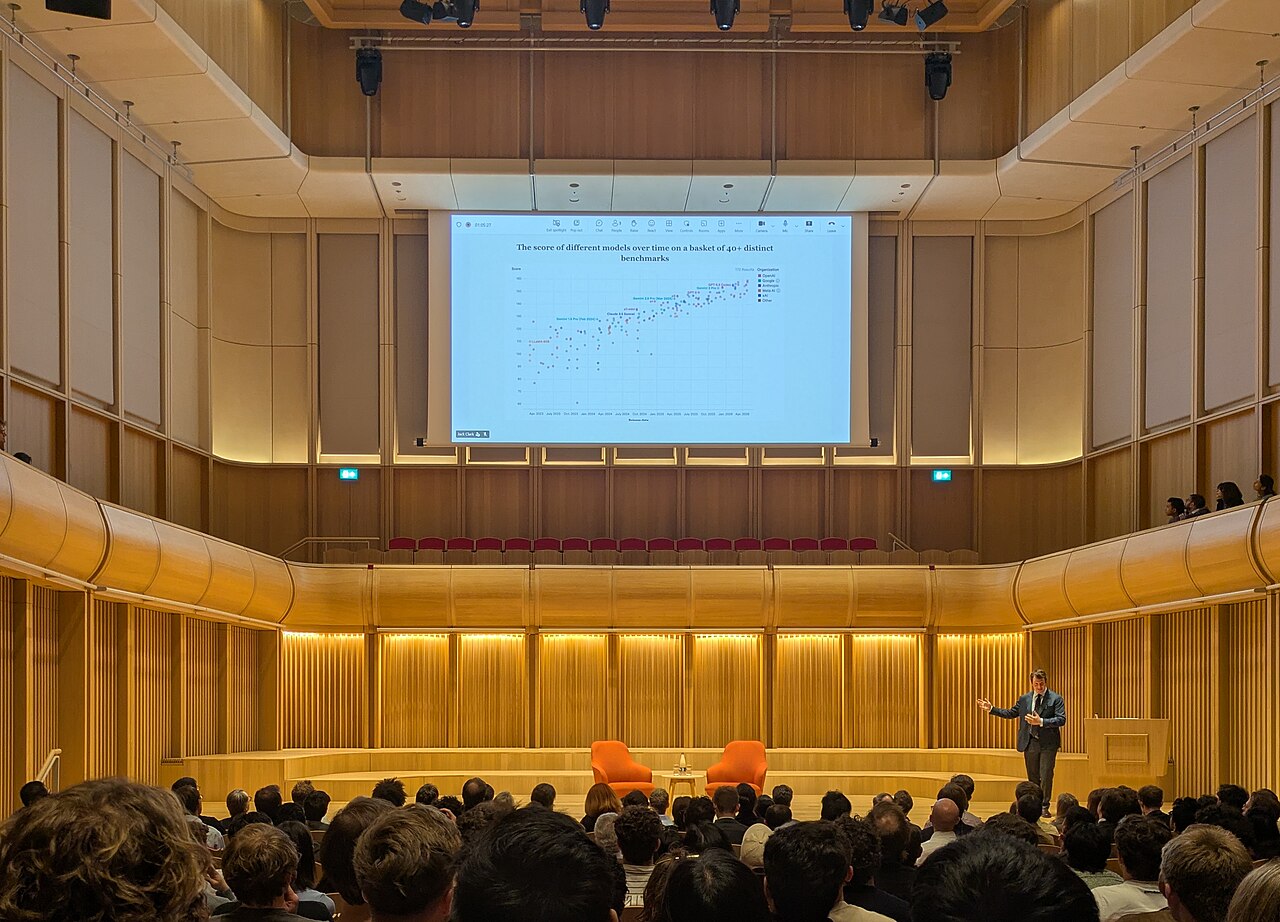
Anthropic co-founder Jack Clark speaking about AI at the Schwarzman Centre in Oxford, May 2026. Photo: Mvolz / Wikimedia Commons. CC0 1.0.
Revising the rules
Putting this approach into practice proved harder than setting it out at the beginning. In February 2026, Anthropic released the third version of its Responsible Scaling Policy. The company acknowledged that some initial expectations had not been met. Model capabilities are difficult to match precisely to predefined risk thresholds, while regulation develops more slowly than the technology.
The updated policy emphasizes risk reports, security plans and external evaluation. Anthropic distinguishes between commitments it can fulfill itself and more ambitious goals requiring action by other companies and governments. Describing its history as a steady tightening of every rule would therefore be inaccurate. Its research principles remain, while the ways it implements them change.
These disagreements remained public after the IPO. On November 25, Axios reported on debates within the AI industry over how many decisions people should delegate to more powerful systems. Amodei rejected the interpretation that he was proposing to give up human free will in favor of AI. For Anthropic, control over the technology remains part of its strategy and reputation.
Research becomes big business
Sales growth shows how quickly Claude found customers. According to Anthropic’s prospectus, revenue rose from $386 million in 2024 to $4.59 billion in 2025. In the first half of 2026, the company generated $16.29 billion, up from $1.16 billion a year earlier.
Anthropic earns revenue from subscriptions and usage-based access to its models. Under the latter approach, customers pay as they consume the service, so more tasks or more data processed generate additional revenue. Financial performance is therefore tied to how deeply Claude is integrated into customers’ daily work.
Rapid sales growth comes with substantial spending. Anthropic recorded an operating loss of approximately $693 million in the first half of 2026. It spent $8.95 billion on computing and infrastructure. Assessing the business requires understanding how revenue growth compares with the cost of training and serving models.
IPO and early trading
Anthropic shares began trading on Nasdaq under the ticker ANT on November 19, 2026. The offering price was $83. The initial IPO comprised 980 million shares, or $81.34 billion before expenses and the underwriters’ additional option. According to SEC filings, the full exercise of that option increased the number of shares sold to 1.127 billion.
The market debut brought sharp price swings. The first trade was at $111.50, and the stock reached $115.10 intraday. It closed November 19 at $97.17, however, and continued falling in the following sessions. At the November 25 close, ANT stood at $82.79.
Interactive ANT chart / TradingView. Quotes may be delayed. Calculations in the article use the November 25, 2026 closing price.
Relative to the IPO price, the calculated change as of November 25 was −0.3%: $82.79 / $83 − 1. On November 23, the price of $87.64 implied a gain of approximately 5.6% from the IPO price. That changed over two trading sessions. Buying at the first market price of $111.50 would have produced a different result: approximately −25.7% at the same closing price.
The calculation excludes fees and taxes. The ability to sell shares depends on the terms of the specific offering.
Anthropic’s next test
In 2021, the first investors backed an experienced team before Claude was publicly available. By the IPO, Anthropic had billions of dollars in revenue and customers using its models in their workflows. The Amodeis had built an independent company while maintaining their chosen research direction.
The next stage will require demonstrating that demand for Claude can deliver sustainable financial results as AI costs rise. The founders must also make safety decisions at a company now watched by public markets. Those decisions will show how the principles that prompted the team to leave OpenAI work in a business of this scale.
