

Regolith Cards: Two Cards for Online Payments and Travel
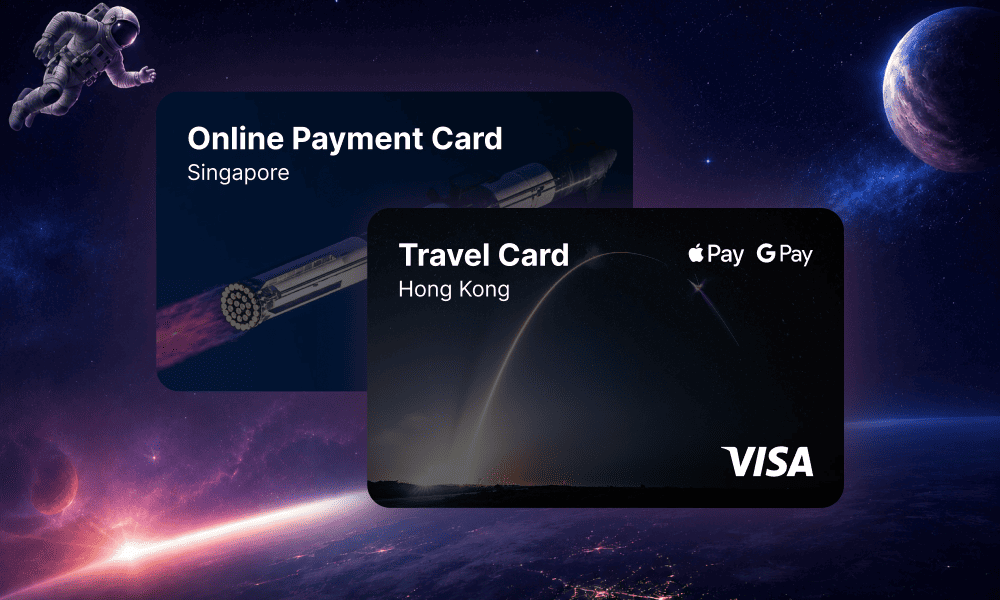
Regolith has introduced a new financial service – Regolith Cards. Following a testing period, card issuance is now open to all platform clients, and a dedicated Cards section is available in the Regolith web platform for card issuance and management.
Two options are currently available: the Visa-based Online Card and the Mastercard-based Travel Card. They are designed for different use cases, from paying for online services to everyday purchases and travel expenses.
Both cards are USD-based, support multicurrency transactions, and can be funded with USDT via the TRC20, ERC20, and BSC networks. The minimum top-up is $30, with no monthly maintenance fee.
Until October 1, 2026, a special launch offer is available: 50% off the card issuance fee plus a $30 bonus credited to the account after issuance.
Why We Launched Regolith Cards
Over the past several years, Regolith has primarily developed as an investment platform. Pre-IPO, IPO, ETFs, funds, real estate, crypto strategies, and other investment opportunities have gradually been brought together within a single portfolio.
Regolith Cards add payment services to this ecosystem. The platform now covers another everyday use case – spending funds on purchases and services.
A key feature is the ability to top up cards with USDT. For clients who already use stablecoins and other digital financial services, this provides a direct way to fund the card through supported blockchain networks.
Regolith offers two cards with different features and purposes, allowing users to choose the option that best matches how they plan to use it – primarily for online payments or for broader everyday and travel spending.

Online Card for Online Payments
The Online Card is designed primarily for purchases and services on the internet.
The card is issued in Singapore on the Visa network. Its base currency is USD, with support for multicurrency transactions.
The standard issuance fee is $100, the minimum top-up is $30, and there is no monthly maintenance fee. The Online Card can be used for subscriptions, digital services, bookings, online stores, and other internet transactions.
The card comes with relatively high online payment limits:
- up to $20,000 per transaction;
- up to $250,000 per day;
- up to $1 million per month.
Top-ups are available in USDT via TRC20, ERC20, and BSC. The top-up fee is $3 for AML screening + 3.5% of the top-up amount.
Travel Card for Travel and Everyday Purchases
The second option is the Travel Card, designed for a broader range of transactions.
The card is issued in the United States on the Mastercard network and supports Apple Pay and Google Pay. This makes it suitable for both online purchases and payments at physical stores and other locations that accept contactless payments. The base currency is also USD, with support for multicurrency transactions.
The standard Travel Card issuance fee is $150. The minimum top-up is $30, and there is no monthly maintenance fee. Online and in-store payment limits are the same:
- up to $10,000 per transaction;
- up to $50,000 per day;
- up to $400,000 per month.
The card can be funded with USDT via TRC20, ERC20, or BSC. The top-up fee is $3 for AML screening + 3.9%.

Online vs. Travel: What’s the Difference?
The main difference between the two cards is how they are intended to be used.
- Online Card is focused on internet transactions and offers higher limits for online payments. It is issued in Singapore on the Visa network.
- Travel Card is more versatile. In addition to online purchases, it can be used at physical points of sale and supports Apple Pay and Google Pay. It is issued in the United States on the Mastercard network.
The choice therefore depends mainly on how the card will be used. For subscriptions, online stores, and digital services, the Online Card is the more specialized option. For travel, restaurants, stores, and everyday contactless payments, the Travel Card offers broader functionality.
Funding Cards With USDT
One of the key features of Regolith Cards is the ability to fund them with USDT. Three networks are supported:
- TRC20 – TRON;
- ERC20 – Ethereum;
- BSC – BNB Smart Chain.
Users can choose the network they normally use for transfers. The minimum top-up for both cards is $30. Once the funds are credited, they can be used for card transactions within the limits and terms of the selected card.
When making a transfer, it is important to use the exact network specified during the top-up process. Sending funds through an unsupported network may result in the loss of funds.
How Much Does a Regolith Card Cost?
Under standard terms, the issuance fees are:
- Online Card – $100
- Travel Card – $150
A special launch offer is available until October 1, 2026. Card issuance fees are reduced by 50%, and clients also receive a $30 account bonus after issuance.
During the promotion, the Online Card can therefore be issued for $50 instead of $100, while the Travel Card costs $75 instead of $150, with the additional $30 bonus credited after issuance.

How to Get a Card
Regolith Cards are currently available through the Regolith web platform. A dedicated section in the account allows users to select a card and complete the issuance process. The card can be issued in just a few minutes after the required checks are completed.
If the Cards section is not yet visible in the account or there are questions about the terms, clients can contact a Regolith manager.
The team also continues to collect feedback from early users and improve the card service based on real-world usage.
Regolith Cards as Part of the Platform’s Development
The launch of Regolith Cards continues the platform’s expansion beyond traditional investment products.
Today, Regolith brings together investment instruments, portfolio management, analytics, the personal account, AI assistant Paul, and now payment cards. For users, this creates a broader financial environment within a single platform. Investments remain at the core of Regolith, while additional services expand the ways clients can use their accounts and funds.
Online Card and Travel Card serve different needs. The first is focused on internet payments, while the second adds in-store payments and support for Apple Pay and Google Pay.
Regolith is also working on integrating cards into the mobile app, so card management will eventually be available through Regolith App in addition to the web version. The company plans to continue developing the card service alongside other platform features.

What to Know Before Getting a Card
Before choosing a card, it is worth reviewing several parameters: country of issuance, payment network, supported use cases, top-up fees, transaction limits, and KYC requirements.
The two cards have different terms, so the right option depends on how the user plans to use it. Online Card is designed primarily for internet payments and offers higher online limits. Travel Card is intended for broader everyday use and supports Apple Pay and Google Pay.
Until October 1, 2026, both cards are available with a 50% discount on issuance, plus a $30 account bonus after the card is issued.
Current Regolith Cards terms are available in the Regolith account or from a Regolith manager.
Issuance terms, fees, and limits may change. Please check the latest information in your Regolith account before ordering a card.
