

38 New Unicorns Worth a Combined $71 Billion Emerged in September
In September, 38 private companies reached valuations of $1 billion or more for the first time, according to Crunchbase analysts. Their combined value totaled $71 billion. The newcomers included businesses in semiconductors, financial services and space technology.
A total of 311 companies became unicorns in the first nine months of 2026. At this pace, the year could rank second only to the record set in 2021, when more than 600 businesses crossed the billion-dollar threshold.
How Companies Become Unicorns
A unicorn is a privately held company valued at $1 billion or more. On the Crunchbase Unicorn Board, that status is determined by funding rounds and reflects the value of the business immediately after it raises capital. A company can still be unprofitable and remain years away from an IPO.
The $71 billion in September’s roundup is the companies’ combined valuation. A startup does not need to raise a billion dollars to achieve that value. Investors buy a stake at an agreed price, which implies a valuation for the entire business. The amount raised in the round is usually much smaller.
SiMa.ai, for example, raised $150 million at a $1.45 billion valuation. These figures measure different things. The first is the capital raised in that particular round; the second is the value investors assigned to the company in the transaction.
Venture Funding Recovers
Global venture funding reached $681 billion in 2021. In 2022, it fell to $445 billion, a decline of 35%, according to a Crunchbase analysis published in January 2023. Investors slowed their dealmaking as stocks fell and conditions deteriorated for technology companies.
The downturn coincided with the start of U.S. interest rate increases. Crunchbase’s 2022 timeline tracks both the Federal Reserve’s first hike in March and the subsequent sharp drop in funding. Higher capital costs are particularly significant for venture-backed businesses. Many spend heavily on development long before generating consistent profits, while their investors may have to wait years for an opportunity to sell.
The recovery began gradually. According to Crunchbase’s 2024 review, global startup investment rose to roughly $314 billion, up from $304 billion in 2023. AI attracted more than $100 billion, almost a third of the total. Capital was concentrating in the technologies for which investors had the highest expectations.
The creation of billion-dollar companies accelerated in 2026 as well. A separate Crunchbase study counted 195 new unicorns in the first half alone, exceeding the 193 recorded in all of 2025. September’s newcomers offer a closer look at the products helping startups secure large funding rounds.

Web Summit 2024 attendees in Lisbon. File photo. Sam Barnes / Web Summit via Sportsfile. Source · CC BY 2.0.
SiMa.ai’s Robot Chips
Based in San Jose, California, SiMa.ai develops semiconductors and software that run AI directly on devices. Its technology is designed for robots, vehicles, drones and industrial equipment.
There is a practical reason to bring those computations on board. An autonomous machine needs to process camera and sensor data quickly while working within power constraints. Sending that work to a remote server does not suit every application. In its robotics platform brief, SiMa.ai emphasizes local processing for navigation, understanding the surrounding environment and motion control.
On September 28, the company announced a $150 million Series C co-led by Fidelity Management & Research Company and Amplify. The round valued SiMa.ai at $1.45 billion and brought its total funding to $500 million. The proceeds will support its software platform and next-generation computing products.
SiMa.ai names Bosch and STIGA among its customers and partners. In February 2026, it announced a partnership with European garden equipment manufacturer STIGA to develop AI capabilities for robotic lawn mowers. These machines need to interpret their surroundings while conserving battery power. Computing efficiency was one of the reasons behind the collaboration.
Relationships with equipment manufacturers are especially important for a chip startup. Getting its technology into a production model creates an opportunity for recurring shipments. The scale of the business will depend on how many devices its partners build with those solutions and how long they continue using them.
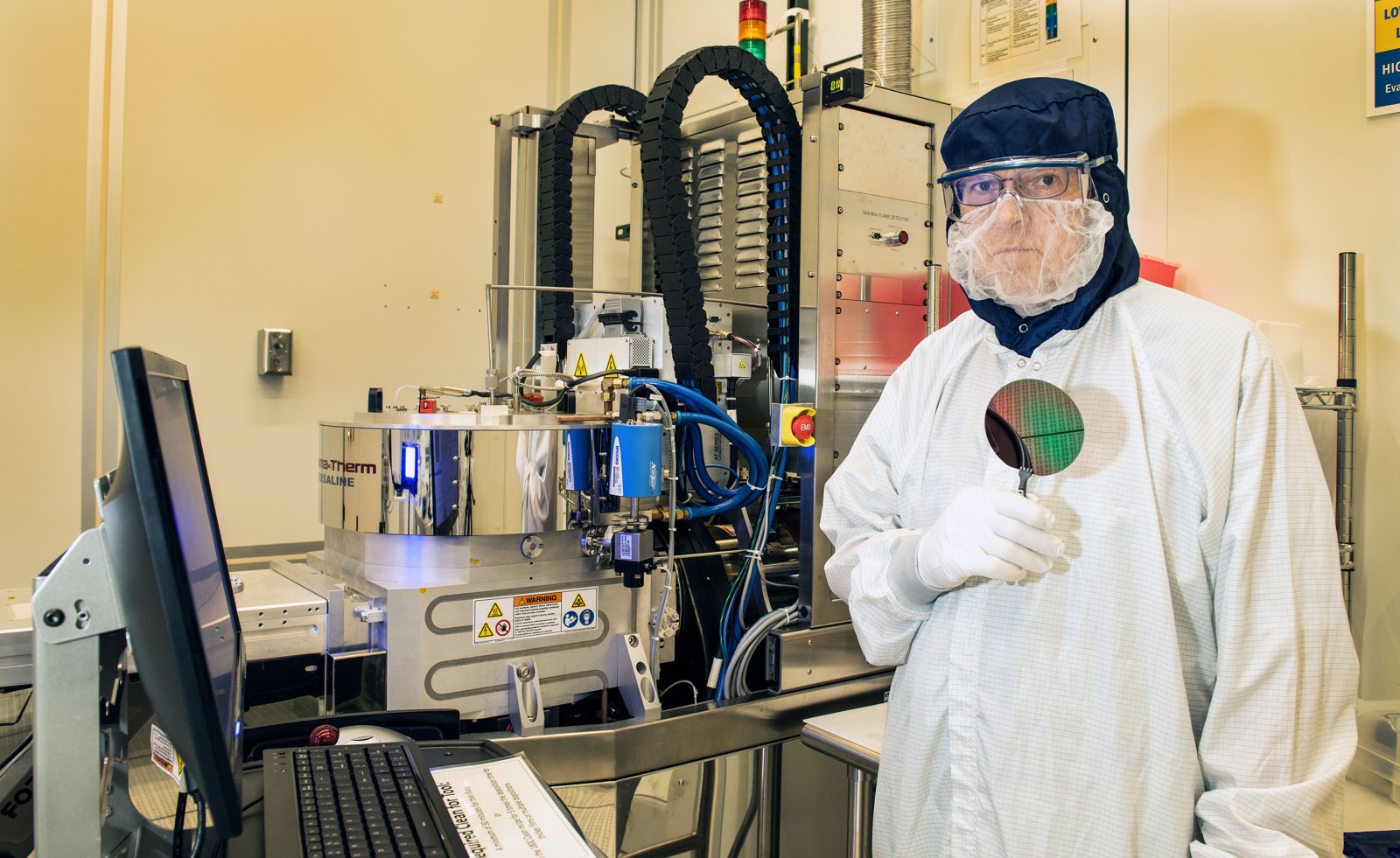
Engineer Richard Kasica holding a semiconductor wafer at a NIST laboratory. Photo: Curt Suplee / NIST
Hubble’s Satellite Bluetooth
Seattle-based Hubble Network is building connectivity for devices that travel beyond cellular coverage. A shipment, for example, may leave a well-connected warehouse and continue through areas where a conventional tracker cannot transmit data.
Hubble uses Bluetooth Low Energy, a low-power version of the familiar wireless technology. According to the company, a compatible device can transmit signals to its satellites after a firmware update and integration with Hubble’s software tools. No dedicated satellite modem is required.
On September 23, the startup announced a $200 million Series C led by Smith Point Capital at a $1.6 billion valuation. Hubble has raised about $300 million in total, including a $70 million round a year earlier.
At the time of the announcement, Hubble said it had six satellites operating in low Earth orbit. It plans to expand the constellation to 60 by 2030. Muon Space is building the new spacecraft, and the latest funding will help expand the network and lower connectivity costs.
Hubble’s first two satellites launched in March 2024. The company subsequently reported receiving a signal from a small Bluetooth chip roughly 600 kilometers away. A larger constellation should increase the frequency of satellite passes and make data transmission more regular.
The service is designed for short messages about an object’s location or condition. It does not replace mobile broadband for activities such as streaming video. Its business proposition is to make tracking affordable for large numbers of inexpensive items that would previously have been too costly to equip with dedicated satellite hardware.
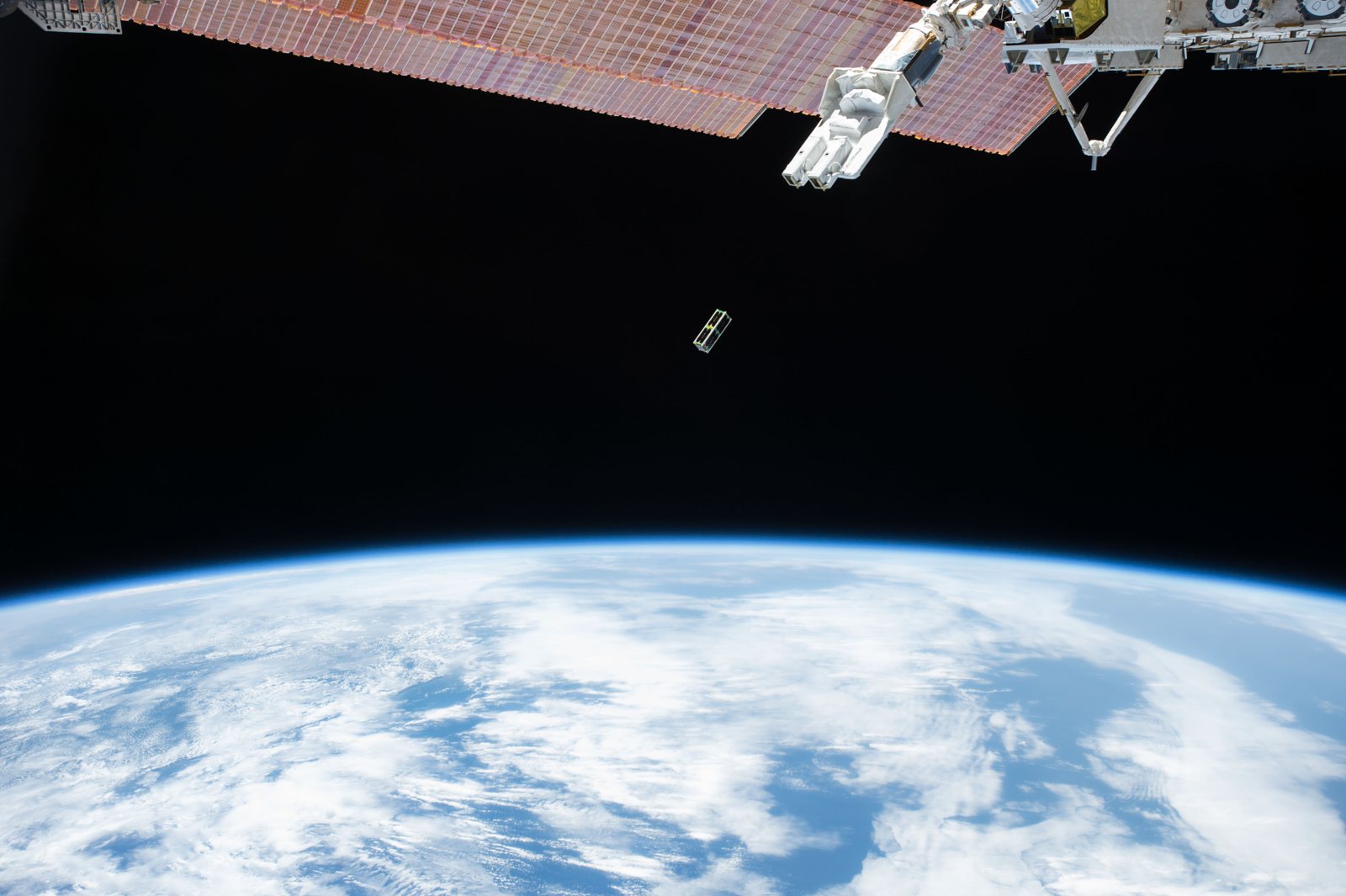
Deployment of small satellites. Photo: NASA. Source · Public domain (U.S.).
Félix’s WhatsApp Transfers
Miami-based fintech company Félix helps Latin American immigrants living in the United States send money home. Customers interact with the service through WhatsApp. According to the product description, there is no need to download a separate app to make a transfer.
Félix secured $200 million in financing in September, split between equity and debt. According to Crunchbase, it raised $87 million in equity at a $1.4 billion valuation, alongside $113 million in debt financing from General Catalyst. Andreessen Horowitz led the Series C equity round.
The distinction matters. An equity investment gives an investor a stake in the business, while debt comes with repayment obligations under agreed terms. A headline describing the entire $200 million as equity funding would obscure a substantial part of the deal’s structure.
In its funding announcement, Félix said it had processed a cumulative $8 billion in transfers and served 11 Latin American markets. It also reported that revenue had grown more than 2.5-fold year over year. These figures come from the company, and the $8 billion in transfers should not be confused with revenue.
Its plans include expanding into more markets and developing additional financial services, including lending. Existing relationships with people who send remittances could help Félix offer new products to the same audience. A lending business would also require borrower assessment and management of the risk that loans are not repaid.
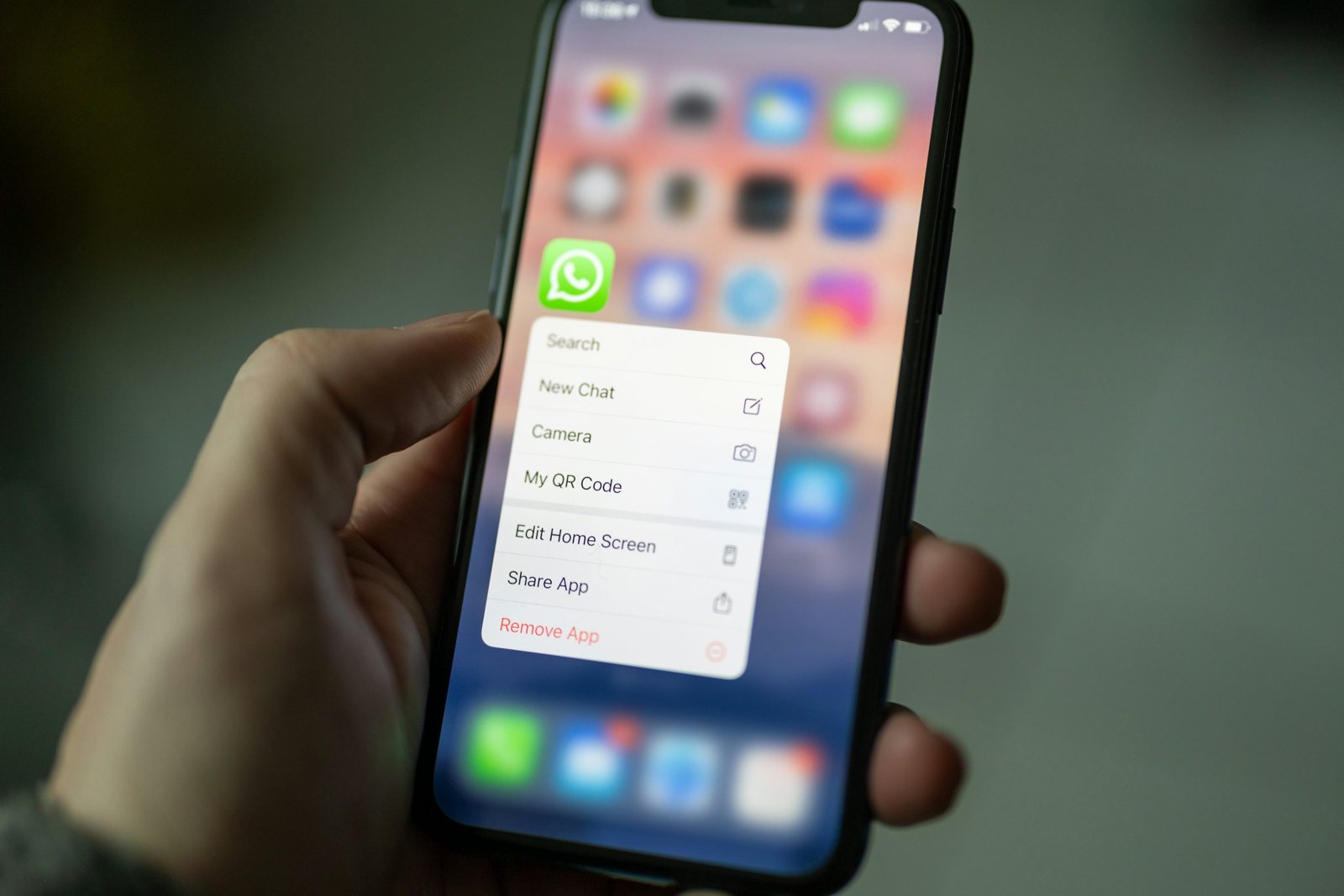
WhatsApp on a smartphone. Photo: Dimitri Karastelev / Unsplash. Source · Unsplash License.
Where Unicorns Emerge
The United States led September’s roundup with 21 of the 38 companies. China accounted for six and the United Kingdom for three. The remaining eight were based in other countries.
The pattern was similar in the first half. The United States accounted for 110 of the 195 new unicorns, or about 56%, according to Crunchbase’s study. That suggests a sustained geographic concentration rather than the result of a single strong month.
Valuations and Returns
The three companies face different growth challenges. SiMa.ai needs to get its chips into more of its partners’ equipment. Hubble must fund its satellite constellation and connect more devices. Félix aims to develop additional services for its existing remittance audience. Demand and product economics will determine how well each strategy performs after the latest round.
A billion-dollar valuation reflects the price agreed in a particular private-market transaction. Investors may be unable to sell their stakes at that value whenever they choose. In its bulletin on private placements, Investor.gov highlights both the limited liquidity of these investments and the more restricted disclosure available compared with public companies.
September’s results show which technologies have secured the backing of major investors. Whether that support translates into shareholder returns will become clearer as the businesses grow and opportunities to sell emerge. For these new unicorns, the next test is to deliver operating results that justify the valuations investors have agreed to pay.
