

Starlink Mobile: SpaceX prepares its own U.S. mobile network
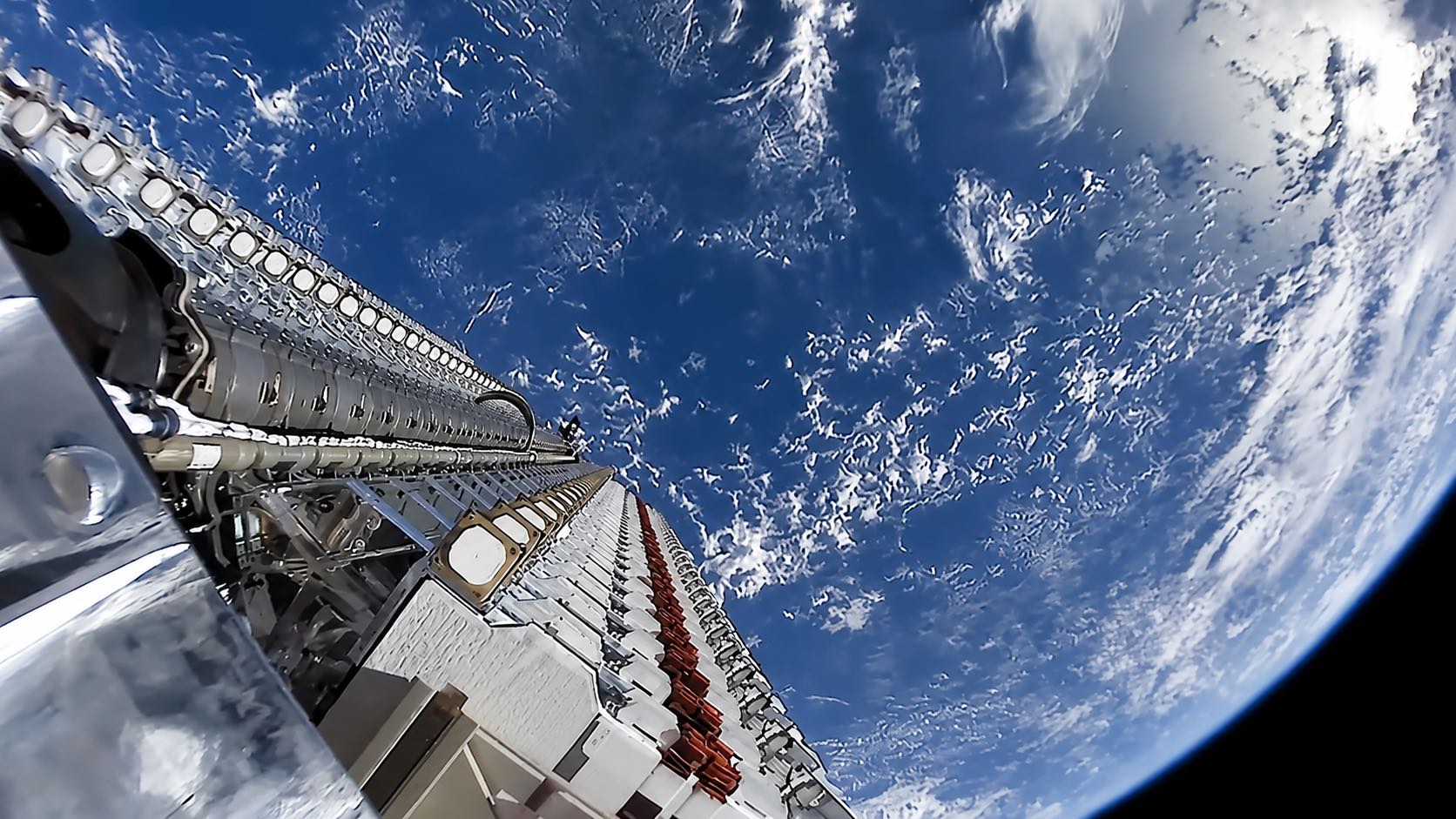
The first 60 Starlink satellites before deployment. SpaceX / Official SpaceX Photos. CC0 1.0.
SpaceX is preparing a mobile network that will combine satellites with terrestrial infrastructure. On October 8, the company signed an agreement to acquire a nationwide portfolio of 800 MHz spectrum licenses from investment firm Grain Management. The acquisition is intended to address a key challenge for the planned service: maintaining a reliable smartphone signal where walls and other obstacles weaken reception.
Two days earlier, the U.S. Federal Communications Commission, or FCC, authorized a separate system of 15,000 satellites serving mobile devices. These developments bring SpaceX closer to a market where customers choose a carrier for everyday calls and internet access. The company intends to offer the service under the Starlink Mobile brand.

A train of Starlink satellites against the night sky and aurora, photographed from the ISS. Photo: NASA · Public domain in the United States.
The Grain deal: what SpaceX is acquiring
According to Grain Management’s announcement, the agreement covers the firm’s entire nationwide 800 MHz portfolio. SpaceX is acquiring the rights to use specific radio frequencies. Operating a network on those frequencies will also require base stations, equipment and subscriber connections.
SpaceX describes the portfolio as up to 14 MHz of paired spectrum. The 800 MHz figure identifies the frequency band, while 14 MHz describes the bandwidth available to carry data. Paired spectrum provides separate frequency blocks for signals traveling from devices to the network and back. Bandwidth, the technology used and the number of connected devices determine how much traffic the network can handle at once.
The purchase price has not been publicly disclosed. Closing requires FCC approval and satisfaction of customary conditions. SpaceX therefore has a signed agreement; the final transfer of the licenses will be a separate milestone.
The portfolio allows the company to plan a network on a nationwide scale. A license grants the right to use frequencies in a particular area, while actual coverage depends on equipment being installed and activated. A coverage map for the planned terrestrial network has not yet been released.
Grain Management: investing in connectivity infrastructure
Grain Management was founded in 2007 and specializes in digital infrastructure. Its investments include fiber networks, spectrum, towers and communications services. The firm was founded by David Grain, who remains its CEO. According to the company, it had more than $12 billion in assets under management as of June 30, 2026.
These investments involve the equipment and rights carriers need to deliver their services. Fiber carries data between network nodes, towers provide sites for antennas, and licenses grant access to radio frequencies. Each asset has its own economics: revenue can come from infrastructure leases, network operations or a subsequent sale.
In this transaction, Grain is the spectrum owner and seller. Assessing its investors’ return would require the sale price and the payment terms agreed with SpaceX. Neither has been disclosed, so publicly available information is insufficient to calculate a profit.
From T-Mobile to Grain and SpaceX: the 800 MHz portfolio’s history
Grain acquired the portfolio only recently. On August 11, 2026, the firm announced that it had completed the purchase from T-Mobile. In exchange, the carrier received $2.9 billion in cash and Grain’s 600 MHz licenses. T-Mobile disclosed these terms in its transaction announcement.
The August transaction combined a cash payment with an exchange of spectrum assets. The $2.9 billion figure relates to the transaction between T-Mobile and Grain. It cannot be used as the price of SpaceX’s October acquisition, which involves a different buyer and an undisclosed purchase price.
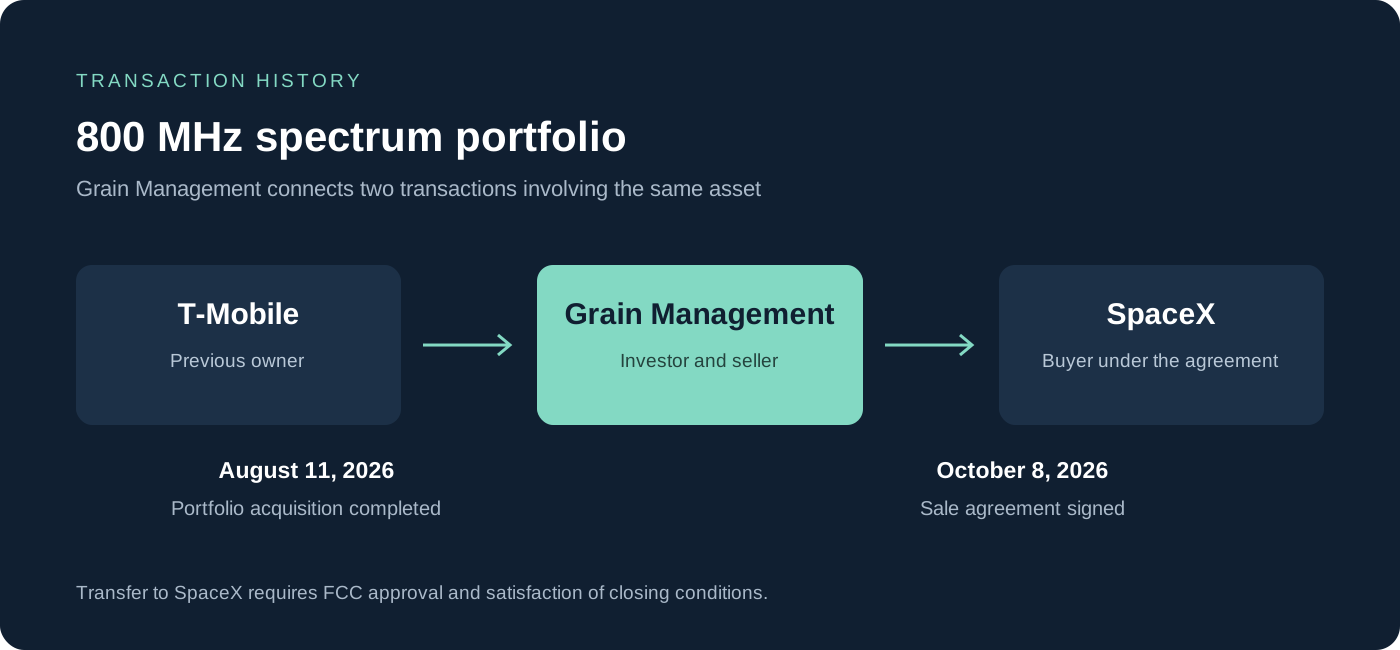
Grain had previously outlined potential uses for the band, including private wireless networks for utilities and other critical infrastructure, enterprise connectivity and satellite services for ordinary devices. The proposed sale to SpaceX links the asset to plans for a nationwide mobile network.
This adds a competitive twist: spectrum sold by T-Mobile could end up with a company that already supplies satellite connectivity to the carrier while preparing its own service for subscribers.
800 MHz: indoor coverage and the terrestrial network
Low frequencies are valued for their ability to provide broad coverage and penetrate obstacles more effectively. The FCC highlights these properties of low-band spectrum for rural areas and indoor connectivity. Users experience the difference in buildings where walls weaken signals arriving from outside.
In SpaceX’s announcement, the new band complements spectrum around 2 GHz intended to provide higher capacity. The company plans to combine its satellite system with a terrestrial network: satellites will extend access beyond conventional coverage, while ground equipment will help serve devices inside buildings and in other locations with difficult reception.
SpaceX says most existing mobile devices already support the band it is acquiring. That could make it easier to connect customers without requiring widespread phone replacements. Compatibility with the actual service still needs to be confirmed: the smartphone model, software and network access requirements will all matter.
Connection quality will also depend on base station locations, user density, equipment power and interference. Acquiring low-band spectrum provides a technical foundation for indoor coverage; the future network’s performance can be assessed after deployment and testing.
From a Starlink dish to an ordinary smartphone
Starlink has two distinct ways of serving users. For satellite broadband, a subscriber installs a dedicated antenna that connects to a satellite and provides internet access to devices through a router. The mobile service is designed to connect satellites directly to compatible phones.
The technology is called direct-to-cell. Equipment on the satellite performs some of the functions of a cellular base station. For a terrestrial carrier, the system can act as a roaming partner, giving smartphones connectivity beyond the reach of conventional cell towers.
There are technical challenges. A satellite moves relative to the user and is hundreds of kilometers away, while a phone’s antenna and transmitter power are designed for terrestrial connections. In its service description, SpaceX explains that the system required specialized antennas, custom chips and signal management algorithms.
These constraints help explain the progression from messaging to full mobile internet access. A short text requires only a small amount of data. Calls, video conversations and apps need greater network capacity and a stable connection as both satellites and users move.
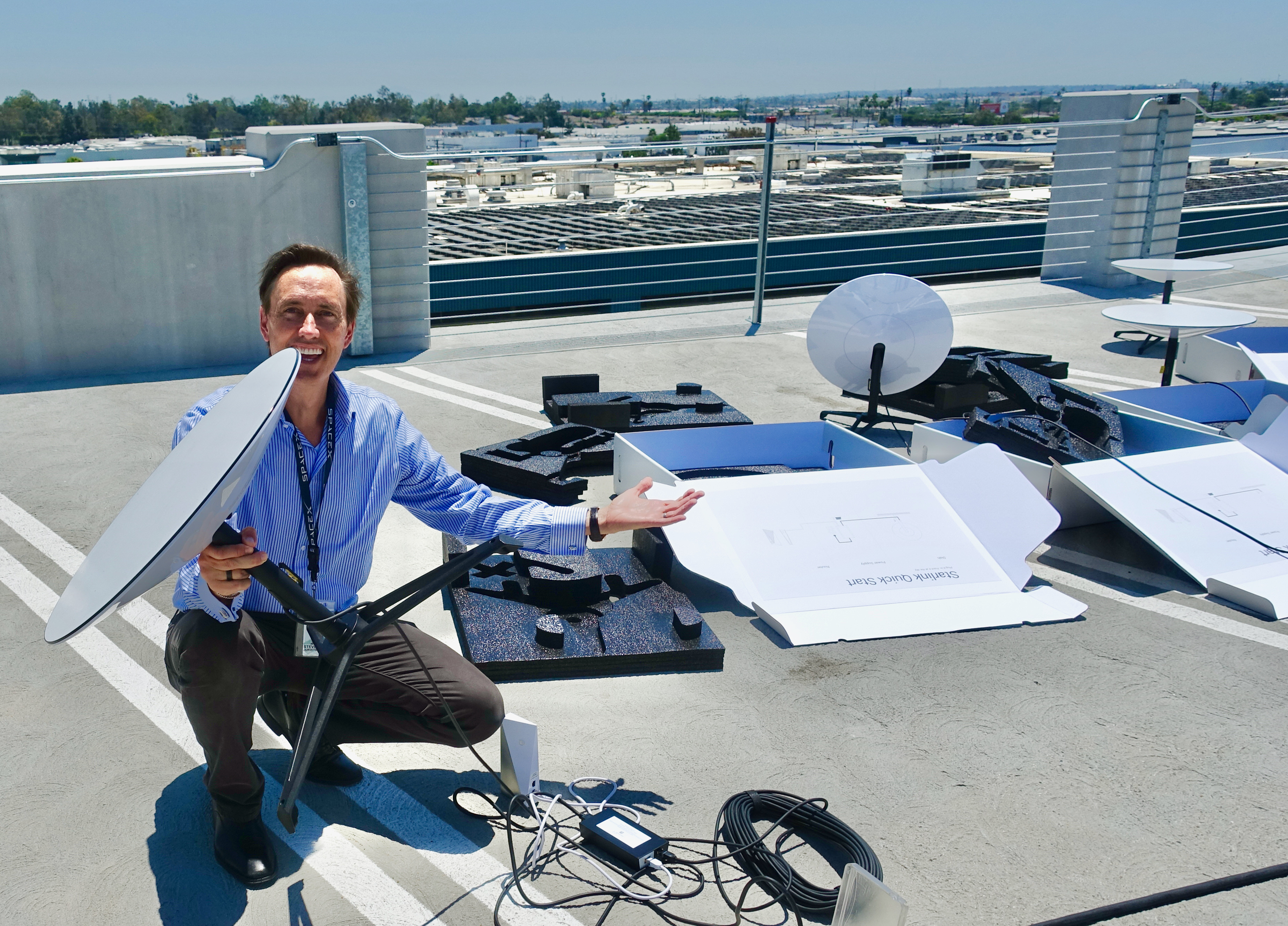
Starlink user terminals. Archive photograph of satellite broadband equipment; direct-to-cell is designed to connect smartphones without this type of antenna. Photo: Steve Jurvetson · CC BY 2.0.
The T-Mobile partnership: Starlink’s first steps in mobile connectivity
SpaceX and T-Mobile announced plans to connect ordinary phones to satellites on August 25, 2022, under the Coverage Above and Beyond initiative. The aim was to extend connectivity to areas beyond terrestrial tower coverage, with an initial focus on messaging.
In January 2024, SpaceX began launching direct-to-cell satellites and conducted its first SMS tests using T-Mobile’s spectrum. The company described this work in Starlink’s 2024 progress report. Carrier integration, device testing and commercial approvals followed.
On July 23, 2025, T-Mobile launched T-Satellite after a testing period. The service used a network of more than 650 satellites and enabled messaging in areas without a terrestrial signal. That launch date refers to T-Mobile’s partnership service; a launch date for SpaceX’s new standalone network has not been announced.
The early rollout also extended beyond the United States. In February 2025, SpaceX reported that satellite messaging was available to One NZ customers in New Zealand and that trials were underway with carriers elsewhere. This model allows satellite infrastructure to connect with existing mobile networks.
Owning spectrum gives SpaceX more options: it can develop direct relationships with subscribers while continuing to work through partners. For established carriers, satellite service helps fill coverage gaps. A standalone Starlink Mobile service creates the possibility of competing for the same customers.
The EchoStar deal: spectrum for the next generation
SpaceX took a major step in this direction on September 8, 2025, when EchoStar announced an agreement to sell its AWS-4 and H-block licenses for approximately $17 billion. The original terms provided for up to $8.5 billion in cash and up to $8.5 billion in SpaceX stock, valued at the time of signing.
The spectrum is intended to support the next generation of direct-to-cell satellites. The agreement also included a long-term commercial partnership under which subscribers to EchoStar’s Boost Mobile brand would gain access to the new satellite service.
The transaction serves two purposes: securing spectrum for SpaceX’s own system and gaining access to an established carrier’s customers. The October agreement with Grain adds low-band spectrum for terrestrial coverage. SpaceX is assembling different parts of the spectrum to meet the planned network’s different technical needs.
FCC approval: 15,000 satellites and deployment deadlines
In its October 6, 2026 order, the FCC authorized SpaceX to launch and operate a separate mobile system of 15,000 satellites. The order specifies nine orbital shells at altitudes of approximately 326–335 km. These are the parameters of the authorized system, which still needs to be built and launched.
The regulator granted the application in part and imposed conditions on spectrum use. Half the authorized satellites must be launched, placed in their assigned orbits and operational by October 7, 2032. The deadline for the remaining satellites is October 7, 2035.
These dates establish regulatory obligations. Commercial service could begin before the system is fully deployed, provided the necessary technical and legal conditions are met. According to Via Satellite, SpaceX President and COO Gwynne Shotwell discussed beginning launches of the second generation in 2027 and providing services by the end of that year. This is management’s target; an exact launch date for the new hybrid network has not been given.
Satellite authorization and approval of the Grain license transfer are separate regulatory processes. For prospective subscribers, the next practical milestone will be the release of connection requirements, supported devices, coverage maps and pricing.
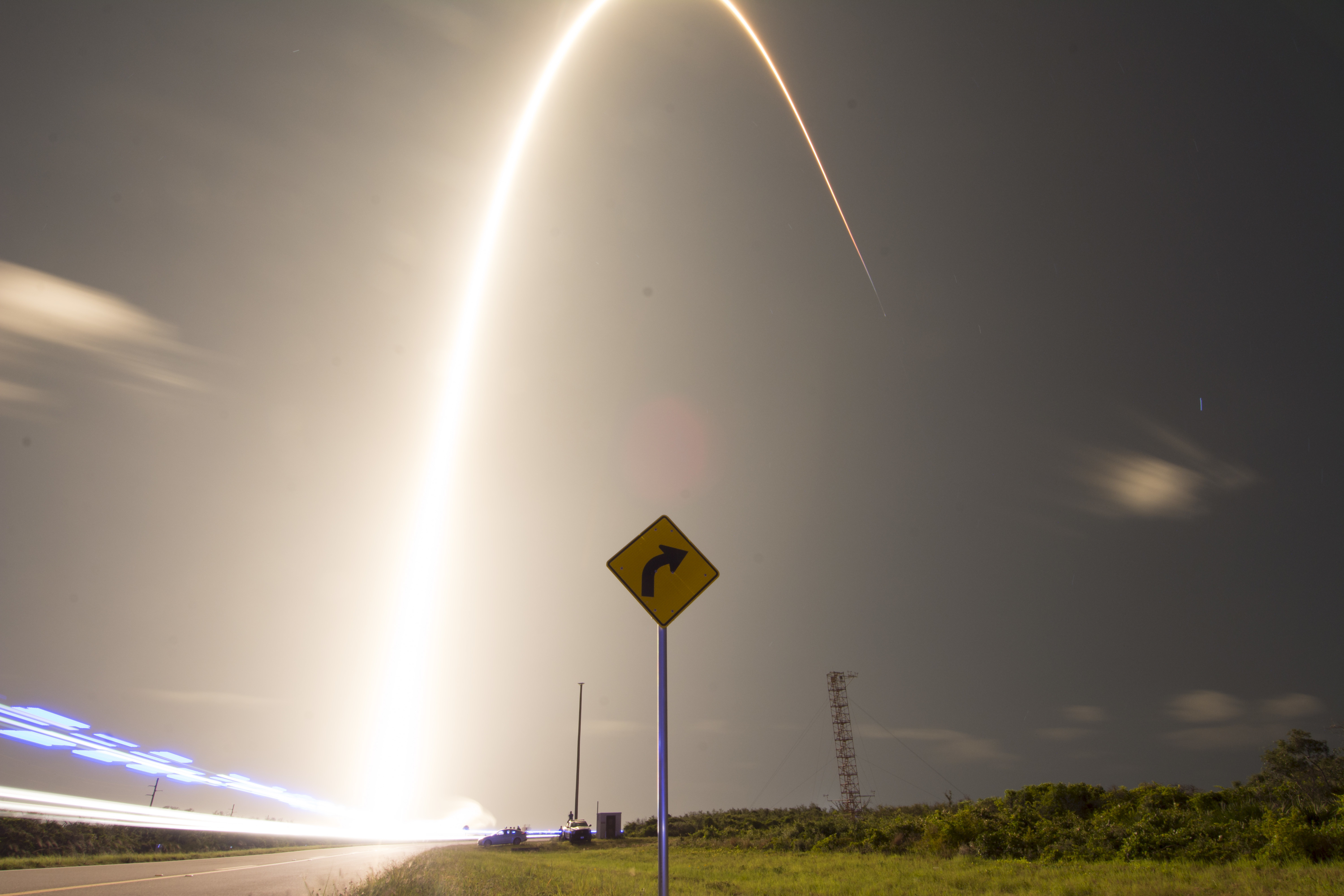
Falcon 9 launches the first batch of 60 Starlink satellites from Cape Canaveral. Photo: Alex Preisser / U.S. Air Force
Carrier stocks: investors weigh a new competitor
Shares in the largest U.S. wireless carriers fell in after-hours trading on October 8 following the deal announcement. According to Yahoo Finance’s snapshot at publication, Verizon was down nearly 7%, AT&T nearly 8%, and T-Mobile around 7%. The percentages changed during the session and represent a specific point in trading.
The reaction reflects the risk of a new competitor. If Starlink Mobile can deliver reception where subscribers routinely need it and offer an attractive price, some customers will have another reason to switch carriers. That puts pressure on incumbent operators’ customer retention, pricing and network investment.
The decline in share prices reflects a shift in investor expectations. The eventual impact on AT&T, Verizon and T-Mobile will depend on connection quality, service costs and the pace of subscriber growth.
SpaceX manufactures its own satellites and has the launch capability to deploy them. A terrestrial mobile network will also require infrastructure, customer support and day-to-day operations. Delivering those capabilities will turn the technology plan into a service customers can compare with incumbent carriers’ offerings.
A T-Mobile store sign in Apple Valley, Minnesota. Photo: Tony Webster · CC BY 2.0.
SPCX: the share price and Regolith’s entry price
SpaceX shares closed the regular session on October 8, 2026, at $160.57. The price then recovered in after-hours trading, reaching $164.30 at 7:59 p.m. EDT, up 2.32% from the regular-session close. These figures are reported by Stock Analysis. For the calculation as of October 9, we use the after-hours price of $164.30.
Regolith invested in SpaceX at the pre-IPO stage on April 1, 2022, at $15.90 per share. At a share price of $164.30, the implied gain relative to the entry price is: +933.3%.
The next milestone for Regolith investors is the expected expiry of the SpaceX pre-IPO lock-up in December.
For Starlink Mobile, the next developments to watch are the FCC’s decision on the Grain license transfer and details of the terrestrial rollout. Pricing, coverage maps and connection requirements will allow customers to compare SpaceX’s offering with existing carriers. For investors, a key measure will be the company’s ability to attract subscribers and generate revenue from the new network.
