

SpaceX and Tesla Begin Talks on a Potential Merger
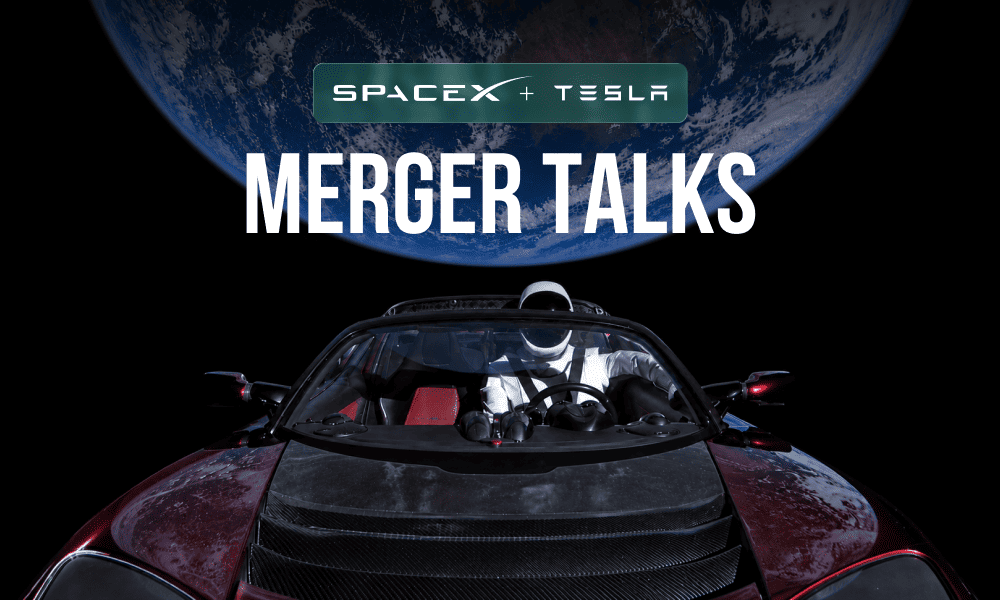
SpaceX and Tesla have begun discussing a potential merger. During SpaceX’s quarterly earnings call on October 20, Elon Musk said the boards of both companies had formed special committees. According to Musk, the committees were established at the request of shareholders, who would ultimately need to approve a deal.
Musk supports a merger, but terms have yet to be agreed. A deal would combine SpaceX’s space business, Starlink satellite connectivity and Grok AI operations with Tesla’s vehicle manufacturing, energy storage and robotics businesses. The group would bring together computing infrastructure and the products it is being built to support, including Optimus robots.
Talks Without Musk
The committees consist of independent directors. Musk is not taking part in their discussions: he leads both companies and holds substantial stakes in each. His interests as a SpaceX shareholder could differ from his interests as a Tesla shareholder, particularly when it comes to valuing each business.
The formation of the committees moves the merger idea into formal discussions. Musk nevertheless cautioned against assuming a combination is inevitable: the parties have not agreed on terms and may never reach an agreement.
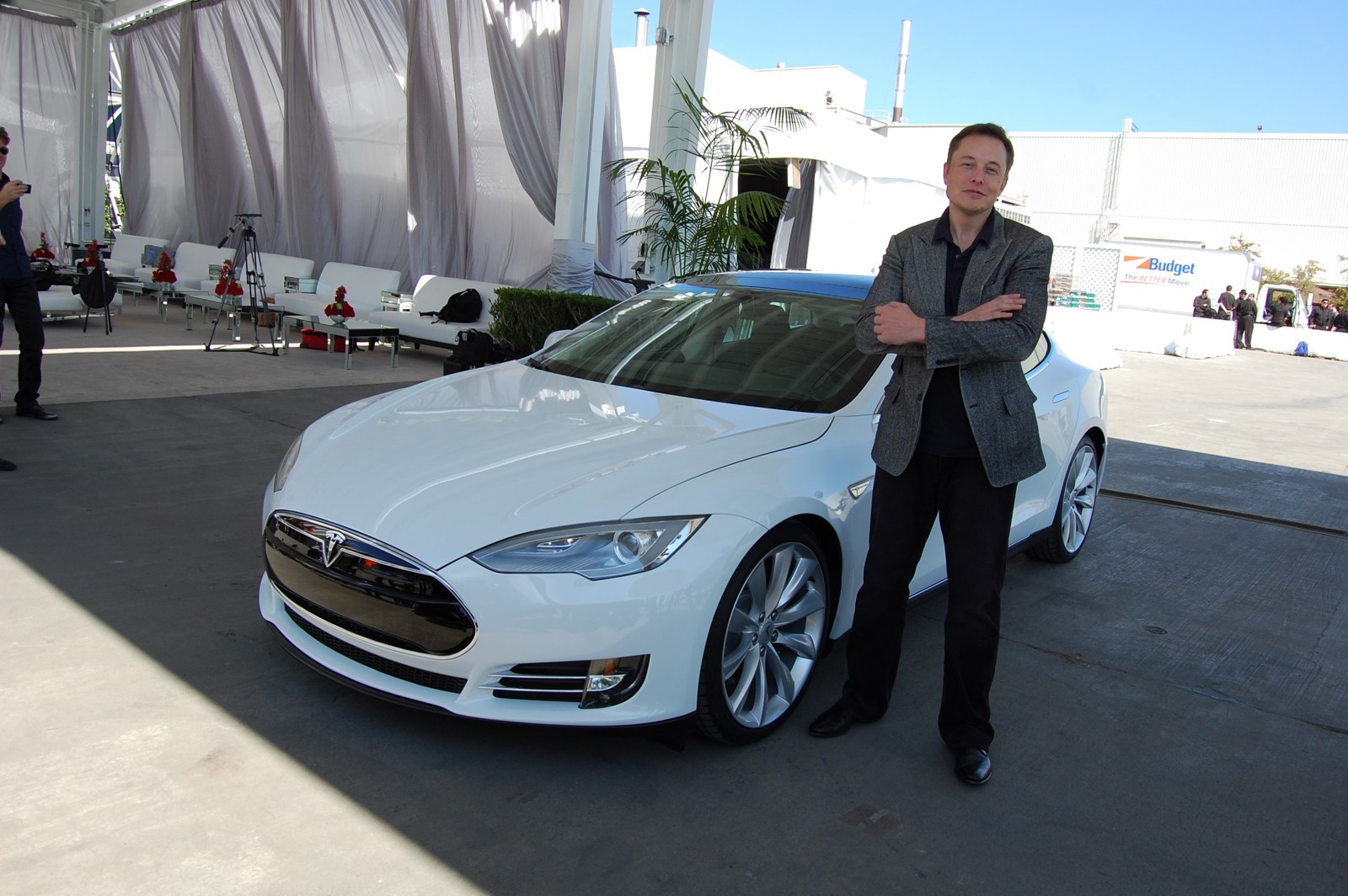
Elon Musk at the Tesla factory in Fremont, California, October 1, 2011. Archival photo: Maurizio Pesce / Wikimedia Commons · CC BY 2.0.
Existing Business Ties
SpaceX enters the merger discussions with several major businesses. Its rocket operations provide launches for commercial and government customers. Starlink sells satellite internet access to consumers, businesses and government organizations. Its AI business develops Grok models, applications and computing infrastructure.
Grok developer xAI became part of SpaceX on February 2, 2026. A potential combination with Tesla would therefore include this business as well.
Tesla already owns SpaceX shares. In its annual meeting materials, the company disclosed that it completed an investment of approximately $2 billion on March 12. The funds were originally earmarked for xAI, but following its acquisition, Tesla’s investment rights were converted into the right to acquire SpaceX shares.
The companies also supply products to one another. Tesla’s filings disclose sales of Megapack energy storage systems to xAI and vehicles to SpaceX. These ties help explain the interest in a merger, although joint projects can also develop while the companies remain separately owned.
SpaceX Reports Record Revenue
SpaceX’s third-quarter revenue rose 161% to $14.6 billion. Net income reached $4.4 billion, compared with a $1.1 billion loss a year earlier. Operating income was $2.8 billion.
Super Intelligence, the segment covering AI services and infrastructure, became the largest business by revenue, generating $7.56 billion. Growth was driven by new cloud contracts, the expansion of Grok and the acquisition of Cursor, a developer of AI coding tools.
The satellite connectivity segment generated $5.25 billion in revenue and $2.37 billion in operating income. Starlink had 13.6 million consumer subscribers at the end of September. The space segment contributed another $1.77 billion in revenue, while its operating result remained slightly negative.
Expansion requires substantial investment. SpaceX’s capital expenditures reached $19.6 billion for the quarter, with most directed toward AI infrastructure. For investors, the relationship matters: rising revenue and earnings are accompanied by an even larger buildout of computing capacity.
Starlink Plans a Mobile Network
Alongside satellite internet, SpaceX is developing Starlink Mobile. In October, it agreed to acquire spectrum licenses in the 800 MHz band. These would support a terrestrial network designed to complement satellite connectivity, including coverage inside buildings.
In its quarterly report, the company said it expected the spectrum acquisition to close in the first half of 2027, subject to the necessary approvals. The move would allow SpaceX to broaden its customer base and compete for subscribers in the mobile market.
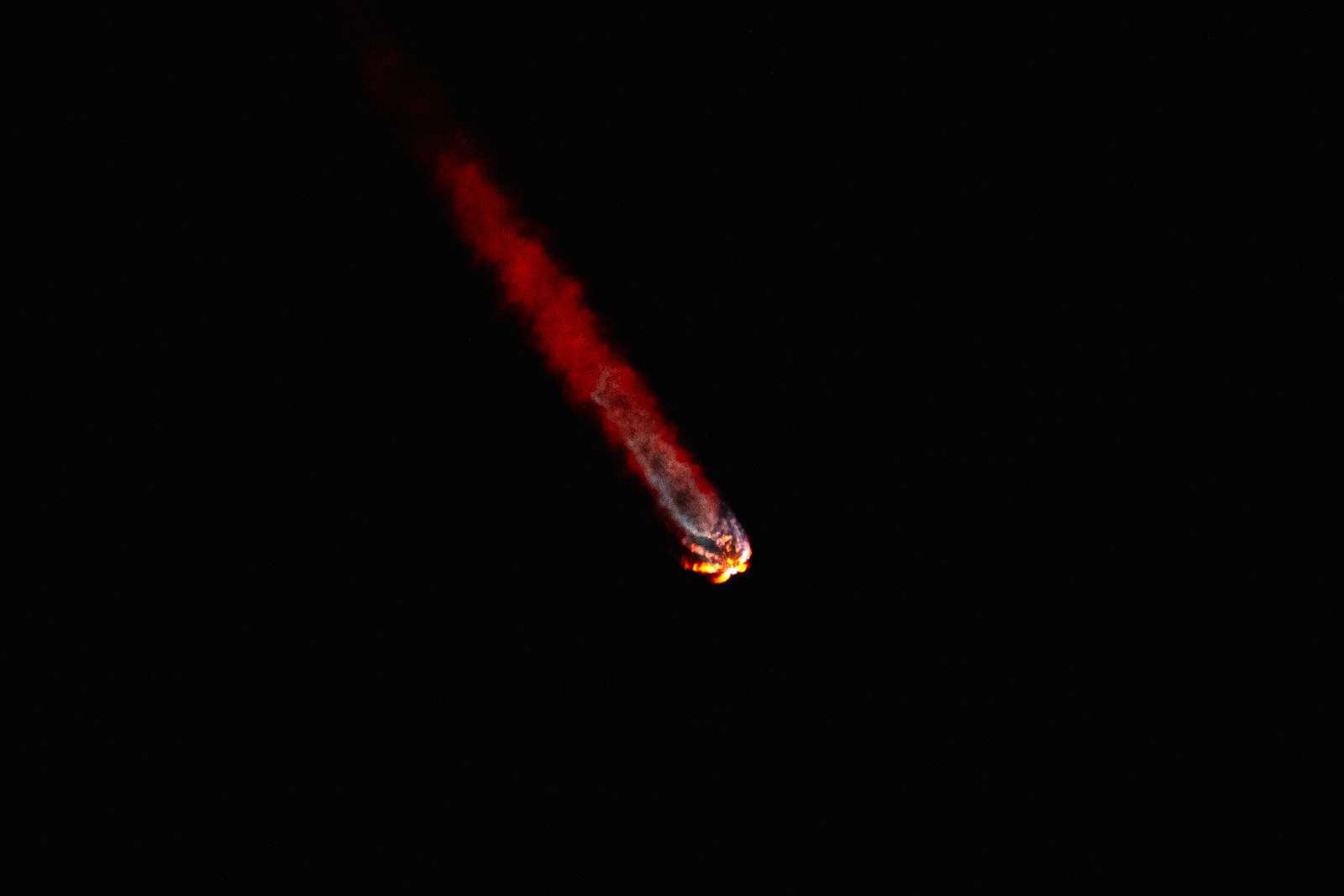
A Falcon 9 launch carrying Starlink satellites from LC-39A in Florida. Archival photo: Joshua Conti / U.S. Space Force · Public domain (U.S.).
Tesla Steps Up Spending
Tesla reported its results on October 21. Quarterly revenue was $28.05 billion, almost unchanged from a year earlier. Net income attributable to common shareholders fell 43% to $787 million. Operating income declined 56% to $718 million.
Automotive remains its largest source of revenue, generating $20.56 billion. Energy generation and storage contributed $2.88 billion, while services and other activities brought in $4.61 billion. Operating expenses rose 39%, and capital expenditures more than doubled to $4.73 billion.
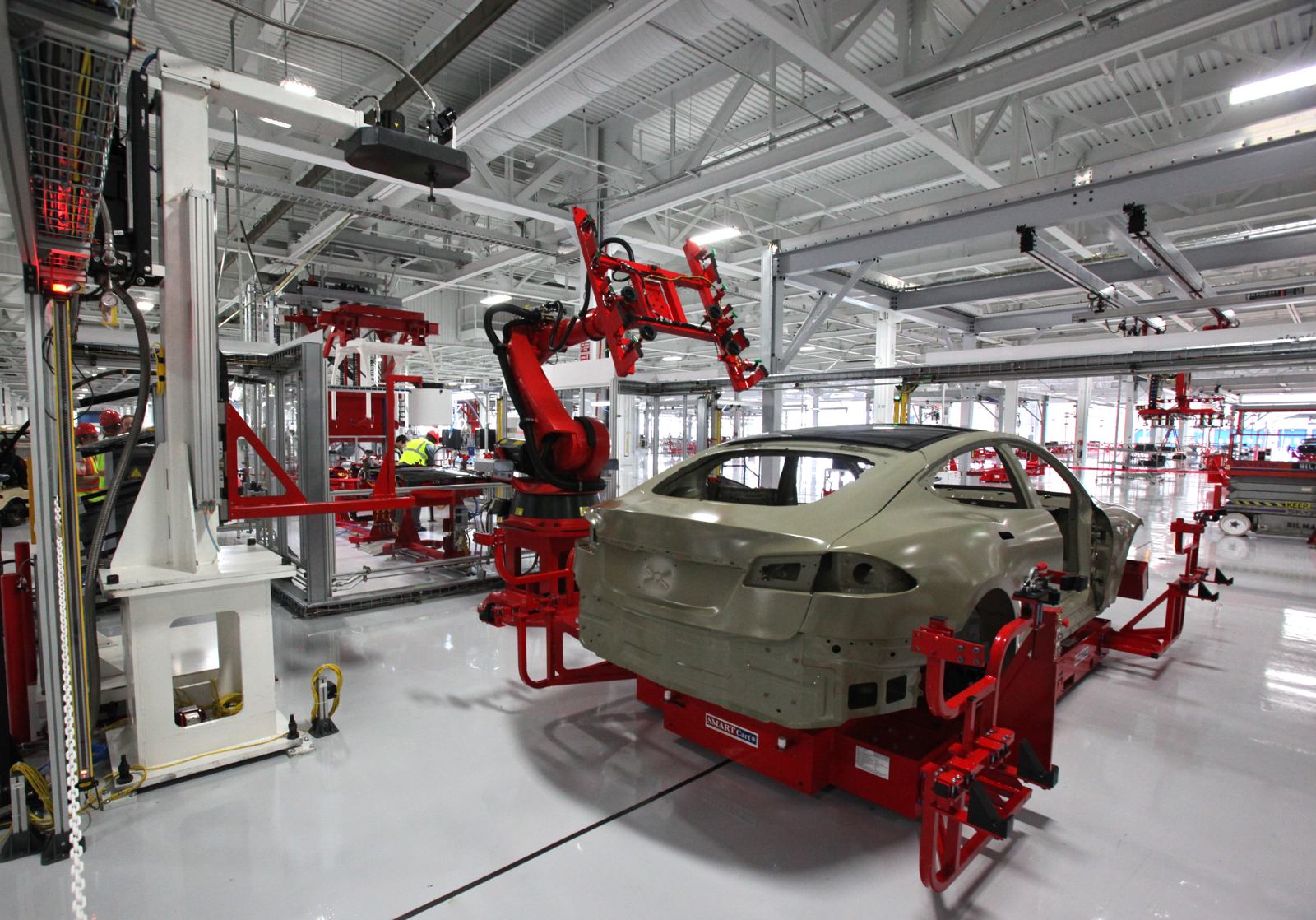
A robotic Tesla Model S production line in Fremont. Archival photo: Steve Jurvetson / Wikimedia Commons · CC BY 2.0.
Betting on Cybercab and Optimus
In its report, Tesla said it began using Cybercab vehicles in its Robotaxi service in Austin on September 3. By the end of the quarter, the service’s cumulative driverless mileage had approached 2 million miles. Optimus production started in Fremont, with the company describing it as an early production ramp.
These projects help explain why Musk frames a merger primarily around AI. Tesla develops vehicles and robots that need algorithms, computing power and chips. SpaceX has AI models and is expanding the infrastructure needed to train and run them. In Musk’s view, a combination would make it easier to develop these technologies jointly.
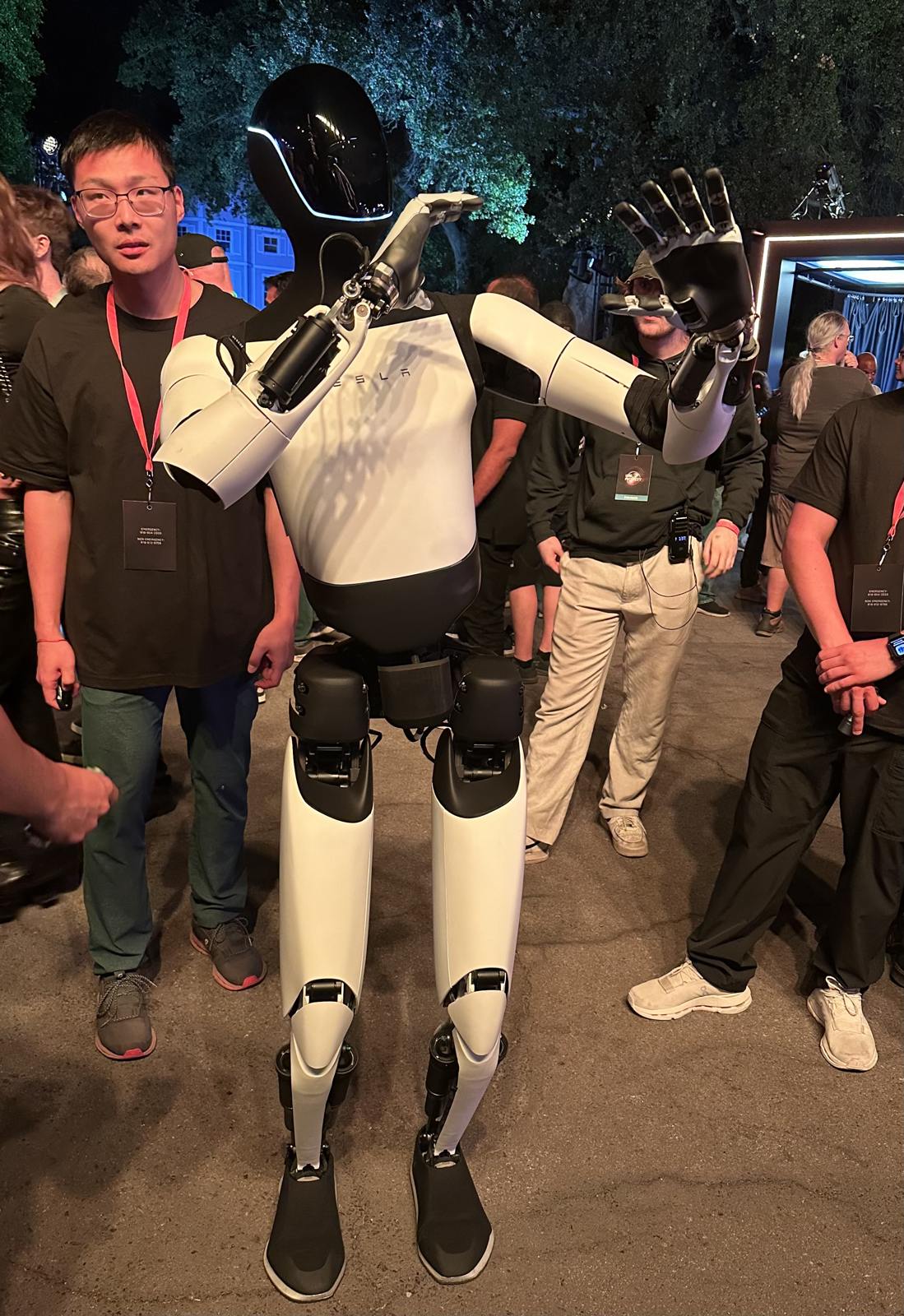
Tesla Optimus at the Robotaxi unveiling on the Warner Bros. lot, October 10, 2024. Archival photo: Steve Jurvetson / Wikimedia Commons · CC BY 2.0.
Joint Chipmaking Plans
One joint project already has a name: Terafab. SpaceX and Tesla plan to bring together logic chip production, memory manufacturing and advanced semiconductor packaging. The approach would allow them to develop components tailored to the needs of both businesses.
The project’s website lists chips for Tesla’s FSD driver-assistance system, Optimus robots and space-based computing. In-house production would give the companies greater control over supply, as AI expansion depends on access to hardware as well as software.
During the October earnings call, Musk targeted May–June 2027 for the first test chip. He sees volume production as possible in the second half of 2028, describing these timelines as highly ambitious. Terafab remains a project under development, requiring equipment, specialists and substantial investment.
Deal Terms for Shareholders
A potential merger would change the mix of businesses owned by investors in each company. A combination would give Tesla shareholders exposure to space launches and satellite connectivity, while SpaceX shareholders would gain exposure to vehicles, robotics and energy. Their respective stakes would depend on the companies’ valuations and the form of consideration.
If the companies propose a share exchange, the exchange ratio would matter: how many shares in the combined business an investor would receive for each Tesla or SpaceX share. That ratio would determine the investor’s ownership stake after the deal. No agreed exchange terms have been announced.
Joint development could reduce duplicated spending and accelerate product launches. The combined group would also take on commitments across several capital-intensive programs. Shareholders would therefore need to assess both the technological benefits and future spending on rockets, data centers, robots and chip manufacturing.
SpaceX Shares After Earnings
On October 21, the first regular trading session after the results were released, SpaceX shares rose approximately 7.8% to close at $159.31. The market’s reaction followed both a strong quarterly earnings report and news of a possible combination with Tesla.
Regolith invested in SpaceX at the pre-IPO stage in 2022 at $15.90 per share. Based on the October 21 closing price, the calculated gain relative to that entry price is 901.95%. The share price is approximately 10.02 times the entry price.
To assess a potential merger, investors need the terms proposed by the independent committees. The valuation of each company, the share exchange arrangements and the allocation of capital across projects will show how much of the combined business existing shareholders would own and which plans they would be funding.
