

SpaceX to Test Satellite Links for NASA’s Moon Base
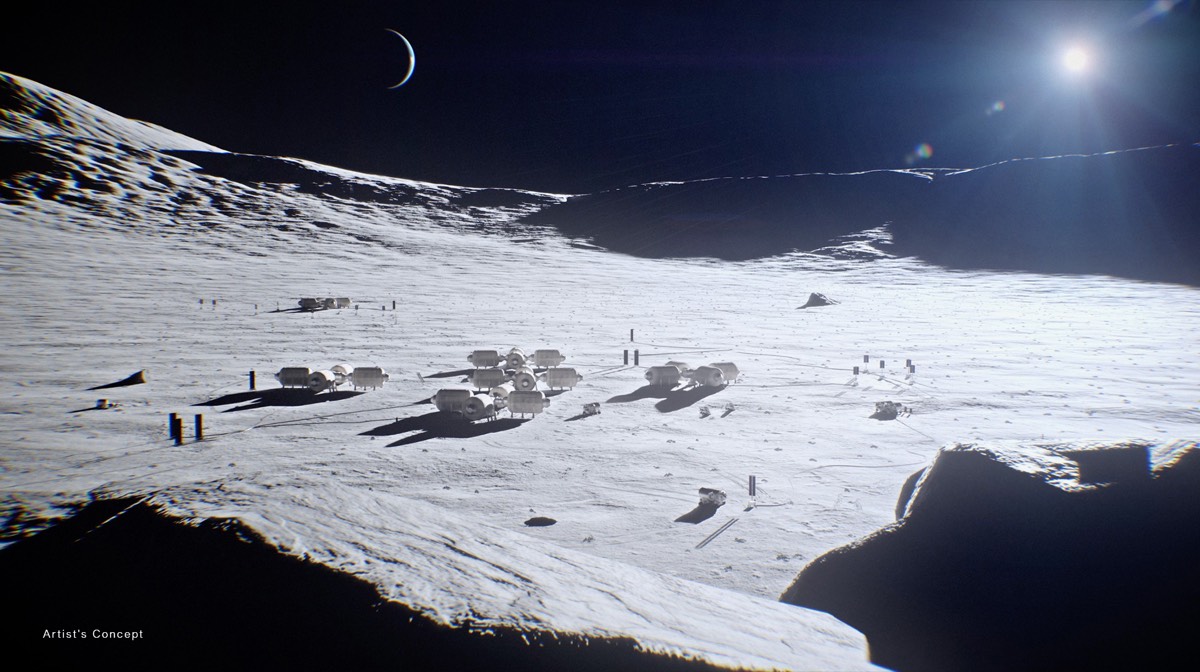
An artist’s concept of a future Moon base. Illustration: NASA.
When a rover descends into a crater near the Moon’s south pole, it can lose its direct link to Earth. That limits where a rover can go on a short mission. At a future base, astronauts and machines working across several sites will need a way to stay connected even when Earth is out of sight.
On November 7, NASA announced that it had selected SpaceX to test satellite communications near the Moon. The Starship launch is targeted for 2028. That same year, NASA plans to send its PROMISE rover to the lunar south pole to look for ice beneath the surface. The agency is also studying whether that same lunar soil could be used to build parts of the base.
SpaceX’s assignment
At the lunar south pole, Earth sits low on the horizon. It may be visible from a ridge, yet the walls of a nearby crater can block the signal from its floor. A relay satellite can get around that obstacle. When both the rover and Earth have a clear line of sight to the satellite, mission control can send commands and receive images and instrument data through it.
SpaceX will launch the satellites aboard Starship under a separate task order within its existing lunar logistics contract. NASA plans to use the results to design a network connecting the base, astronaut crews and mission control. The agency has given 2028 as the target year without announcing a specific launch date or saying that these satellites will serve PROMISE.

Shackleton crater near the Moon’s south pole. Visualization based on data from the Lunar Reconnaissance Orbiter: NASA.
NASA is also preparing communications and power equipment for the surface. For its small miniCAST tower, the agency has commissioned components including solar panels, batteries and wireless power transfer equipment. The system will first be assembled and tested on Earth. The satellites provide a way to transmit data; the surface instruments and antennas also need a reliable source of power.
Two roles for Starship
Starship is the name of both the spacecraft and the full launch system. The Super Heavy booster lifts the spacecraft off Earth, and after the stages separate, Starship continues under its own power. For the communications test, NASA needs a launch that can deliver satellites to the region around the Moon. The agency has not announced a lunar landing as part of that assignment.
For crewed Artemis missions, SpaceX is developing a separate version of the spacecraft, the Starship Human Landing System, or HLS. Its job is to carry astronauts to the lunar surface and return them to the Orion spacecraft. Orion and its crew will launch from Earth on NASA’s Space Launch System rocket.
Under the plan NASA outlined in October, tanker spacecraft will first transfer propellant to a depot in Earth orbit. The depot will then fuel the lander. Once refueled, Starship will dock with Orion in Earth orbit, and the two spacecraft will travel to the Moon together. Two astronauts will descend to the surface aboard Starship. The crew will return to Earth aboard Orion.
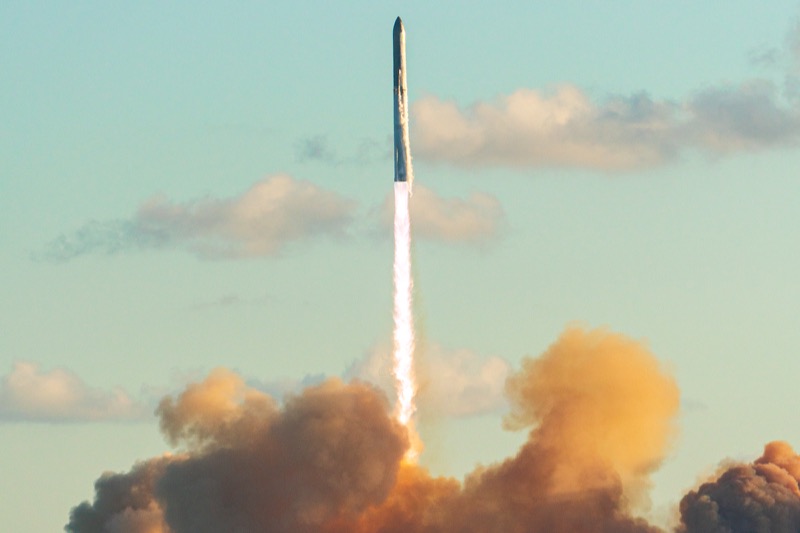
Starship lifts off from Starbase on its 11th test flight. Photo: Shujianyang / Wikimedia Commons. Cropped. CC BY-SA 4.0.
What still needs testing
In March 2024, during Starship’s third test flight, SpaceX carried out a propellant transfer between tanks inside a single spacecraft. A lunar mission requires transferring propellant between separate spacecraft after they rendezvous and dock in orbit. NASA plans to test that process during an uncrewed demonstration of the lunar lander before it carries astronauts.
Each assignment has its own test of success. For the communications demonstration, SpaceX needs to deliver the satellites and NASA needs to see how they relay data. For a crewed landing, the lander must also demonstrate that it can refuel, take astronauts to the surface and bring them back to orbit. A successful satellite launch alone would not establish that Starship is ready for a crewed landing.
A rover to look for ice
Sunlight never reaches the floor of some craters near the lunar south pole. Water ice may have survived in those cold spots. If crews can eventually extract and purify it, they could get some of their water on the Moon. First, scientists need to find out where the ice is, how far down it lies and how much of it is mixed into the soil.
NASA is targeting late 2028 for the PROMISE launch, with an 18-month primary mission. Engineers at NASA’s Jet Propulsion Laboratory are building the rover using components and test hardware from the Curiosity and Perseverance Mars rover programs. A radioisotope generator will supply electricity during the lunar night and in areas that never receive sunlight.
PROMISE will drill up to one meter below the surface and bring up material in 10-centimeter increments. That will let scientists study how the soil changes with depth. Some instruments will look for signs of ice, while others will analyze the samples’ composition. The results can guide further exploration. The mission itself will not extract water for use.
NASA has tasked Blue Origin with landing and deploying the rover using its Mark 1 lander. The base award is worth $94 million, with an additional performance-based option worth up to $140 million. SpaceX has a separate assignment to launch the communications satellites. NASA did not disclose the value of that task order in its announcement.
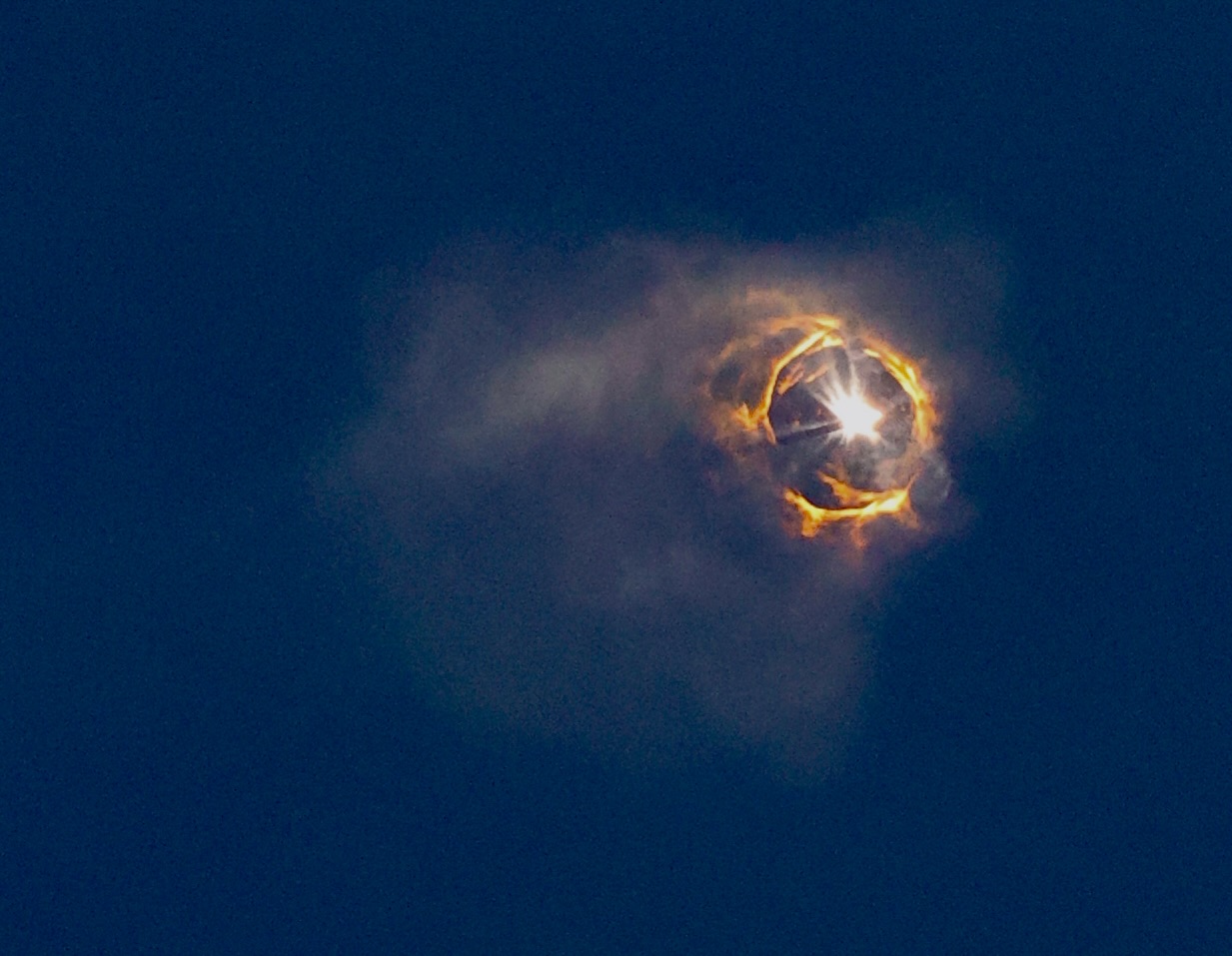
Starship during hot staging on its fifth test flight, October 13, 2024. Photo: Steve Jurvetson / Flickr. CC BY 2.0.
Choosing a site for the base
A good place to look for ice may be a poor place to land a spacecraft or install equipment. A crater floor can be cold and dark while a nearby ridge receives more sunlight. NASA has to weigh terrain, lighting and communications coverage when choosing a site, which is why it plans to survey the region both from the surface and from above.
One of those reconnaissance missions is MoonFall. NASA plans to send four rocket-powered drones to the south pole that can hop between sites. They will photograph the terrain from above, including areas that are harder for wheeled vehicles to reach. The images can help map potential landing sites and refine routes for future expeditions.
NASA’s plan starts with robotic missions to test cargo delivery and operations near the south pole. In the 2029–2032 phase, the agency expects to begin deploying power, communications and cargo systems for longer operations. Data from the early missions will help determine where that infrastructure should go.
Building with lunar soil
Regolith is the loose layer of dust, grains and rock fragments covering the Moon. It formed over billions of years as meteorite impacts broke up rock and later impacts ground the fragments into smaller particles. It’s the material that held the Apollo astronauts’ bootprints. At the south pole, the same kind of soil will sit beneath the base and could supply some of its construction material.
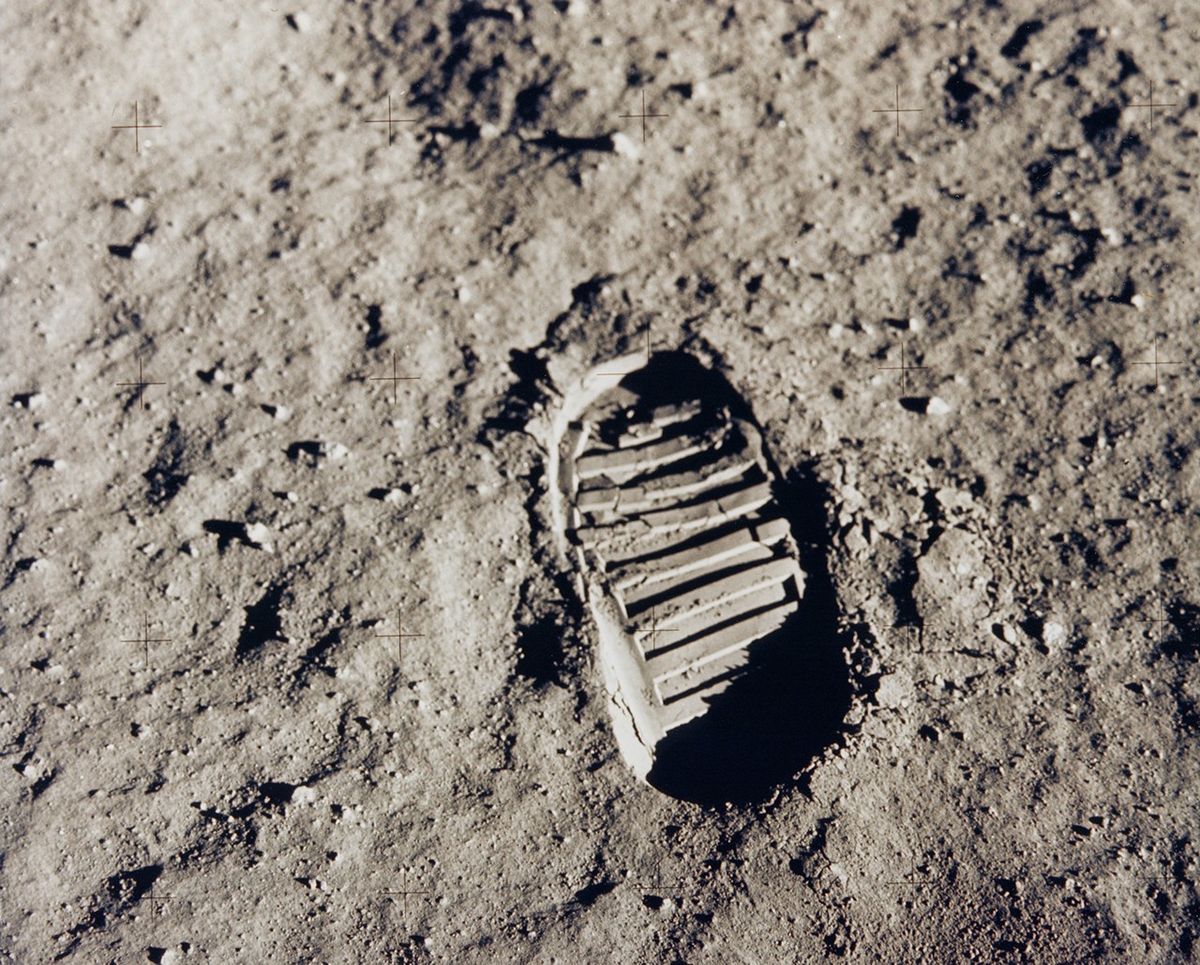
A bootprint in lunar soil during the Apollo 11 mission in 1969. Photo: NASA / Edwin “Buzz” Aldrin.
Foundations and landing pads need a lot of material. Gathering most of it on the Moon would free up cargo space for tools and components that cannot yet be made there. It would also require equipment on the surface to collect, move and process the soil.
One option is to mix regolith with a binder. The soil makes up most of the mixture, and the binder holds the particles together once it sets. The result is a hard material that could serve some of the same purposes as concrete. At Kennedy Space Center, NASA and its partners tested 3D printing with a mixture of polymer and simulated regolith in a vacuum chamber to see how the process works without air.
NASA is also looking at methods that do not require bringing a binder from Earth. One is sintering: heating the soil until the particles bond into a solid surface. As part of the MMPACT project, a team 3D-printed a small-scale landing pad in Texas. Experiments like this help researchers test how to lay the material over a larger area. The equipment and the finished surface still need to prove themselves under lunar conditions.
Foundations and landing pads
A foundation must bear the weight of equipment without settling. A landing pad must also withstand rocket exhaust. When a spacecraft lands on loose soil, its exhaust can send dust and rocks flying, reduce visibility and damage nearby equipment. A prepared landing surface would become more valuable as cargo deliveries grow more frequent.
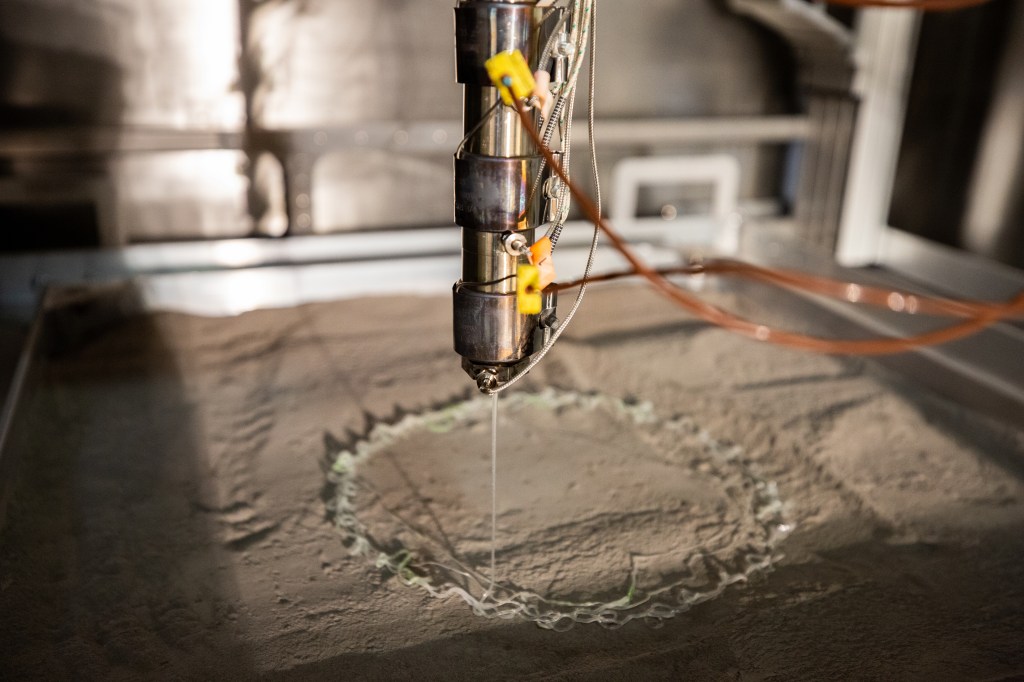
Ground test of 3D printing with simulated lunar soil in a vacuum chamber. Photo: NASA/KSC, 2022.
To test how candidate surfaces hold up under those forces, NASA exposed samples to hot rocket exhaust in the Mojave Desert. The samples included tiles made from sintered rock and carbon fiber material filled with simulated regolith. The tests compared different approaches on Earth. NASA has not announced that it will use a regolith-and-binder mixture for the base’s foundations or landing pads.
SpaceX share price
SpaceX shares (SPCX) fell 9.05% on November 5, closing at $123.62. They rebounded to $134.27 on November 6 and rose another 5.81% to close at $142.07 on November 9, the first trading session after NASA’s announcement. Over those two sessions, the shares gained 14.9% from their November 5 close, more than making up for that day’s decline.
Based on Regolith’s pre-IPO entry price of $15.90 per share, the November 9 close represents a calculated gain of 793.5%.
The rebound began before NASA’s announcement, so the share price alone cannot isolate the effect of the news. The task order gives SpaceX a chance to demonstrate that Starship can deliver satellites to the region around the Moon. If the test succeeds, NASA can use the results to design the network that will connect its future lunar base and crews to Earth.
