

Venture Capital’s Pioneers and Their First Big Wins
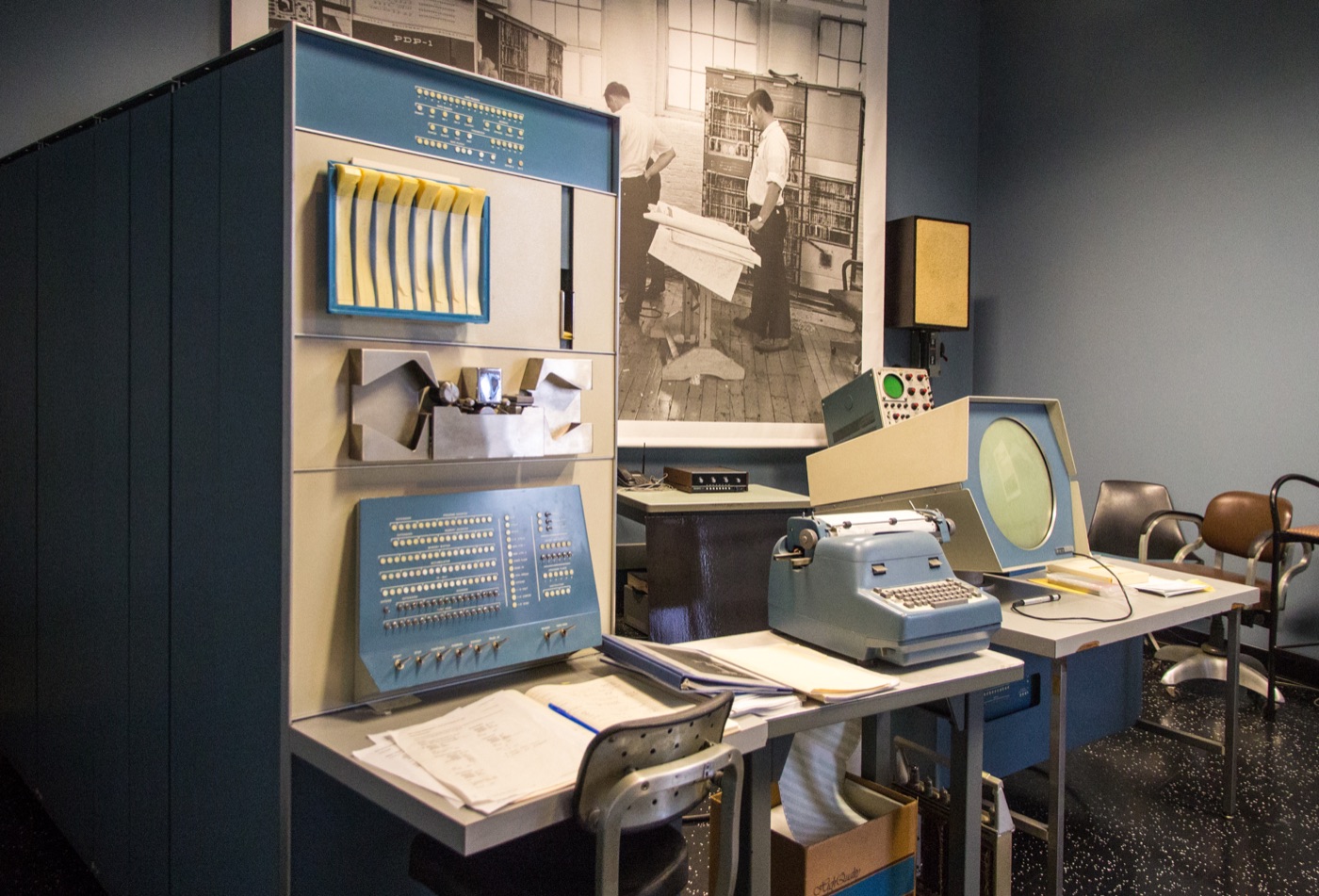
DEC PDP-1 computer at the Computer History Museum in Mountain View. Photo: Alexey Komarov / Wikimedia Commons. CC BY-SA 4.0.
In 1957, two engineers from the Massachusetts Institute of Technology were looking for funding to start a business. Ken Olsen and Harlan Anderson planned to make electronic equipment and rented space in a former textile mill. Their company, Digital Equipment Corporation, or DEC, received $70,000 in exchange for a 70% equity stake. Within a few years, it became one of the leading minicomputer manufacturers.
The DEC investment became one of venture capital’s first major successes. But the earliest funds had been established before the company was founded. Their founders came from different backgrounds: a Harvard professor, the heir to a family fortune, an investment banker and engineers. They learned to make money by backing companies that had yet to prove there was demand for their technology.
The First Venture Capital Firms
Before professional venture capital firms emerged, risky new businesses relied heavily on wealthy families. Family capital could finance ideas that struggled to qualify for conventional bank loans. Yet that support depended on the decisions of individual owners of substantial fortunes.
A turning point came in 1946. American Research and Development Corporation, known as ARD, was established in Boston, while J.H. Whitney & Company began operating in New York. Both became pioneers of the modern venture capital industry.
ARD raised capital beyond family networks and entrusted investment selection to a professional team. J.H. Whitney initially relied on its founder’s money but also helped entrepreneurs develop their businesses. Financing young companies was gradually becoming a profession in its own right.
Georges Doriot and ARD
One of the central figures in this emerging market was Georges Doriot, a professor at Harvard Business School. During World War II, he served in the U.S. Army, working on development and supply. In 1946, Doriot became president of ARD.
The firm’s founders included MIT president Karl Compton, financier Ralph Flanders, Massachusetts Investors Trust head Merrill Griswold and Harvard Business School dean Donald David. Together, they brought scientific expertise, business connections and capital to support new enterprises.
Doriot believed an investor’s work continued after the money had been transferred. ARD helped executives build their businesses and supported them through difficult periods. Its portfolio included manufacturers of analytical instruments, water purification equipment and other industrial technologies. DEC became its best-known investment.
DEC’s $355 Million Payoff
Olsen and Anderson’s initial proposal was just four pages long. They later prepared a more detailed plan, and ARD agreed to provide $70,000 in equity capital and a separate $30,000 loan. That marked the beginning of DEC in 1957.
The company initially produced electronic modules for laboratory equipment. Its first computer, the PDP-1, arrived in 1960. The PDP-8, introduced in 1965, helped DEC establish a leading position in the minicomputer market. These machines gave engineering and scientific organizations access to computers that were smaller and less expensive than large general-purpose systems.
According to research by Harvard Business School professor Tom Nicholas, the DEC shares were worth $355 million when they were distributed to ARD’s investors in 1971. Roughly 14 years had passed since the initial investment.
DEC had a substantial effect on the performance of the entire portfolio. The same research cites a historical estimate that ARD generated an annualized return of 14.7% between 1946 and 1971, compared with 7.4% excluding DEC. A single successful investment could transform the outcome of years of portfolio management. That potential attracted new entrants to venture capital.
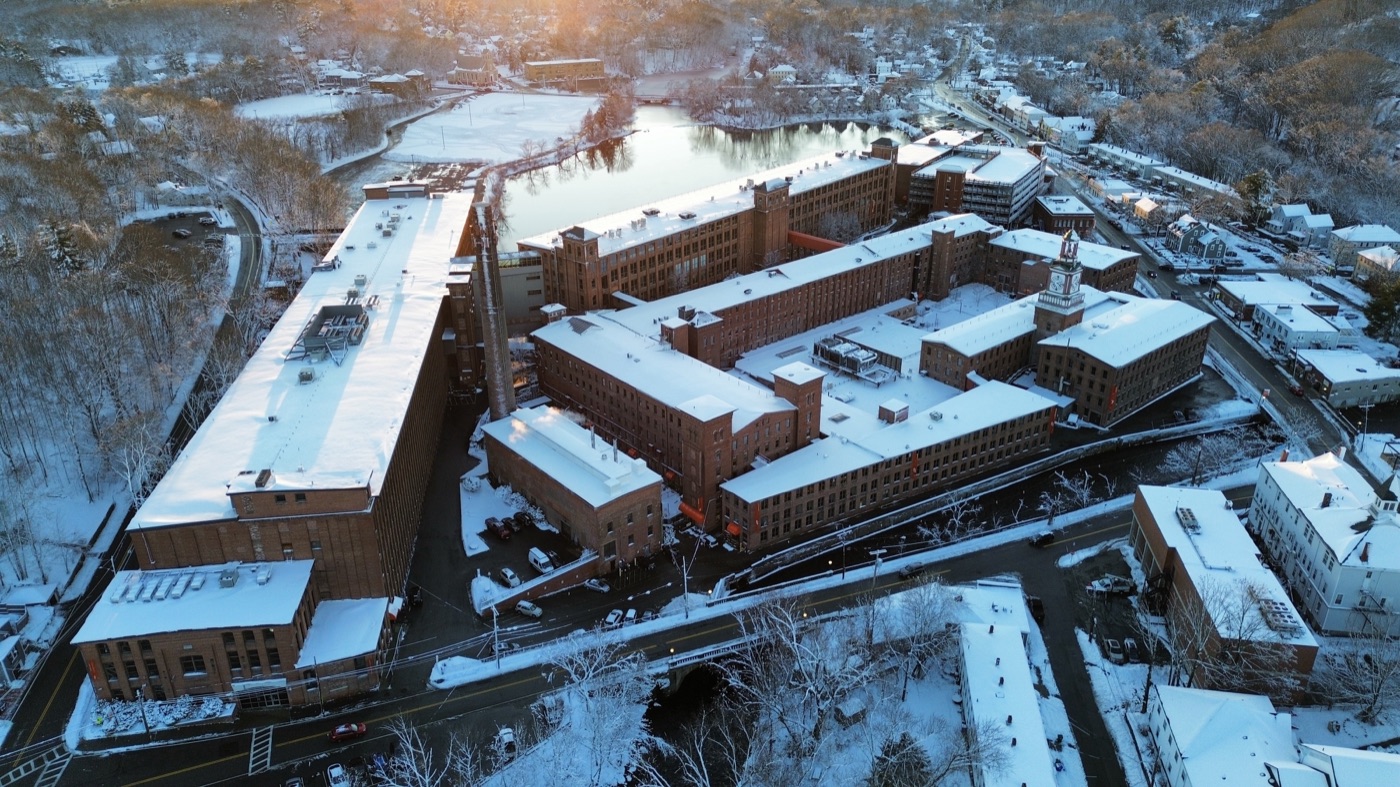
The former Assabet Woolen Mill in Maynard, where DEC began operating in 1957. Photo: Percival Kestreltail / Wikimedia Commons. CC BY-SA 4.0.
Whitney’s Bet on Orange Juice
Another pioneer, John Hay “Jock” Whitney, came from a wealthy American family. He founded J.H. Whitney & Company in 1946. One of his key partners was Benno Schmidt, who became the firm’s managing partner.
One of J.H. Whitney’s early successes was Minute Maid. The company developed frozen orange juice concentrate, which consumers could store in a freezer and mix with water at home. According to the investment firm’s own history, some of the product development even took place in the kitchen of its New York office.
Coca-Cola acquired Minute Maid in 1960. A buyer with an established sales network offered the growing company a new phase of development and gave shareholders an opportunity to exit their investment. The deal illustrates the breadth of early venture investing: new consumer products attracted investors alongside electronics.
Arthur Rock Backs the Engineers
In 1957, eight specialists left the company run by William Shockley, one of the inventors of the transistor. They included Robert Noyce and Gordon Moore. They wanted to continue working on semiconductors but needed financing to start their own business.
Arthur Rock, who worked at the New York investment bank Hayden, Stone & Co., took on the task. He secured support from industrialist Sherman Fairchild and his company, Fairchild Camera and Instrument. Fairchild Semiconductor was born.
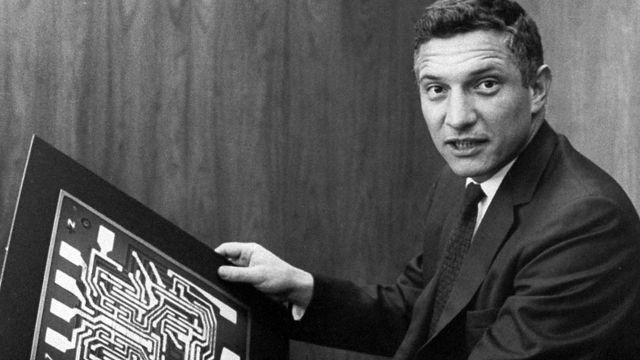
Robert Noyce, one of Fairchild Semiconductor’s founders, holding a circuit board. 1959. Photo: Intel Free Press / Wikimedia Commons. CC BY-SA 2.0.
The deal differed from a typical startup funding round today: the capital came from an industrial company. But Rock was already playing a recognizable venture capital role. He helped a strong engineering team establish its own business and connected it with a source of funding.
In 1961, Rock and Tommy Davis established the partnership Davis & Rock. According to Harvard Business School, it invested $3 million between 1961 and 1968 and returned $100 million to its investors. Success now extended to a portfolio of investments, while the experience of supporting technology companies could be applied to future deals.

Fairchild Semiconductor’s first building in Palo Alto. Photograph taken in 2006. Photo: Dicklyon / Wikimedia Commons.
Intel’s Roots in Fairchild
Fairchild became an important training ground for future Silicon Valley founders. In 1968, Noyce and Moore left to start a new company. It was incorporated as NM Electronics before taking the name Intel.
Rock again helped arrange the financing. According to Intel’s historical timeline, Noyce and Moore each invested $245,000, while Rock contributed $10,000. He raised another $2.5 million through convertible debt securities, which could be exchanged for shares. Rock became chairman of the board.
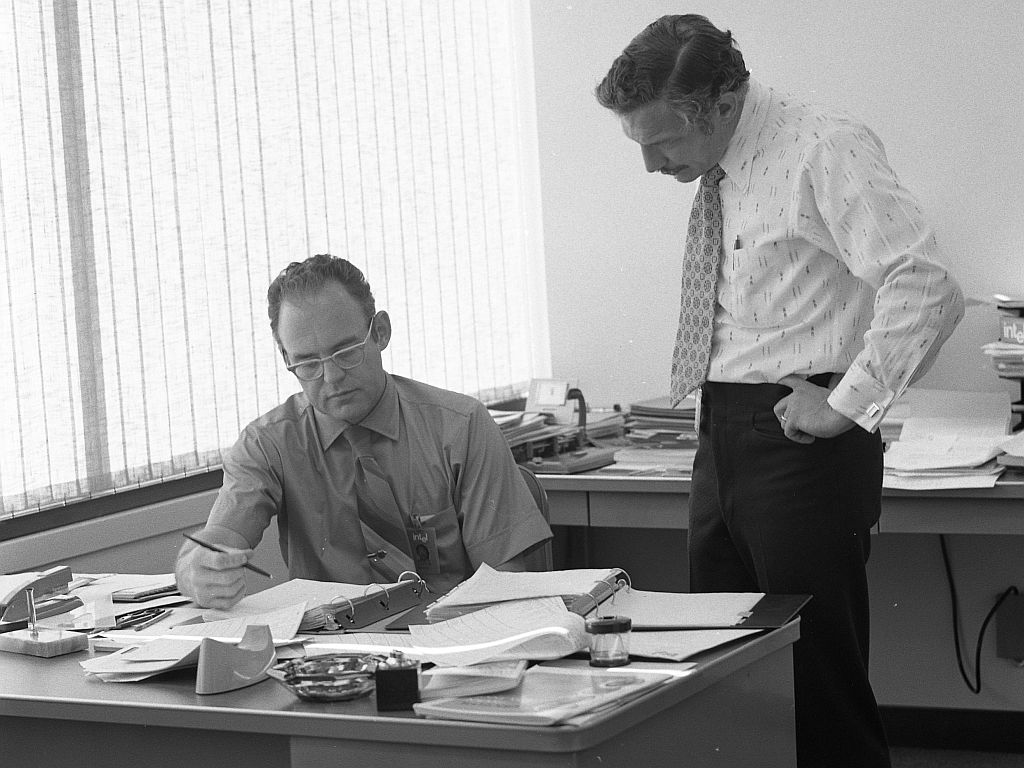
Intel founders Gordon Moore (left) and Robert Noyce in the company’s office. 1970. Photo: Intel Free Press / Wikimedia Commons. CC BY-SA 2.0.
This time, the founders approached investors with experience building a successful semiconductor business. Their investor already knew how they worked. Relationships forged around one company helped finance the next.
Intel went public in 1971, raising $6.8 million. That same year, it introduced the 4004 microprocessor. Venture funding had helped launch a business that would become one of the world’s leading semiconductor manufacturers.
Sequoia and Kleiner Perkins
Two firms that would become among the best-known names in venture capital were founded in 1972. Don Valentine established Sequoia Capital, while Eugene Kleiner and Tom Perkins founded Kleiner Perkins. Kleiner had been one of the original eight founders of Fairchild Semiconductor.
Valentine also knew the semiconductor industry well. Before starting Sequoia, he had worked at Fairchild and National Semiconductor. That experience helped him assess both the technology and the markets in which a company could grow.
Sequoia’s first $3 million fund backed companies including Atari and Apple. The firm invested in Atari in 1975, a year before Warner Communications acquired the video game maker. Atari founder Nolan Bushnell recalled how Valentine helped him navigate the finances of a fast-growing business and scrutinized the numbers at board meetings.
For founders, the emergence of such firms created more opportunities to find a partner who understood their industry. For fund investors, it offered a way to participate in the growth of several young businesses through a professional management team.
Genentech’s Biotech Breakthrough
Kleiner Perkins became one of Genentech’s earliest investors. The company was founded in 1976 by biochemist Herbert Boyer and Robert Swanson, a young Kleiner Perkins partner with an engineering background.
Swanson saw commercial potential in research on recombinant DNA, a technology that allows sections of genetic material to be combined. It could be used to develop medicines, including human insulin. Boyer brought scientific expertise, Swanson became CEO, and Tom Perkins and Eugene Kleiner joined the board.
Genentech chose to partner with Eli Lilly rather than build its own entire drug marketing operation. Lilly already had relationships with physicians and a sales infrastructure. The partnership allowed Genentech to focus on research and share the costs of commercialization.
In 1980, Genentech raised $35 million in its IPO. According to Kleiner Perkins’ history of the company, its shares climbed from the $35 offering price to $88 in less than an hour of trading. Investor interest demonstrated the stock market’s willingness to value the potential of a new field of medicine, even though drug development required time and substantial funding.
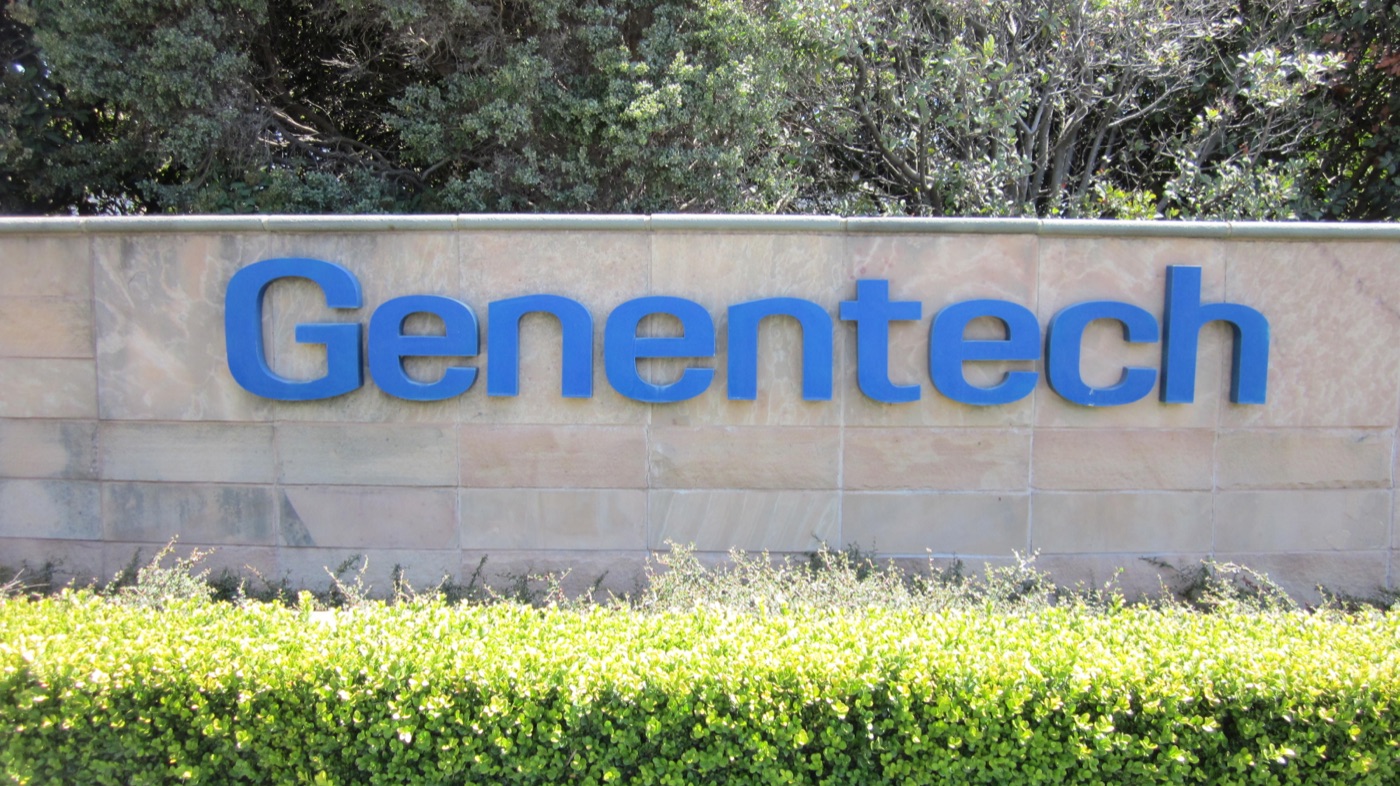
Sign outside Genentech’s headquarters in South San Francisco. Photo: © BrokenSphere / Wikimedia Commons. CC BY 3.0.
Venture Capital Becomes an Industry
By the early 1980s, entrepreneurs had access to a network of professional partners willing to finance businesses that were still taking shape. Experienced engineers started new companies, investors backed founders they already knew, and acquisitions and IPOs enabled funds to return capital to their investors. Successful deals attracted fresh money. Venture investing was evolving beyond the activities of a few wealthy families into an industry capable of supporting entire sectors, from microelectronics to biotechnology.
