
 Русский
 Marketplace Regolith
Your investment opportunities


Once Upon a Farm
Once Upon a Farm
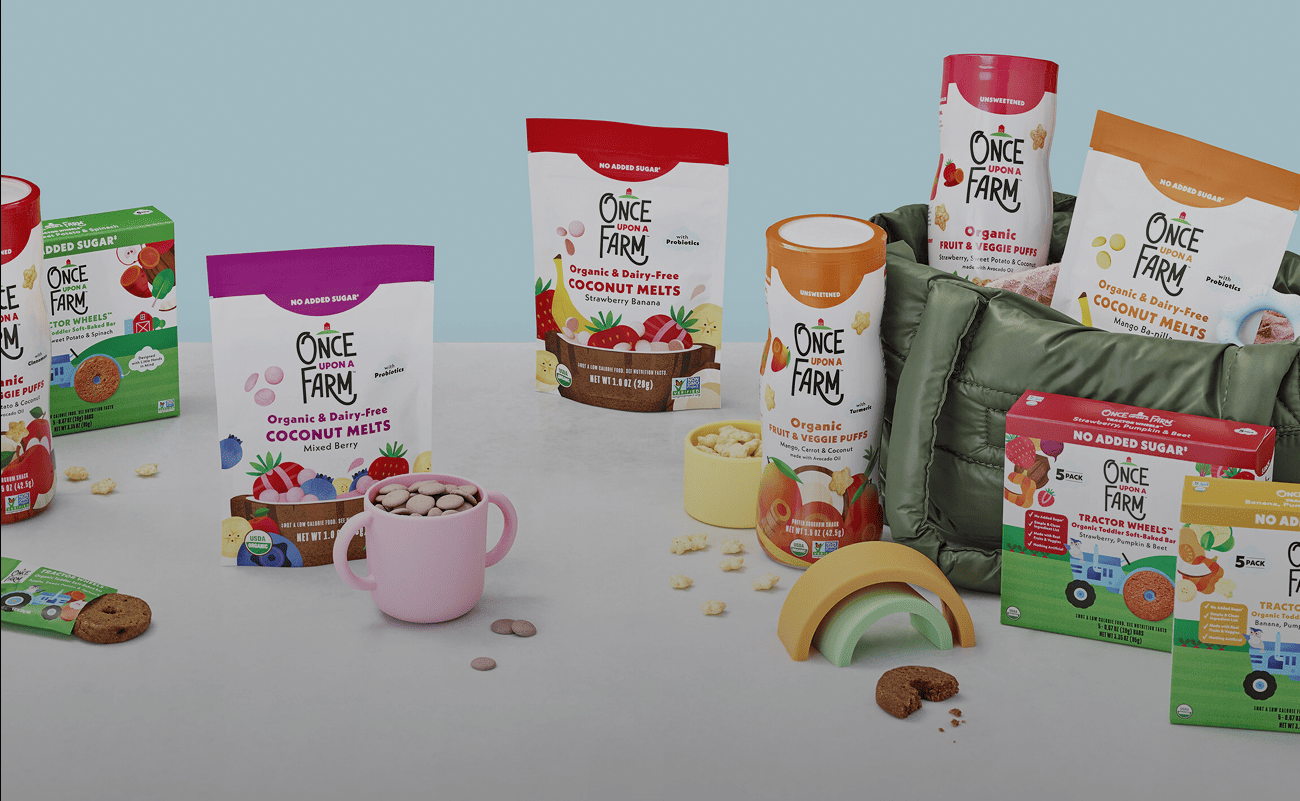
Organic baby food from the USA
Updated on 9 Feb 2026
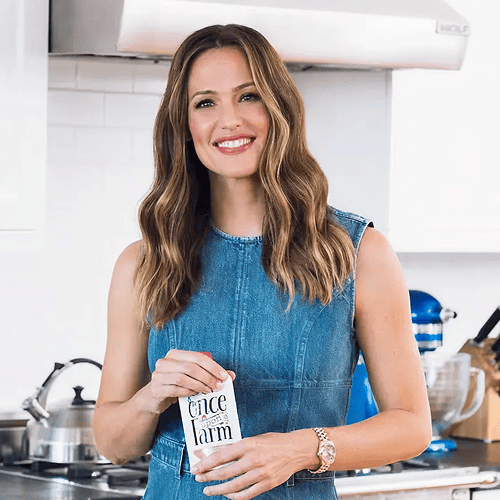
Cassandra Curtis
Co-founder & CIO
Updated on 9 Feb 2026
Why Once Upon a Farm Is a Must-Have in Your Portfolio
Once Upon a Farm is a leading organic baby food brand in the United States. The company was founded in 2015, and in 2017, actress Jennifer Garner joined as co-founder. The CEO is John Foraker, former head of Annie's Homegrown (sold to General Mills).
Financial results confirm the brand's success: trailing twelve-month revenue (through June 2025) reached $202 million, with 66% revenue growth in the first half of 2025. Compound annual growth rate since 2018 is 64.6%.
The product portfolio is diversified: 68% of revenue comes from signature pouches, 30% from snacks, and 2% from other products. The company is expanding beyond baby food, offering products for older children and adults.
Distribution covers over 3,200 stores in the U.S., with 40% of sales coming from online channels. The company has installed 2,800 branded coolers in stores, creating unique category infrastructure.
Household penetration has grown to 4.4% (from 3.1% a year earlier), indicating significant growth potential. Once Upon a Farm holds a strong position in the premium children's nutrition segment.
Participation Terms
The Once Upon a Farm IPO is one of the notable offerings in the CPG (consumer packaged goods) sector. The company plans to list on the NYSE under the ticker OFRM, with a price range of $17–19 per share and an offering size of 11 million shares, targeting up to $198 million in proceeds.
Once Upon a Farm is going public at a valuation of up to $764 million, backed by leading investment banks: Goldman Sachs, J.P. Morgan, and BofA Securities. IPO proceeds will be used to repay loans, purchase equipment, and fund business development.
Application and funding deadline: Wednesday, February 5, 6:00 PM (UAE).
Facts and Strengths
• Celebrity co-founder: Jennifer Garner is not just a brand ambassador but an active business participant. Her involvement drives media attention and consumer trust.
• Experienced leadership: CEO John Foraker previously led Annie's Homegrown and successfully sold the company to General Mills. He knows how to build and scale CPG brands.
• Explosive growth: 64.6% compound annual revenue growth since 2018. Revenue grew from $8 million to $202 million in 7 years.
• Product diversification: The company expanded from pouches (94% in 2023) to a portfolio of snacks and products for all ages (68% pouches, 30% snacks in 2025).
• Unique infrastructure: 2,800 branded coolers in stores create a barrier for competitors and increase brand visibility.
• B Corp certification: The company meets high standards of social and environmental responsibility – important for its target audience of millennial parents.
About Once Upon a Farm
Once Upon a Farm was founded in 2015 by Cassandra Curtis and Ari Raz in California. The idea came from a personal need: Cassandra couldn't find quality, nutritious baby food in stores for her daughter, so she started making it herself.
The company pioneered the refrigerated baby food category, creating the first cold-pressed pouches that retain more nutrients than traditional shelf-stable products. It was a new approach to baby food – fresh, preservative-free, and conveniently packaged.
In 2017, Jennifer Garner and John Foraker joined the company. Garner became co-founder and brand ambassador, while Foraker took on the CEO role. He had previously spent 18 years leading Annie's Homegrown before selling it to General Mills. This combination of star power and operational expertise became a growth catalyst.
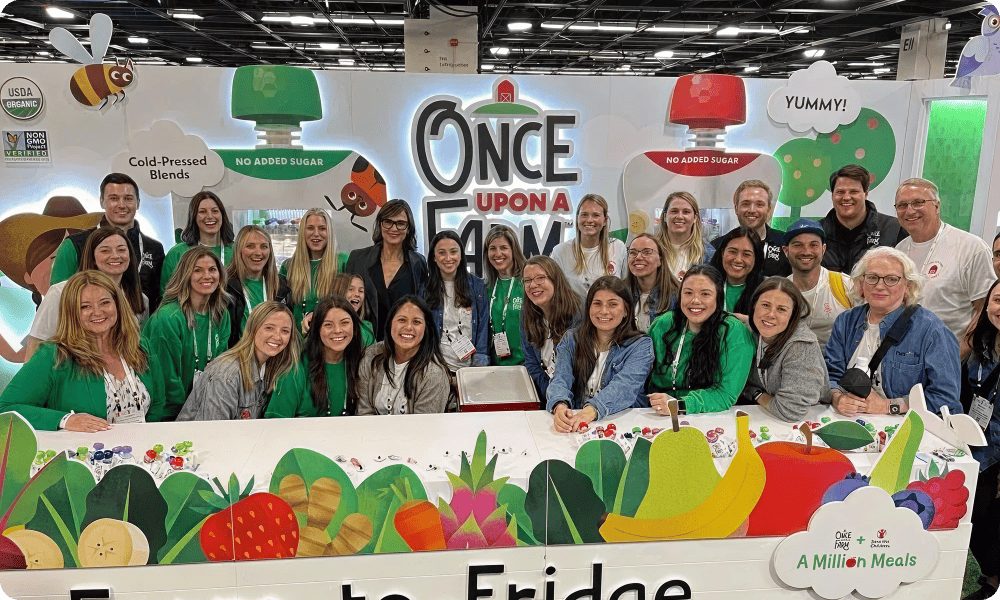
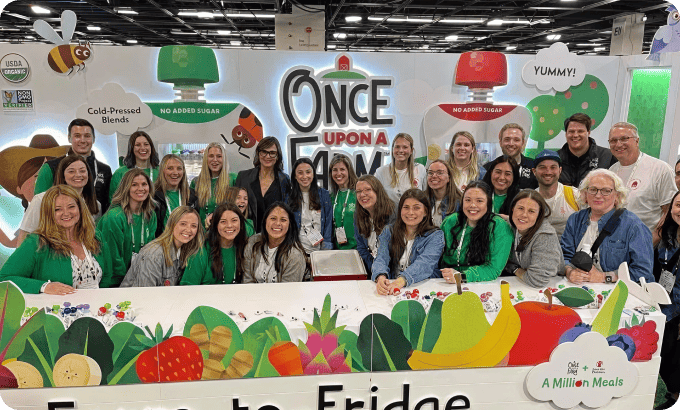
When Garner and Foraker joined, revenue was under $1 million per year. By 2020, it reached $20 million, by 2023 – $100 million, and by mid-2025 – $202 million. It's one of the fastest-growing brands in the baby food category.
The company raised investments from CAVU Venture Partners and S2G Investments – funds specializing in consumer brands. CAVU has also invested in brands like Oatly and Banza.
Today, Once Upon a Farm is sold in over 3,200 stores, including Walmart, Target, Kroger, and Whole Foods. The company is also growing online sales, which account for 40% of volume. The product line has expanded from pouches to snacks, bars, and frozen meals.
The business model is built on premium positioning: organic ingredients, refrigerated storage, and convenient formats justify a higher price point. The target audience is millennial parents willing to pay for quality and transparency.
The U.S. baby food market is valued at $8+ billion and continues to grow. Once Upon a Farm occupies a premium niche with 4.4% household penetration – significant room for growth as distribution scales.
The Once Upon a Farm IPO is an opportunity to invest in a fast-growing brand with a strong team, loyal audience, and significant growth potential in a large category.
Frequently Asked Questions (FAQ)
— What is an IPO?
An IPO (Initial Public Offering) is when a private company lists its shares on a stock exchange for the first time to raise capital from investors. From that point onward, the company’s shares can be freely bought and sold on the open market.
— Where are IPOs conducted?
IPOs take place on the world’s largest stock exchanges. In the U.S., the primary venues are the NYSE (New York Stock Exchange) and NASDAQ. Once a company goes public, its shares are freely traded on these exchanges, and the market price is established after the offering.
— What is allocation?
Allocation (from “allocation” — distribution) refers to the process of distributing resources, assets, or capital for maximum efficiency. In investing, allocation usually means distributing the available amount of shares among investors in an IPO or private placement.
— How much allocation does an investor receive?
The allocation size depends on the specific deal and typically ranges from 2% to 30% of the submitted order. In rare cases, allocation may reach up to 100%. Information about the actual IPO volume and share price we entered at becomes available roughly one day before the offering, approximately six hours prior to the trade.
Example — Bullish IPO (Aug 13, 2025):
An investor placed an order for $10,000. The allocation was 29.6%, meaning $2,960 was invested in the IPO. The remaining $7,040, including the purchase commission, was refunded to the balance and became available for withdrawal.Klarna IPO (Sept 10, 2025):
An investor placed an order for $10,000. The allocation was 14%, meaning $1,400 was invested in the IPO. The remaining $8,600, including the purchase commission, was refunded to the balance and became available for withdrawal.Figure IPO (Sept 11, 2025):
An investor placed an order for $10,000. The allocation was 16%, meaning $1,600 was invested in the IPO. The remaining $8,400, including the purchase commission, was refunded to the balance and became available for withdrawal.Gemini IPO (Sept 12, 2025):
An investor placed an order for $10,000. The allocation was 29%, meaning $2,900 was invested in the IPO. The remaining $7,100, including the purchase commission, was refunded to the balance and became available for withdrawal.Legence IPO (Sept 12, 2025):
An investor placed an order for $10,000. The allocation was 78%, meaning $7,800 was invested in the IPO. The remaining $2,200, including the purchase commission, was refunded to the balance and became available for withdrawal.Black Rock Coffee Bar IPO (Sept 12, 2025):
An investor placed an order for $10,000. The allocation was 68%, meaning $6,800 was invested in the IPO. The remaining $3,200, including the purchase commission, was refunded to the balance and became available for withdrawal.
— Why do companies go public?
To raise growth capital, increase brand visibility, and provide early investors and employees with an opportunity to sell part of their shares.
— How is participating in an IPO different from buying shares on the exchange?
When you participate in an IPO, you buy shares before they start trading publicly. This provides an opportunity to purchase at the fixed offering price but also carries the risk that the price may drop once trading begins.
— What do I get by participating in an IPO through Regolith?
You become an investor in the company at the IPO stage via our U.S. partner infrastructure. After the transaction is completed and the lock-up period expires, profits from the share sale are distributed among investors proportionally to their stake in the deal.
— What is a lock-up period and how long does it last?
A lock-up period is a timeframe set by the issuer and underwriters during which shares cannot be sold. For IPOs offered through our platform, this period is 93 days. Once it ends, the shares are sold on the exchange and proceeds are distributed among investors.
— How is participating through the platform different from buying shares independently?
To buy independently, you would need access to a U.S. broker, a significant investment amount, and approval from underwriters. The platform pools capital from investors, providing access to IPOs that are otherwise unavailable to most individuals.
— Through whom is IPO participation carried out?
We operate through a U.S.-based structure that works with a licensed broker in the U.S. Our partner selects promising IPOs and participates in the offering under its own name.
— How is the deal structured legally?
An investor signs an agreement/offer to participate in the investment product. Regolith then transfers funds to its partner entity — Wealthy Labs Limited (the provider), which enters into a forward contract with the broker and executes all operational activities. The provider delivers the financial outcome to Regolith, which then distributes proceeds among investors.
— Is there a minimum investment amount?
Yes. Each IPO has a defined minimum entry threshold, shown on the offering page. On average, Regolith provides access starting from $500.
— Do I receive shares into my personal brokerage account?
No. Shares are purchased and held in the partner’s brokerage account. After the lock-up period, the broker sells the shares and transfers proceeds for distribution among investors.
— Can shares be transferred directly to my brokerage account?
No. Participation is structured via a forward contract with the partner’s brokerage infrastructure. The deal is executed on behalf of the partner, and settlements with investors are carried out through the platform.
— How can I sell my shares after the IPO?
Sales are processed automatically: once the lock-up expires, the partner broker sells the shares on the exchange, and proceeds are distributed proportionally among investors.
— What are the risks of investing in IPOs?
IPOs are high-risk investments. While they may offer high returns, they also carry significant volatility. Share prices on the first trading day — and after the lock-up — can fluctuate sharply. There is a risk that the market price will fall below the offering price. In addition, macroeconomic and sector-specific factors can affect outcomes.
— Can I know in advance how much I will earn?
IPO returns are not guaranteed. The final result depends on the share price at the time of sale after the lock-up, overall market conditions, and the company’s performance.
— How can I verify that Regolith participates in IPOs?
We publish all available deal information in the client dashboard. Additionally, we provide an agreement disclosing the infrastructure used for transactions. Broker and partner documents are not shared, as they contain confidential data protected by contractual obligations.
Cassandra Curtis
Co-founder & CIO
Details
Ticker
OFRMExchange
NYSEIPO Range
$17–19Offering Size
~$198MCompany Valuation
~$764MShares Offered
11MUnderwriters
Goldman Sachs, J.P. Morgan, BofA Securities, William Blair, Barclays, Evercore ISI, Deutsche Bank, Oppenheimer & Co., TD CowenIPO Date
6 Feb 2026Submit by
5 Feb 2026, 6:00 PM (UAE)Terms
Deal Fee
5%Carried Interest
30%Risk potentinal
Very HighLock-up period
93 daysOnce Upon a Farm
Organic baby food from the USA
Updated on 9 Feb 2026
Cassandra Curtis
Co-founder & CIO
