

SLAT Wheel Fund: Six Profitable Months and a New Return Record
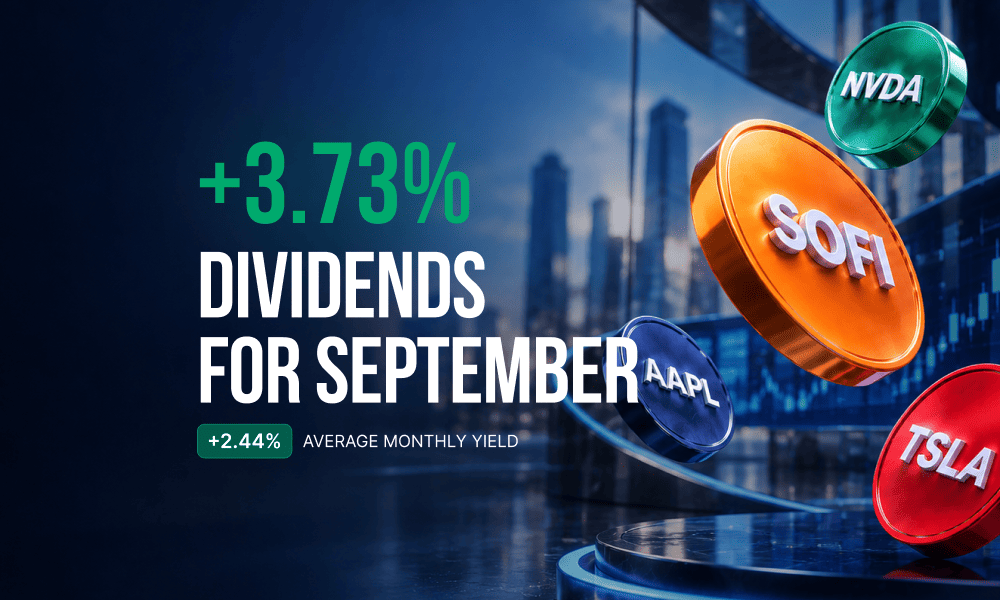
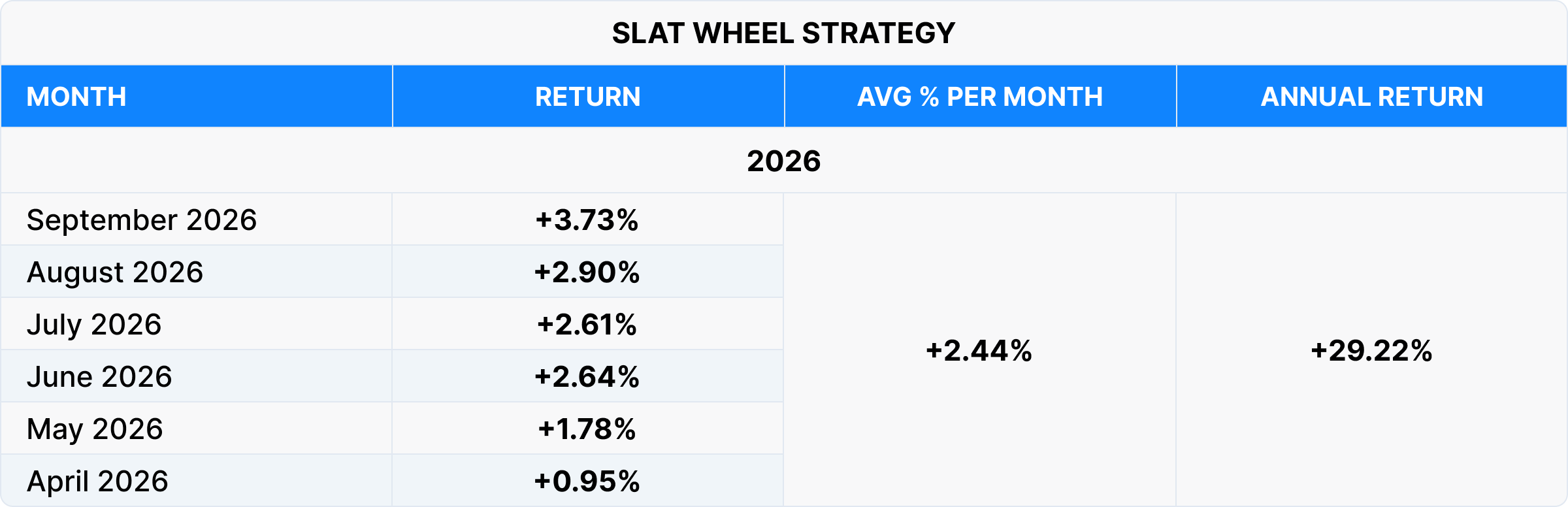
In April 2026, SLAT Fund transitioned to a new options-based Wheel strategy. Over its first six months, the fund finished every month in positive territory, while returns for investors who entered after the strategy change increased from +0.95% in April to +3.73% in September.
From April through September, monthly returns totaled +14.61% without compounding, while the average monthly return reached +2.44%.
How the SLAT Strategy Changed
The transition to Wheel took place in April 2026 and also marked a change in fund management. The strategy is now managed by Ilya Kurishko, a trader with 15 years of experience in financial markets and an ACCA qualification. Trading is executed through Interactive Brokers.
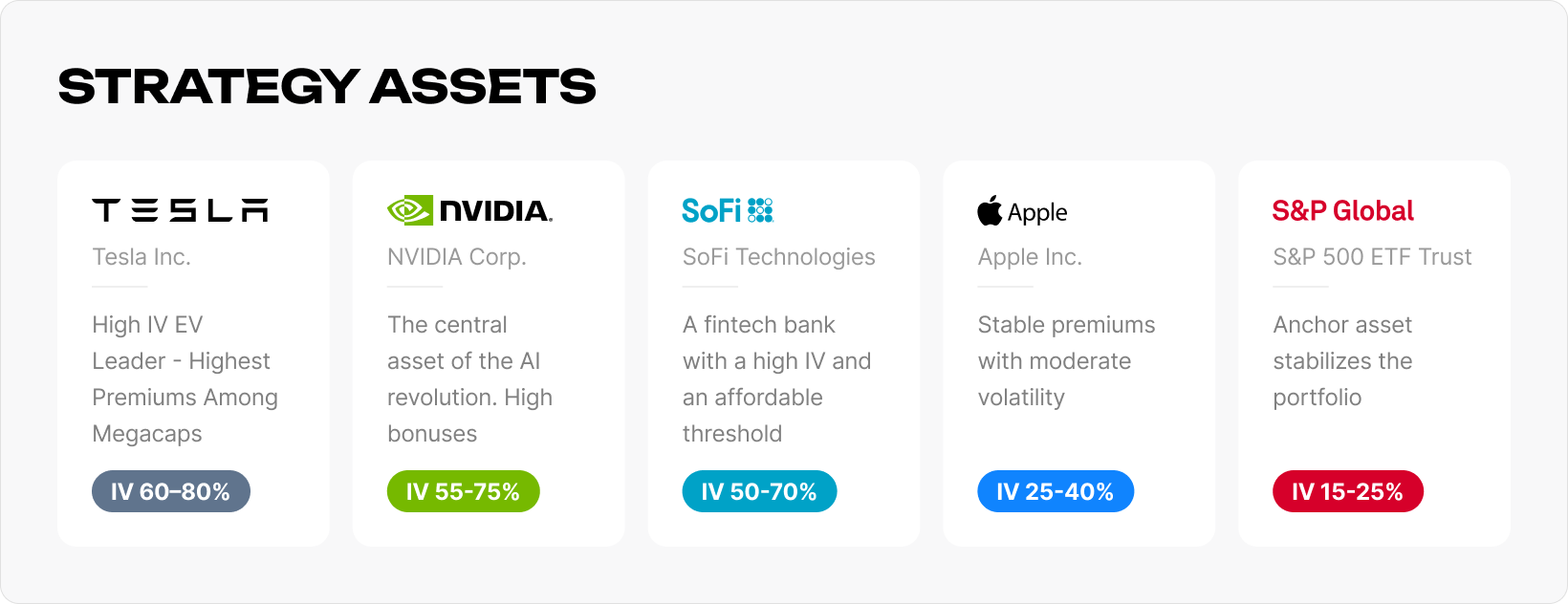
The Wheel strategy is built around selling options on liquid U.S. equities. Over the past several months, the fund has traded names including Tesla, Nvidia, Apple, SoFi, Bloom Energy, Marvell, IREN, and SPY.
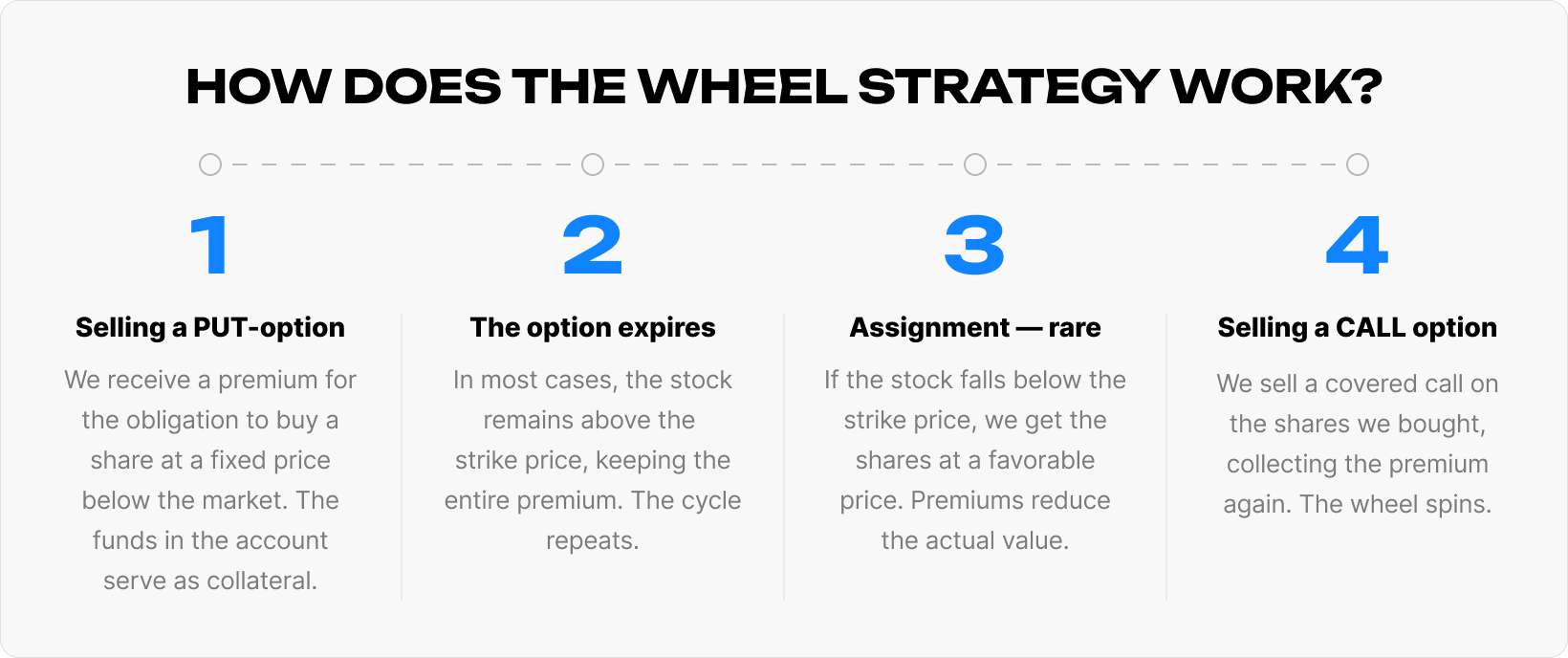
The strategy primarily generates returns from option premiums. The fund sells PUT options on stocks it is prepared to own at a predetermined price. If a PUT is assigned, the shares enter the portfolio and the fund can then sell CALL options against the position. If those CALLs are subsequently assigned, the shares are sold and the cycle can begin again.
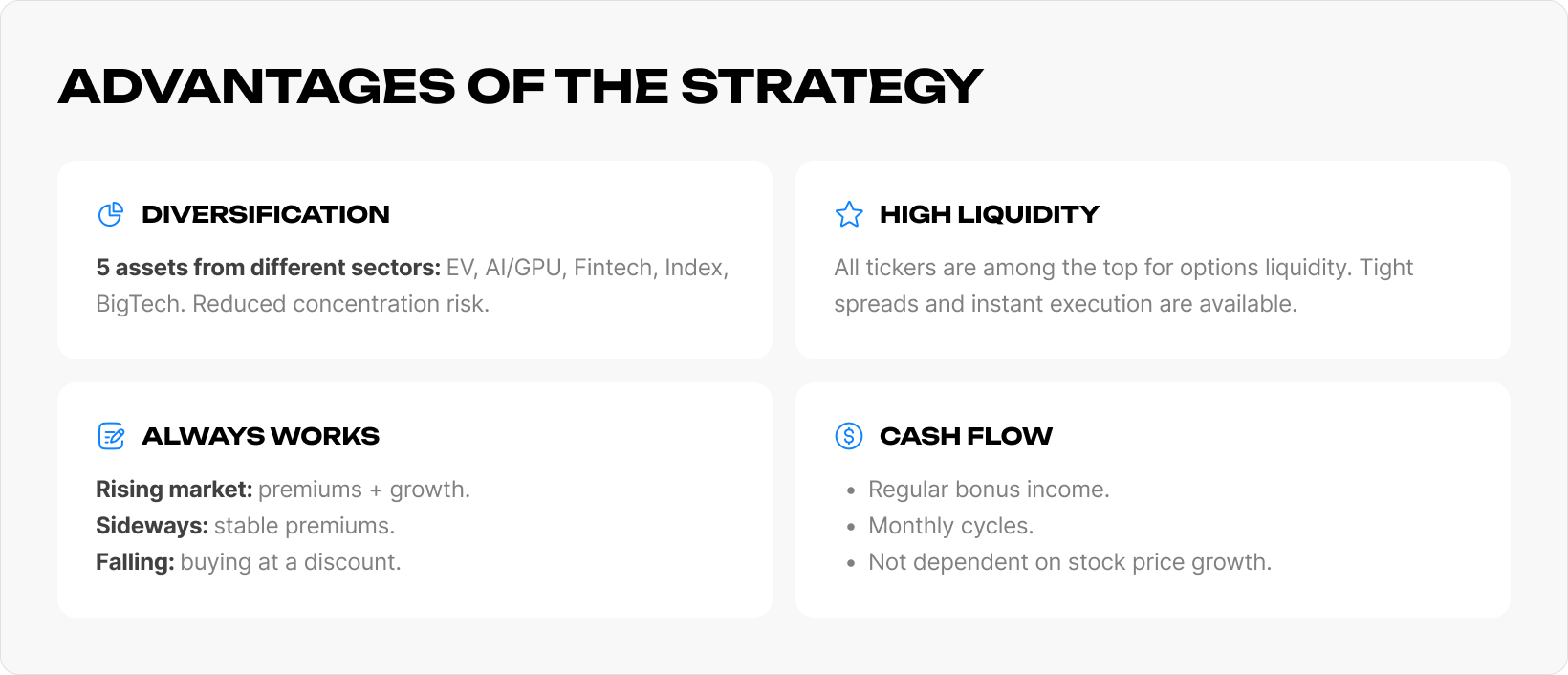
Option premiums are the strategy’s primary source of income, allowing it to generate returns without relying on a single market direction. In 98% of cases, the options expire out of the money, allowing the fund to retain the full premium. This structure enables the strategy to operate across different market environments and collect premiums at several stages of the Wheel cycle.
From +0.95% in April to +3.73% in September
The Wheel strategy delivered a positive result from the outset. April, the first month following the transition, closed with a return of +0.95%.
May was the first month in which the fund’s full capital base was deployed under the Wheel strategy, and the monthly return increased to +1.78%.
Performance continued to improve over the following months. In June, the fund expanded the number of tickers used in the strategy and closed the month at +2.64%.
In July, the fund returned +2.61% and experienced its first option assignment into shares, acquiring 500 Tesla shares at $330. The fund then began selling CALL options against the position to collect additional premiums. Bloom Energy and IREN were also added to the trading universe, with BE becoming the largest contributor to the month’s result.
In August, the Tesla Wheel cycle was completed in full. The 500 shares were sold at the same $330 price at which they had been acquired, while the option premiums collected throughout the cycle remained part of the strategy’s return. The month set a new strategy high at +2.90%, while the trading universe expanded further with IREN and SPY.
In September, the strategy set another record at +3.73%. Performance also became significantly more diversified: trades were spread across eight tickers, while Tesla’s share of the monthly result declined from 76% in August to 29% in September.
The First Full Wheel Cycle in Tesla
One of the key milestones during the first six months was the strategy’s first complete Wheel cycle in Tesla.
In July, following the assignment of a sold PUT option, the fund acquired 500 Tesla shares at $330. This is a standard stage of the Wheel strategy: rather than closing the position at a loss, the shares entered the portfolio and the fund began selling CALL options against them to collect additional premiums.
The cycle was completed in August. All 500 Tesla shares were sold at $330, the same price at which they had entered the portfolio a month earlier. The option premiums collected throughout the cycle remained part of the strategy’s return.
August delivered +2.90%, making it the strongest month for the Wheel strategy at that point. The fund closed 15 trades, with all 15 finishing profitably. The average holding period was 10.7 days.
Tesla accounted for approximately 75.8% of August performance, making broader diversification across underlying assets one of the priorities for the next stage of the strategy.
September: A New Record and Broader Diversification
That shift became much more visible in September. The strategy returned +3.73%, setting a new monthly high. A total of 21 trades were closed, with 20 ending profitably. The win rate was 95.24%, while the average holding period was 11.5 days.
Bloom Energy was the largest contributor to September performance. Nine options trades were closed in the stock, and all nine were profitable.
The month’s result was spread across eight tickers: BE, TSLA, IREN, SPY, MRVL, AAPL, NVDA, and SOFI.
Tesla’s share of monthly performance fell from approximately 76% in August to 29% in September. For the strategy, this marked an important shift: returns were generated across a broader group of underlying assets, reducing reliance on the performance of any single stock.
The best individual trade of the month was TSLA PUT 315, which contributed approximately +0.73 percentage points, or nearly 20% of September’s total result.
How the Strategy Handles Option Assignments
September also provided another example of how the Wheel strategy manages an option assignment.
On September 4, a Bloom Energy CALL option with a $270 strike was assigned, resulting in a short position of 900 shares. The position was fully closed on September 8, and the outcome was reflected in the final +3.73% monthly return.
Assignments are part of the normal mechanics of the Wheel strategy. The portfolio manager accounts for the possibility that shares may be acquired or called away and manages the resulting position through the next stage of the cycle.
The Tesla cycle in July and August, followed by the Bloom Energy position in September, demonstrated how the strategy operates beyond simply collecting option premiums.
Six Months of Strategy Development
Over its first six months, the Wheel strategy moved through several stages. The fund began trading under the new framework in April, moved from options into direct ownership of Tesla shares during the summer, completed its first full Wheel cycle in August, and by September had significantly broadened both its asset base and the distribution of returns across underlying names.
The average return over the six-month period was +2.44% per month.
For investors who entered SLAT before the transition to Wheel, actual performance differs because the calculation reflects their original entry price as well as the result of the previous strategy. For these investors, the average increase in September was approximately +2.89%.
What Comes Next
September’s trading cycle was completed ahead of month-end. By September 28, all positions for the period had been closed, the final +3.73% result was locked in, and distributions had been credited to investors. The next trading cycle begins in October.
Over six months, the Wheel strategy has progressed through several complete trading cycles while expanding the range of underlying assets used in the portfolio. It now draws performance from a broader set of positions, with returns distributed across multiple tickers and a larger body of trading data available to assess how the strategy behaves under different market conditions.
The next stage will provide further insight into how the strategy performs with a broader asset mix and whether the current performance trend can be maintained as market volatility changes.
This material is provided for informational purposes only and does not constitute individualized investment advice.
