

Private Markets: What They Are and Why They Are Becoming More Accessible to Private Investors
Until recently, private markets were largely the domain of venture funds, major asset managers, family offices, and institutional investors. Gaining access to shares in promising companies before they went public usually required substantial capital, industry connections, and access to closed transactions.
That is gradually changing. Companies are staying private for longer, secondary markets are expanding, specialized investment structures and platforms are becoming more common, and the minimum investment required for some deals is declining.
As a result, individual investors are gaining access to companies that were once found mainly in the portfolios of large funds. These may include technology companies, fintech businesses, AI developers, space companies, and biotechnology firms. At the same time, private markets remain very different from the stock market: there are no continuously quoted prices, liquidity is limited, companies generally disclose less information, and the timing of an exit can be difficult to predict.
Below, we explain what private markets are, how the private capital market works, why major companies are staying private for longer, and what participation formats are becoming available to investors.
What Are Private Markets
Private markets are the part of the financial system where companies and projects raise capital without listing their shares on a public stock exchange.
Shares of Nvidia, Apple, or Amazon can be bought during a regular trading session. Shares of a private company, by contrast, do not have a continuously available market price. They change hands through funding rounds, secondary transactions, or dedicated investment structures.
Private markets include venture investments in early-stage companies, direct investments in mature private businesses, investments in fast-growing companies, private credit, shares and ownership stakes in unlisted companies, pre-IPO investments, private real estate, infrastructure projects, and secondary transactions involving private assets.
The market is already measured in trillions of dollars, and private companies are no longer limited to young startups. A technology business can generate billions of dollars in revenue, serve tens of millions of customers, and reach a valuation of tens or even hundreds of billions of dollars without being listed on an exchange.
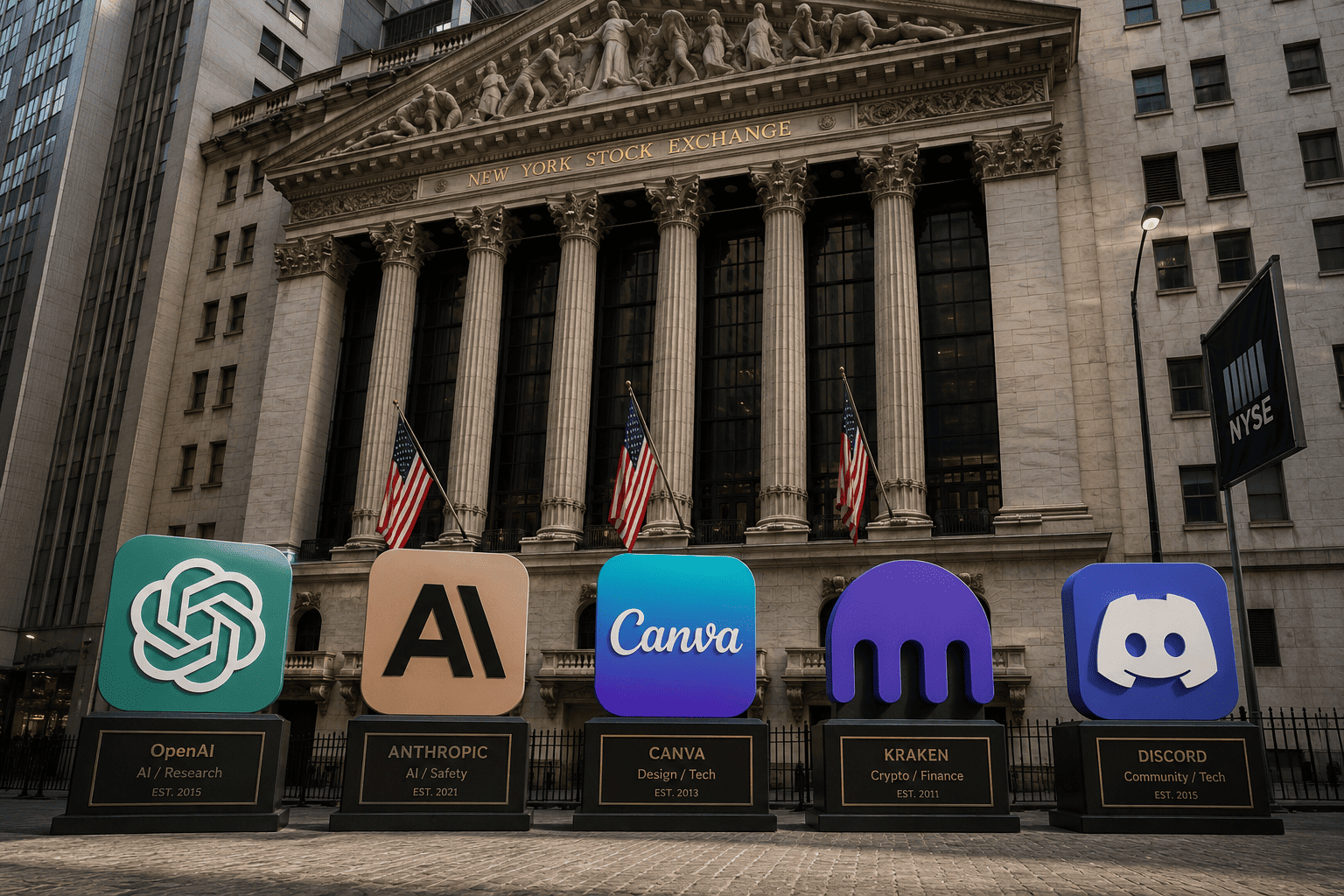
Anthropic is one example. The company became one of the largest artificial intelligence developers while still private and continues to raise capital outside the public market.
This is one of the most important changes in modern capital markets: a growing share of a technology company’s development can now take place before its shares ever become publicly traded.
How Private Markets Differ from the Public Stock Market
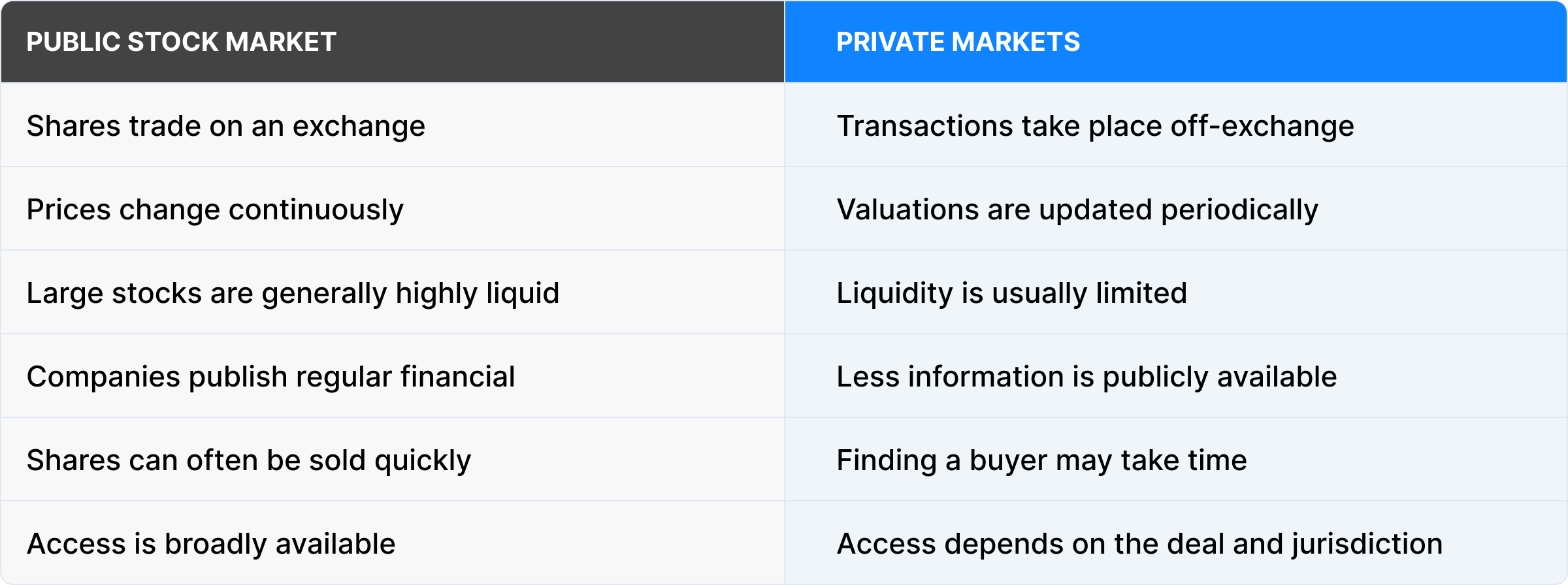
The main difference is how assets are bought, sold, and valued. In the public stock market, a company’s shares are listed on an exchange. Their price changes continuously based on supply and demand, and public companies are required to publish financial reports and disclose material information on a regular basis.
In private markets, transactions take place outside a stock exchange. A company’s valuation is usually established during a new funding round or a transaction between shareholders.
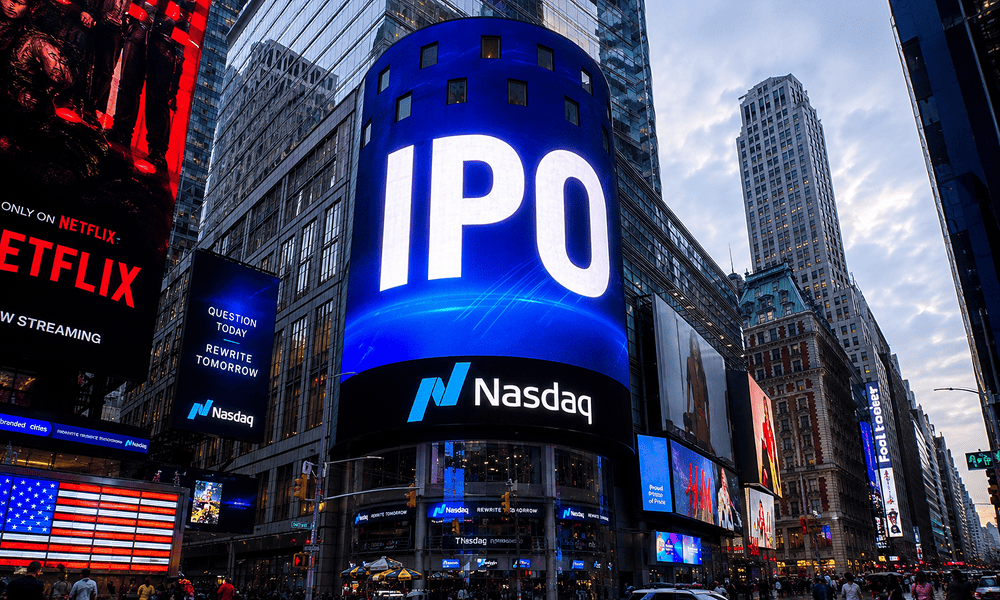
The difference becomes especially clear when a company moves from the private market to the public market. Before an IPO, shares are available to a limited group of investors and may change hands through private transactions. After the listing, the company receives a public market price that changes throughout every trading day.
SpaceX followed this path. The company remained private for years and raised capital through funding rounds and secondary transactions. In June 2026, SpaceX listed on Nasdaq at $135 per share, raised $75 billion, and reached a valuation of approximately $1.77 trillion. Its shares opened their first trading session at $150, after which the company’s value began responding daily to investor demand, company news, and broader market conditions.
How the Private Capital Market Works
In the private capital market, companies raise money directly from investors or through funds and specialized investment structures.
A technology company often begins with capital from its founders and angel investors. It may then attract venture investors and complete increasingly large funding rounds. As the business grows, larger funds and institutional investors may enter. At a later stage, the company may reach the pre-IPO phase and eventually go public or be acquired by a strategic buyer.
The investor base, company valuation, and risk profile change at every stage. At an early stage, the company may not yet have stable revenue. Investors focus more heavily on the product, management team, technology, and potential market size.
As the business matures, it develops revenue, a larger customer base, and a clearer business model. Later funding rounds may involve major venture funds, investment firms, sovereign wealth funds, and other institutional investors. Some companies reach the scale of major public corporations while continuing to rely on private capital.
For example, Kraken has already taken steps toward a potential public listing but remains a private company. This illustrates an important feature of the market: even when IPO preparations begin, a company does not necessarily go public immediately.
What Is the Private Securities Market
The private securities market is where shares, ownership interests, and other securities of companies that are not listed on a public exchange are bought and sold. There are two main types of transactions.
In the first, the company issues new shares as part of a funding round. Investors purchase those shares, and the capital goes directly to the business to fund growth, product development, hiring, acquisitions, or expansion into new markets.
In the second, existing shares are sold by a current shareholder. An employee, founder, early investor, or fund may decide to sell part of its position, while a new investor buys those shares. The money goes to the seller rather than the company.
These transactions form the secondary market for private shares. The secondary market is becoming increasingly important as companies remain private for longer. Employees and early investors may want liquidity years before an IPO, while new investors may be looking for exposure to a more mature company before it reaches the stock market.
This expanding secondary market is one reason access to private markets is gradually broadening.
Why Companies Stay Private for Longer
In the past, an IPO was often necessary simply because a growing company needed access to much larger pools of capital. That is no longer always the case.
Large venture funds, private equity firms, sovereign wealth funds, and other investors can now provide a fast-growing company with hundreds of millions or even billions of dollars without requiring it to list on a stock exchange.
Remaining private also offers several advantages:
- fewer public disclosure requirements;
- less pressure from quarterly earnings expectations;
- greater control for founders and major shareholders;
- more flexibility to pursue long-term projects without daily stock market pressure;
- greater freedom to choose the timing of a future IPO.
Discord: A Major Company That Remains Private
Discord has been operating since 2015, has raised substantial private funding, and has become one of the world’s best-known communication platforms. Yet the company remains privately held.
Discord has repeatedly appeared among potential IPO candidates, but its size and valuation have not forced it to enter the stock market immediately. This is a useful example of how a large and established technology company can continue developing outside public markets for years.
Anthropic: Major Growth Before an IPO
A similar pattern is emerging in artificial intelligence. Anthropic continues to attract large amounts of private capital while expanding its business as a private company. If a company goes public only after several years of rapid expansion, a significant part of its value creation may already have taken place in private markets.

Why Private Markets Are Becoming More Accessible to Investors
Historically, investing in private companies was mainly available to large funds, family offices, wealthy individuals, and institutional investors.
There were several barriers: high minimum investments, limited access to transactions, complex documentation, and a lack of infrastructure designed for individual investors. Some of those barriers are now becoming lower.
The Secondary Market Is Expanding
As companies stay private for longer, early investors and employees increasingly look for ways to sell some of their shares before an IPO. This creates more secondary transactions. For a new investor, these transactions may provide an opportunity to gain exposure to an established private company without waiting for its public listing.
Specialized Investment Structures Are Expanding Access
Instead of requiring one investor to purchase a large block of shares, capital from several participants can be pooled through a dedicated structure. One common format is an SPV, or special purpose vehicle, created for a specific company or transaction.
If a seller wants to sell a block of shares worth several million dollars, the structure can pool capital from multiple investors and allocate economic participation among them. This can reduce the minimum amount required from each individual participant.
Transactions Are Moving Online
Specialized platforms make it easier to access information, review documents, track investments, and interact with the infrastructure behind a deal.
Investors no longer necessarily need to find an employee, shareholder, or fund willing to sell shares on their own. However, this does not turn private markets into a conventional stock exchange. Legal requirements, investor eligibility rules, and deal-specific restrictions still apply.
What is changing most is access to the market, not the underlying nature of private assets.
Investing in Private Companies: Main Participation Formats
There are several ways of investing in private companies.
- Participation in a funding round. An investor purchases newly issued shares directly from the company. This format is more common among professional investors, venture funds, and large institutions.
- Buying shares from an existing shareholder. An investor acquires shares from an employee, founder, fund, or another shareholder. This is a secondary transaction.
- Investing through a fund. The investor purchases an interest in a fund, while the fund manager allocates capital across a portfolio of private companies. Venture funds and private equity funds commonly use this model.
- Investing through an SPV. A dedicated investment vehicle is created for one company or transaction. The structure acquires the shares, while investors participate economically through the vehicle.
- Pre-IPO. This involves investing in a private company at a later stage, when a potential IPO is one of the possible future outcomes.
Companies within the pre-IPO segment can still be at very different stages. Kraken confidentially filed for a US IPO in November 2025. The company initially expected to go public in the first quarter of 2026 but later postponed the listing because of market conditions. Kraken continues to expand its business and remains a notable candidate for a future listing.
Discord has also considered going public and has taken steps in that direction. In 2025, the company began working with Goldman Sachs and JPMorgan on a potential offering, while Bloomberg reported in January 2026 that Discord had confidentially filed for an IPO.
Neuralink is at a different stage. The company has not announced a public IPO date and continues to grow as a private business. In June 2025, Neuralink raised $650 million at a valuation of around $9 billion to expand clinical trials of its brain implant technology. Investors in the round included ARK Invest, Sequoia Capital, Thrive Capital, and other major funds.
These companies illustrate different stages of the pre-IPO market. For investors, the attraction is the opportunity to gain exposure to a business before its shares become available on a public exchange.
What Assets Can Be Included in the Private Investment Market
The private investment market extends far beyond buying shares in technology companies before an IPO.
Venture Capital
Venture investors primarily finance young companies with high growth potential. Risk is particularly high because some businesses may never develop a sustainable business model.
Private Equity
Private equity funds generally focus on more mature companies. They may acquire large ownership stakes or entire businesses, change management, improve operations, finance expansion, and eventually sell the company.
Growth Equity
Growth equity provides capital to businesses that have already demonstrated a viable model and are actively scaling. Many large technology companies raising capital in later private rounds fall into this category.
Private Credit
A company borrows directly from a fund or another investor rather than issuing publicly traded bonds. Private credit has grown rapidly and has become an important alternative to traditional bank financing for many businesses.
Private Real Estate
Private market capital can also be invested directly in residential, commercial, hospitality, and other types of real estate.
Infrastructure
Private markets also include energy projects, data centers, transportation, telecommunications, and other large infrastructure assets. The growth of artificial intelligence has further increased interest in data centers and the energy infrastructure required to support large-scale computing.
What Risks Are Associated with Private Markets
Access to a company before its IPO can be attractive, but private investments have characteristics that differ significantly from ordinary exchange-traded shares.
- Limited liquidity. A private position usually cannot be sold at any time. An investor may have to wait for another funding round, a secondary transaction, a sale of the company, or an IPO. That process can take several years.
- An IPO can be postponed. Even after a company begins preparing for a listing, the timing can change. Market conditions, valuation, financial performance, and shareholder decisions all affect when or whether an IPO takes place.
- A company can remain private for years. A business may be large, well known, and financially established while continuing to raise capital outside public markets.
- The share price can fall after an IPO. Going public does not guarantee price appreciation. Before a listing, valuation is determined through individual private transactions. After an IPO, the stock is priced by the market every day and can trade below its offering price.
- Less information is available. Public companies are required to report financial results and disclose other information regularly. Private companies typically disclose less, making some metrics harder for investors to verify independently.
- The latest valuation is not a guaranteed sale price. If the latest funding round valued a company at $20 billion, that does not mean every shareholder can immediately sell shares at the same implied price.
- A later funding round may take place at a lower valuation. A company may need to raise capital at a lower price than in a previous round, especially if growth slows after a period of very high valuations.
- Concentration risk can be significant. An investment in one private company depends heavily on the results of that individual business. Position sizing and diversification therefore matter just as much as company selection.
Who May Be Interested in Private Markets
Private markets can complement an investment portfolio by providing access to companies and assets that are not available on a public exchange.
They may be of interest to investors who are prepared to invest for several years, can keep part of their capital in less liquid assets, accept a higher level of risk, want access to companies before they go public, and are willing to review the terms of each transaction individually.
For example, an investor may hold the majority of a portfolio in publicly traded stocks, bonds, and funds while allocating a limited portion to several private companies. This is very different from placing most available capital into a single pre-IPO company based on expectations of an imminent listing.
Another point is easy to overlook: the absence of a daily quoted price does not mean the asset itself is less volatile. Changes in value simply become visible less frequently, such as during a new funding round or a secondary transaction.
How to Analyze a Private Company Before Participating in a Deal
A private company should not be assessed solely by brand recognition or the prospect of an IPO. Например, Anthropic, Dataminr and Polymarket, for example, operate in different industries and are at different stages of development. The most relevant metrics will therefore differ from one business to another. Still, several basic criteria are useful in almost any private market deal.
Business Stage
Does the company already have stable revenue and a large customer base, or is it still proving that its product can support a viable business? The earlier the stage, the greater the uncertainty.
Growth and Key Metrics
For a technology company, investors may look at revenue, growth rates, customer numbers, margins, expenses, and industry-specific operating metrics.
For Kraken, for example, relevant factors include revenue growth, profitability, client assets, transaction volumes, and the company’s dependence on activity in the crypto market. For Discord, audience growth, monetization, subscriptions, advertising, and the company’s ability to convert its scale into sustainable revenue may be more important. For Neuralink, technological progress, clinical trials, regulation, and the path toward commercialization play a much larger role.
Deal Valuation
A strong company can still be bought at an unattractive price. The current valuation can be compared with previous funding rounds, recent secondary transactions, the company’s revenue and other financial indicators, and valuations of comparable public companies.
Current Investors
The shareholder base provides additional context about a company’s financing history. Participation by well-known funds does not guarantee future returns, but it can show which investors previously conducted their own due diligence and at what stages the company raised capital.
Capital Position
For a loss-making business, it is important to understand how quickly cash is being spent and when another funding round may be required. A new share issuance can affect both the company’s valuation and the ownership percentage of existing shareholders.
Potential Exit Routes
An IPO is only one possible outcome. A company may also be acquired by a strategic buyer, an investor may sell the position in another secondary transaction, or the company may remain private. This is why an investment thesis based solely on the expectation of an IPO is incomplete.
Deal Structure
Before participating, investors should understand what asset is being acquired, which legal structure is used, who owns the underlying shares, what fees apply, whether there are transfer restrictions, how an exit will work, and how proceeds will be distributed after a sale. In private markets, the structure of the transaction can be almost as important as the company itself.
How Regolith Helps Investors Access Private Markets
Accessing a private company is generally more complex than buying a stock on an exchange because private companies do not have freely traded shares or public tickers. Transactions take place directly with the company or existing shareholders, and participation is often arranged through specialized investment structures.
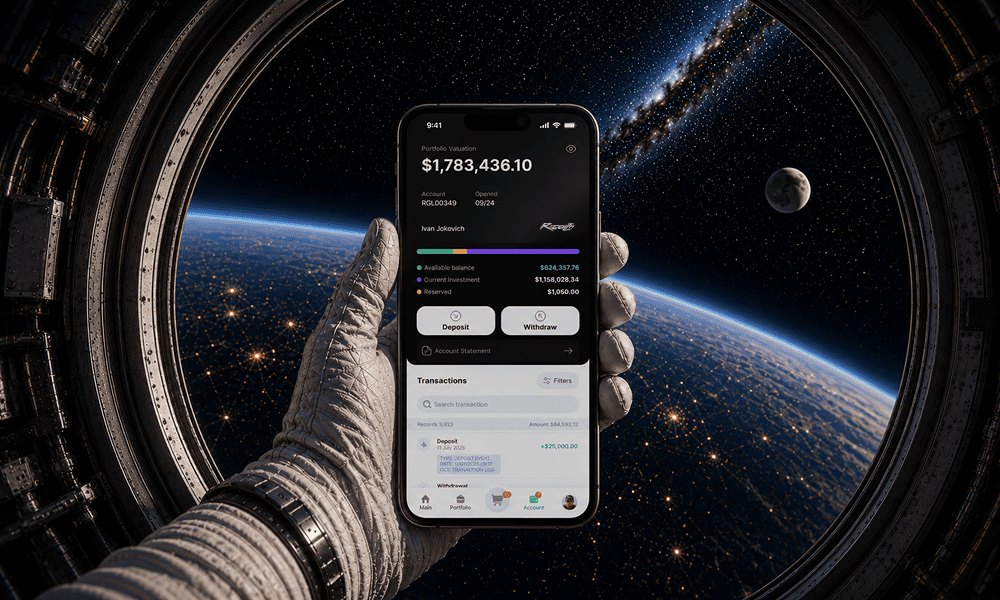
Regolith provides access to selected private companies and pre-IPO opportunities through one platform. These include Kraken, Discord, MetaMask, Dataminr, OpenSea, and other companies across technology, financial services, crypto, and AI.
The minimum investment depends on the specific deal. For example, Kraken is is available from $68 per share, Discord from $83, and MetaMask from $80.
Participation through Regolith is structured through a separate trust series linked to each specific transaction. The trust holds the underlying shares, while the investor becomes a beneficiary of the relevant series. This structure can make it possible to participate with a lower entry threshold than would be required to purchase a large private share block independently.
When considering a private company, investors should look at the underlying business, entry price, transaction terms, and the potential time to an IPO or another liquidity event.
Private markets are becoming more accessible, but they remain fundamentally different from the public stock market. They can provide access to companies before they are listed, while requiring a longer investment horizon and careful assessment of each individual deal.
This material is provided for informational purposes only and does not constitute individual investment advice.
