

What Is an IPO – How an Initial Public Offering Works for Individual Investors
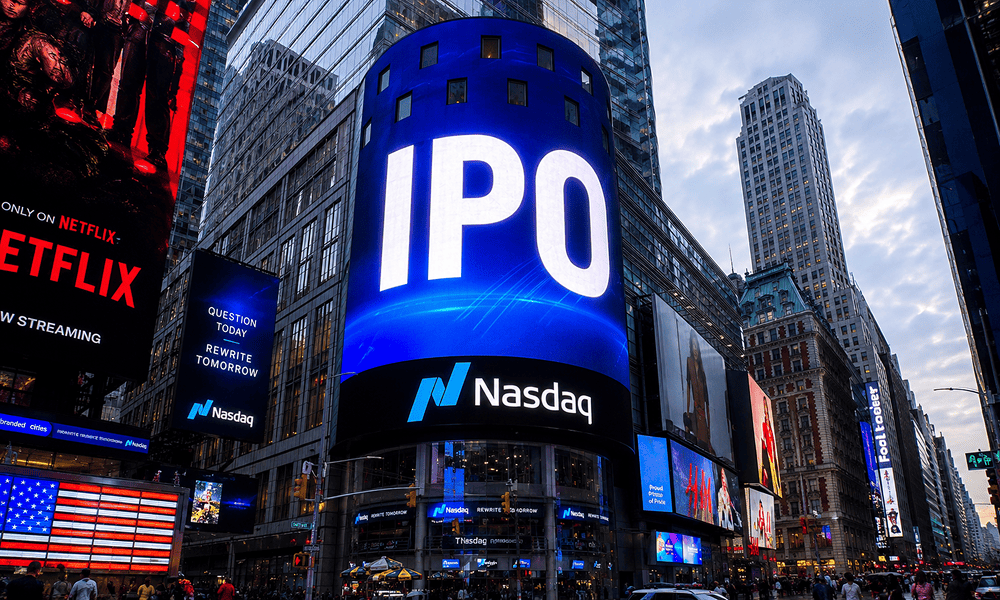
IPO often becomes one of the most important stages in a company’s development. A private business enters the public market, its shares begin trading on a stock exchange, and the company gains access to new capital.
For investors, an IPO offers an opportunity to participate in a company’s offering before regular trading begins. However, a well-known company or strong demand for its shares does not guarantee price growth after the listing. The stock can rise significantly, remain close to the offering price, or fall below it.
In this article, we explain what an IPO is, why companies go public, how an initial public offering works, and how individual investors can participate in an IPO.
What Is an IPO?
IPO stands for Initial Public Offering. It is the process through which a private company offers its shares to public investors for the first time and becomes publicly traded.
Before an IPO, shares are typically held by founders, employees, venture capital funds, institutional investors, and participants in earlier private funding rounds. Once the company completes its IPO, its stock begins trading on a public exchange. In the United States, two of the largest venues for IPOs are the New York Stock Exchange (NYSE) and Nasdaq. After listing, the share price is determined by supply and demand in the public market.
An IPO should not be confused with a pre-IPO investment. Pre-IPO refers to investing in a company while it is still private and its shares are not yet freely traded on a public exchange.
The IPO is the next stage: the company completes its initial public offering and enters the public market.
How an IPO Works
In simple terms, an IPO turns part of a privately owned company into publicly traded stock.
A company decides how many shares it wants to offer, works with investment banks and advisers, prepares regulatory documents, meets potential investors, sets an offering price, and then allocates available shares among participants. Once the offering is completed, the stock begins trading publicly.
The price available during the IPO and the market price after trading starts are two different things. For example, a company may price its IPO at $30 per share. On the first day of trading, demand could push the market price to $40. It could also fall below $30. This is one reason why participating directly in an IPO is different from simply buying the stock after it has listed.
Another important part of how an IPO works is allocation. Demand for popular offerings can be much larger than the number of shares available, which means investors may receive only a portion of what they requested.
Why Companies Go Public
For a company, one of the main reasons to conduct an IPO is to raise capital.
The funds can be used to expand the business, launch new products, enter international markets, build infrastructure, acquire other companies, repay debt, or finance other strategic projects.
Going public can also provide several additional advantages.
- Higher visibility. A stock market listing usually attracts attention from investors, analysts, customers, and the media.
- A public market valuation. Before an IPO, the value of a private company is mainly established through private funding rounds and secondary transactions. After listing, its market capitalization changes continuously with the share price.
- Public shares become a corporate tool. A company can use its stock in employee compensation programs or as part of mergers and acquisitions.
- Liquidity for early shareholders. Venture capital funds, employees, founders, and other early investors may eventually be able to sell part of their holdings on the public market after applicable restrictions expire.
For individual investors, an IPO offers another potential advantage: the opportunity to participate at the offering price before regular exchange trading begins. The main limitation is that investors are not guaranteed to receive the full amount they request. When demand exceeds the number of available shares, the offering is subject to allocation.
The IPO Process
Going public begins long before the first day of stock exchange trading. Preparing for an IPO can take months and, in some cases, years.
Company Preparation
The first stage is determining whether the business is ready to operate as a public company. Management reviews the company’s financial statements, corporate structure, governance, internal controls, and legal documentation. The business usually undergoes audits and prepares the information required by regulators and potential investors.
Once a company is public, the level of transparency expected from it increases significantly. Public companies are generally required to disclose financial results and other material information on a regular basis.
Underwriting
A company normally hires one or more investment banks to act as underwriters for the offering. Underwriters help structure the IPO and advise the company on its potential valuation, the number of shares to be offered, the expected price range, and the overall transaction structure.
Large IPOs frequently involve a syndicate of several investment banks rather than a single institution. The underwriters also help connect the company with institutional investors and assess market demand before the offering.
Regulatory Documents
The company then submits the required documentation to the relevant regulator.
In the United States, one of the main registration documents used in a traditional IPO is Form S-1.
It includes information about the company’s business model, financial results, shareholders, risks, and intended use of the capital raised.
For investors, these filings can be among the most important sources of information available before an IPO.
They help investors evaluate not only growth potential, but also financial weaknesses, competitive risks, dependence on certain markets or customers, regulatory exposure, and other material factors.
Roadshow
Before the IPO, company management typically meets prospective institutional investors and presents the business. This stage is known as the roadshow. Management explains the company’s strategy, financial performance, competitive position, growth plans, and the reasons behind the offering.
At the same time, investment banks collect indications of interest from potential investors. The roadshow helps the company and its underwriters understand how much demand exists for the offering and at what valuation investors may be willing to participate.
IPO Pricing
Based on investor demand, the final IPO price is determined. If demand is strong, the final price may be set near the upper end of the proposed range. If demand is weaker than expected, the price may be closer to the lower end, or the terms of the transaction may be revised.
The IPO price is the price used for the initial placement of the shares.
It should not be confused with the opening market price once public trading begins. The two can differ substantially.
Allocation
Allocation is the process of distributing the available shares among investors.
An investor may submit an application for $10,000 worth of shares but ultimately receive a much smaller amount. The final allocation depends on the structure of the offering, investor demand, and how many shares are available through the relevant participant in the transaction.
For IPOs available through Regolith, actual allocations have typically ranged from approximately 2% to 30% of the original application amount.
For example, in the Bullish IPO, an investor submitted an application for $10,000. The final allocation was 29.6%, meaning $2,960 was ultimately used to participate in the offering. The remaining portion of the application was returned to the investor’s balance once the final allocation had been determined.
The exact allocation is not known in advance. It becomes available shortly before the offering. As a result, the amount requested by an investor can be significantly different from the amount ultimately allocated to the IPO.
Beginning of Trading
Once the placement is completed, the shares begin trading on the stock exchange. From that point onward, the stock price is determined by the public market. The opening price can differ significantly from the IPO price.
For this reason, a strong first-day increase does not necessarily mean that an IPO participant automatically receives the same return immediately, particularly where a lock-up period or another holding restriction applies.
Pros and Cons of IPOs
IPOs can provide benefits for both companies and investors, but they also involve meaningful risks.
Potential Benefits for Companies
An IPO can give a company access to substantial new capital and a broader base of investors. It can strengthen brand recognition and create a public valuation for the business.
Public shares can also be used for employee compensation and acquisitions. For early investors and employees, an IPO can eventually provide a path toward liquidity.
Potential Benefits for Investors
Investors who receive an IPO allocation can participate at the offering price before regular trading begins. If the company performs well and investor demand remains strong, the market price can rise after listing. However, this potential upside should not be treated as guaranteed.
Risks and Disadvantages
IPO investments can be highly volatile. Even a well-known company with significant investor demand can trade below its offering price.
A fast-growing business can also turn out to be a weak investment if its IPO valuation already reflects overly optimistic expectations. Investors should therefore look beyond the company’s brand and consider revenue growth, profitability, cash flow, debt, capital expenditures, market conditions, and valuation relative to comparable businesses.
Allocation is another limitation. Submitting an application does not mean the entire amount will participate in the offering. In a heavily oversubscribed IPO, the investor may receive only a small percentage of the requested amount.
Lock-up restrictions can also affect the final result. A stock may perform strongly on the first trading day but trade at a very different price several months later. For an investor participating through a structure with a fixed holding period, the relevant price is therefore the market price when the position can actually be sold.
How to Invest in an IPO
There are several ways for an individual investor to gain exposure to a company around the time it becomes publicly traded. The simplest option is to wait until trading begins and buy the stock through a regular brokerage account. Technically, however, this is no longer participation in the IPO itself. At that point, the investor is purchasing shares from other market participants at the prevailing market price.
To participate directly in an initial public offering, an investor needs access to IPO allocation. That access may be offered by brokerage firms, investment banks, or investment platforms.
A typical process looks like this:
- The investor selects an available IPO.
- The investor reviews the company, offering terms, and risks.
- An application is submitted.
- The final IPO price is determined before the listing.
- The actual allocation is calculated.
- The allocated portion of the application participates in the purchase.
- The shares begin trading after the IPO.
Terms vary significantly between brokers and platforms. Important differences can include the minimum investment amount, allocation mechanism, fees, holding restrictions, and how the shares are ultimately sold.
How to Participate in an IPO Through Regolith
Through Regolith, investors gain access to IPO transactions using partner infrastructure in the United States. Participation is structured as an investment product linked to a specific IPO, while the underlying shares are purchased and held within the partner’s brokerage infrastructure.
After an investor submits an application, the funds are transferred to the partner structure acting as the provider, which interacts with the brokerage infrastructure through a forward contract.
Once the final allocation is determined, only the corresponding portion of the original application participates in the IPO. Regolith pools investor capital and accesses IPO transactions through its partner infrastructure. Settlement with investors takes place within the platform’s investment product after the transaction is completed.
For IPOs offered through Regolith, the applicable lock-up period is 93 days. After the lock-up expires, the partner broker sells the shares on the public market.
The resulting financial outcome is then transferred through the transaction infrastructure and distributed among investors in proportion to their participation.
IPO Alternatives
An IPO is not the only way to invest around a company’s move from private to public ownership.
Pre-IPO Investing
A pre-IPO investment is made while the company is still private and its shares are not yet publicly traded. Investors typically accept lower liquidity and a longer investment horizon in exchange for entering before a potential listing. IPO timing is never guaranteed: a company can delay, restructure, or cancel its plans. Through Regolith, selected opportunities may be available at both the pre-IPO and IPO stages.
Buying Shares After the IPO
Investors can also wait until the stock begins trading publicly and buy it through a brokerage account at the market price. This offers greater liquidity, but the IPO price is no longer available, and the stock may already be trading at a higher valuation.
IPO Performance
The size or popularity of an IPO does not determine how successful the investment will ultimately be. Some newly listed stocks rise sharply after entering the public market, while others spend months or years below their offering price.
For investors, the more relevant questions are the quality of the business, its valuation, financial performance, growth prospects, competitive position, and the price paid for the shares.
Some of the Largest IPOs in History
Over the past several decades, major IPOs have raised tens of billions of dollars.
One of the largest initial public offerings in history was Saudi Aramco in 2019. The company initially raised approximately $25.6 billion, while the total increased to around $29.4 billion after the exercise of an additional offering option.
Several major technology and consumer companies have also completed large IPOs.
- Alibaba listed in the United States in 2014 and raised more than $20 billion.
- Meta, then Facebook, completed its IPO in 2012 and raised approximately $16 billion.
- Visa raised more than $17 billion through its 2008 IPO.
Other major offerings have included General Motors, SoftBank, and a number of other global corporations. The size of these transactions illustrates how much capital public markets can provide, but it does not tell investors whether the stock will outperform after listing.
Potential IPOs in 2026
In 2026, some of the most closely watched potential offerings are concentrated in artificial intelligence, technology, crypto, and digital platforms.
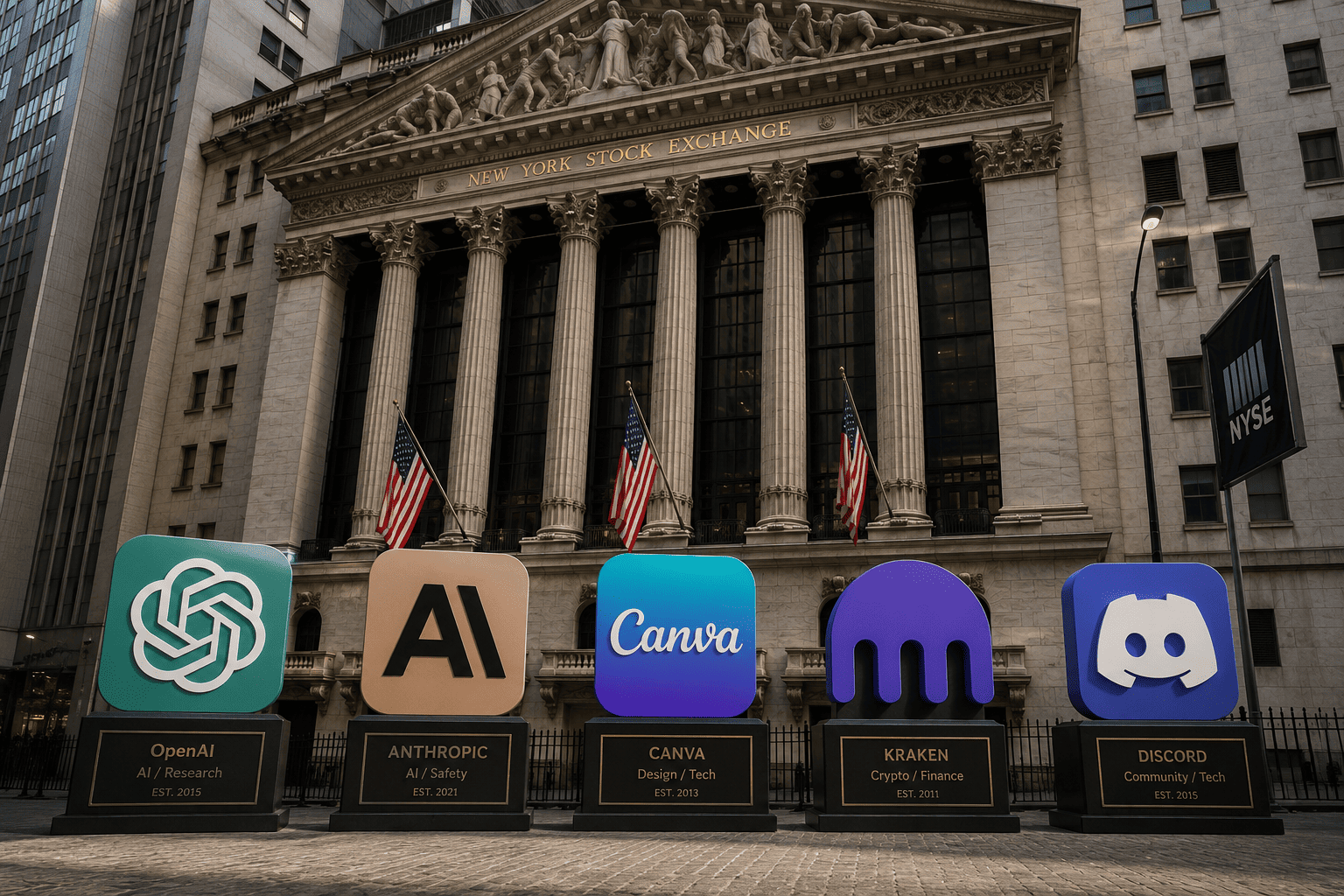
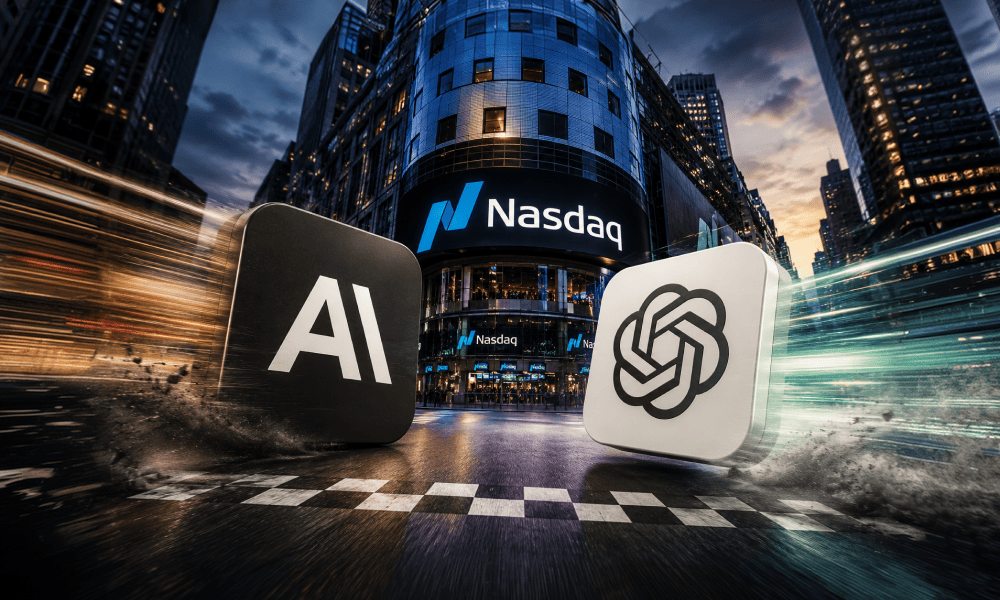
Anthropic has already confidentially filed for an IPO in the United States. The company behind Claude has not disclosed the final size or exact timing of a potential offering, but the filing puts it among the AI companies closest to the public market.
OpenAI has also confidentially submitted IPO documents. The company has not announced a firm listing date, while market attention remains focused on the possibility of one of the largest AI listings to date.
Discord remains another prominent IPO candidate among large private technology companies, supported by the scale of its platform and user base.
Kraken has been preparing for the public market for several years and has already taken steps toward a potential listing. For the crypto sector, a Kraken IPO could become one of the more significant public-market events of the current cycle.
Shein has also moved closer to a potential listing, with Hong Kong considered as a possible venue.
Following the SpaceX IPO in June, investor attention increasingly shifted toward the next large technology companies that could enter the public market, including Anthropic, OpenAI, and other major private businesses.
FAQs
Is IPO participation guaranteed?
No. Access depends on the specific deal, and the final allocation may be much smaller than the original application.
How long can IPO shares be locked?
It depends on the structure of the offering. For IPOs available through Regolith, the lock-up period is typically 93 days.
What happens if I receive only part of my allocation?
Only the allocated portion participates in the IPO. The unused amount is returned according to the terms of the transaction.
Is IPO income guaranteed?
No. The final result depends on the market price when the shares are sold, so the investment can generate either a profit or a loss.
Conclusion
An IPO gives a private company access to public capital and allows investors to participate as it enters the stock market. Before investing, it is important to understand the company’s fundamentals, valuation, allocation terms, lock-up period, and participation structure.
Investors can also consider the company at the pre-IPO stage or wait until its shares begin trading publicly, depending on their preferred investment format and liquidity needs.
This material is provided for informational purposes only and does not constitute individual investment advice.
