

ConsenSys Sets New Fall 2026 Timeline for Its IPO as the Broader Market Repositions Toward Mega-Cap Listings

ConsenSys – the company led by Joe Lubin and the creator of the MetaMask wallet – has updated its outlook for going public. According to CoinDesk, the listing is now expected in fall 2026. For pre-IPO holders, this is a meaningful development. We unpack what's behind the delay, what ConsenSys has built so far, and why this isn't a negative signal.
Joe Lubin: Ethereum Co-Founder and the Architect Behind ConsenSys
The story of ConsenSys is inseparable from the story of Ethereum itself. Joe Lubin, a Canadian-born Princeton graduate in electrical engineering and computer science, previously worked at Goldman Sachs, in Princeton's robotics lab, and in management roles at several fintech startups before turning to crypto.
In 2014, Lubin became one of the eight co-founders of Ethereum alongside Vitalik Buterin. Buterin focused on cryptography and protocol architecture; Lubin took on financing, operations, and strategy. He committed a portion of his personal capital to the early stages of the project and helped assemble the EthDev team that wrote the first version of the protocol.
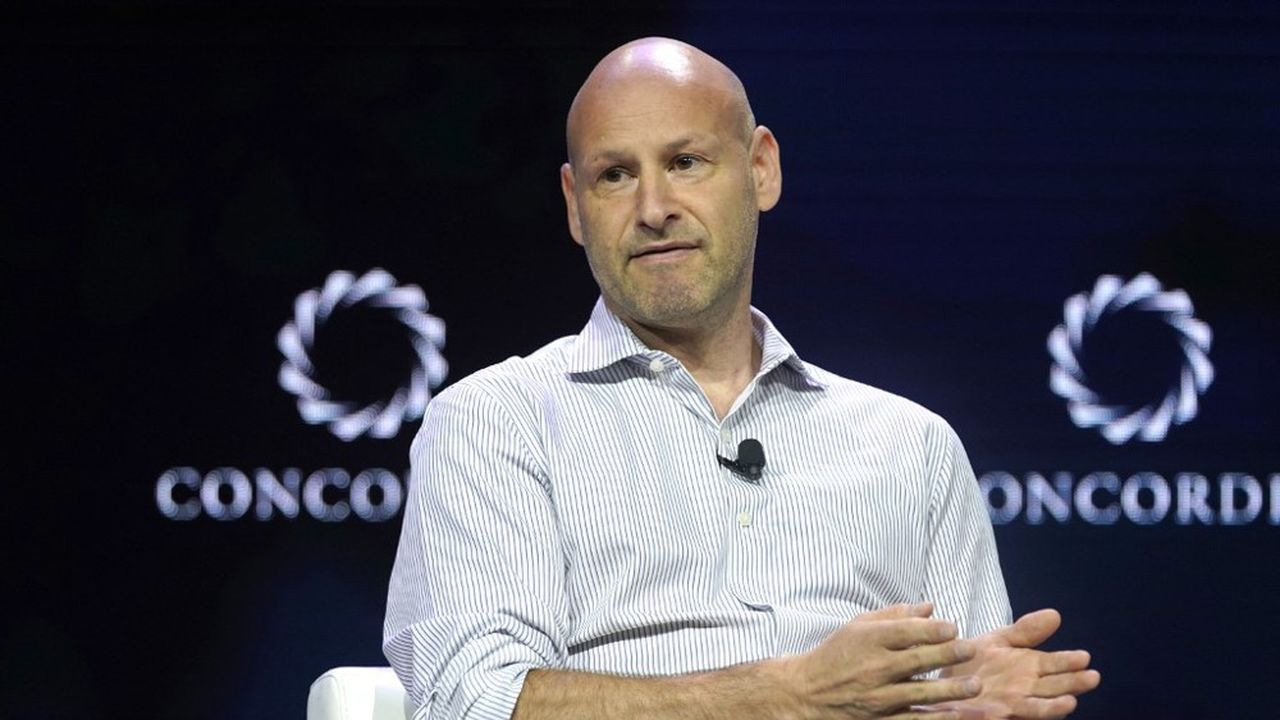
After Ethereum's mainnet launch in July 2015, Lubin came to a conclusion that would define the next decade of his career: the protocol alone wasn't enough. The ecosystem needed an entire infrastructure layer on top – wallets, developer tools, node access, security audits, enterprise solutions. That vision became ConsenSys, an operating company that has methodically built out the Ethereum ecosystem for ten years running.
A Closer Look at ConsenSys
ConsenSys was founded in October 2014 in Brooklyn, New York, launching almost in lockstep with the first Ethereum test networks. From day one, Lubin's ambition was to build a complete infrastructure stack around Ethereum as the foundation of a new financial internet.
Today, the business is built around several core products:
- MetaMask – the most popular Web3 wallet in the world, with more than 30 million monthly active users and an 80–90 percent market share among wallets serving Ethereum and EVM-compatible networks.
- Infura – developer infrastructure for dApps, providing API access to Ethereum, IPFS, and other networks. It powers the majority of major DeFi protocols and NFT marketplaces.
- Linea – ConsenSys's own Layer-2 zkEVM, launched in 2023, with its own token LINEA introduced in 2025.
- Diligence – the company's smart contract audit unit, and one of the leaders in the security-audit market.
- Codefi – enterprise blockchain solutions for banks, custodians, and financial institutions. Clients include Swiss and Asian banks.
Headquartered in New York, ConsenSys employs more than 700 people globally, with additional offices in London, Dubai, Singapore, Sydney, and Ho Chi Minh City.
MetaMask: The Crown Jewel Heading Into IPO
MetaMask is ConsenSys's flagship product and the single biggest driver of how investors will value the company. Launched in 2016 as a simple browser extension for interacting with Ethereum, it has since grown into a full ecosystem:
- Browser extensions for Chrome, Firefox, and Edge
- Mobile applications for iOS and Android
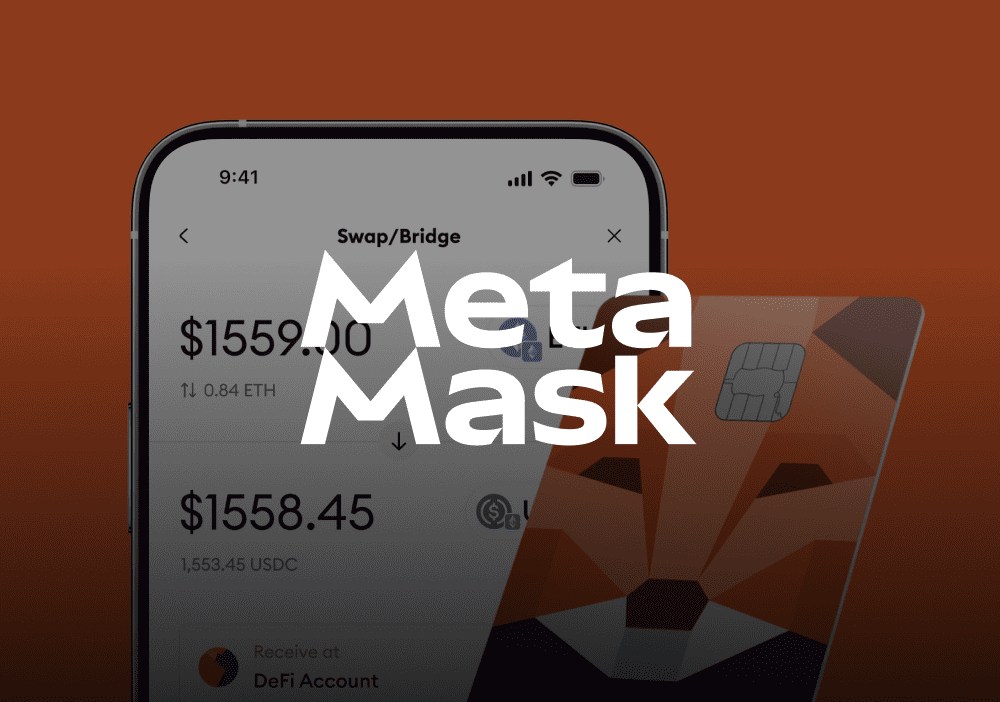
- Built-in exchange functionality through MetaMask Swaps, allowing users to trade tokens directly inside the wallet
- Integration with more than 100 blockchains, including Ethereum, Polygon, BNB Chain, Arbitrum, and Optimism
- Staking through MetaMask Staking
- Hardware wallet integrations via MetaMask Snap

Revenue comes from several streams: fees on Swaps (typically 0.875 percent of the trade size), premium features for developers, and revenue-sharing arrangements with DEX protocols and Layer-2 networks. According to analyst estimates, MetaMask generates the bulk of ConsenSys's revenue – and importantly, these are earnings that don't move directly with the price of bitcoin or ether. They scale with on-chain activity, which is a much more stable metric for valuation.
MetaMask Card: Moving Into Payments
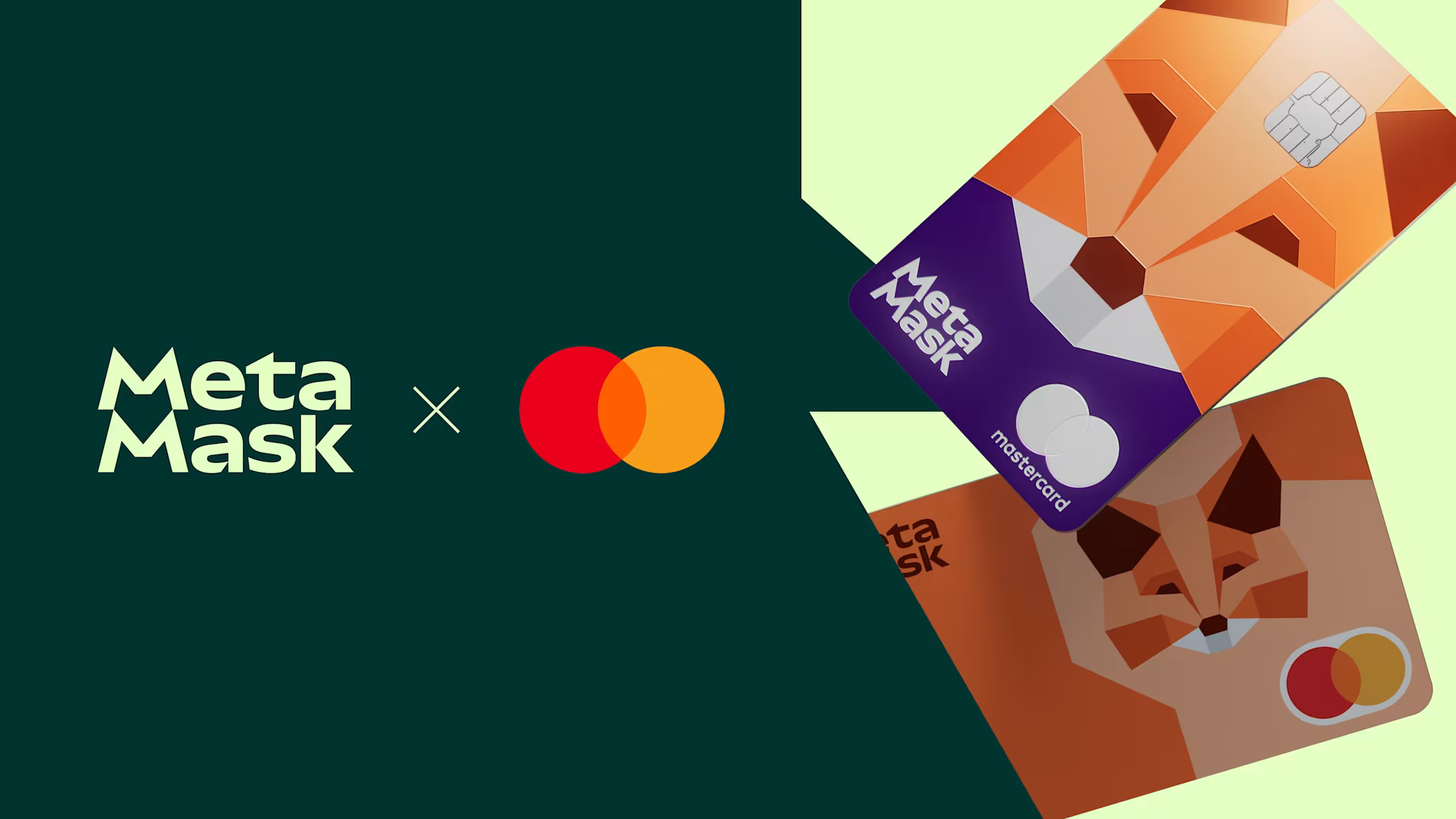
In February 2026, MetaMask and Mastercard completed the U.S. nationwide rollout of the MetaMask Card. The card is now available in 49 states, including New York – one of the most challenging regulatory environments for the crypto industry. The launch followed a year-long pilot in Europe and the U.K.
The key differentiator from existing crypto cards is the self-custodial model. Funds stay in the user's wallet until the moment of payment, conversion happens in real time, and private keys remain under the holder's control. The card works wherever Mastercard is accepted – more than 150 million merchant locations globally, with support for Apple Pay and Google Pay.
The standard card is free, with up to 1 percent cashback. The premium MetaMask Metal Card costs $199 per year and offers up to 3 percent cashback on the first $10,000 of annual spending – one of the most competitive offers on the U.S. card market today.
For ConsenSys's IPO valuation, this is a meaningful factor. Payment revenue adds a stable income stream to the financial model – one that doesn't depend on trading volumes or the volatility of crypto prices. That kind of recurring revenue is precisely what Wall Street analysts tend to value most highly.
Infura: Infrastructure for a Third of Web3
If MetaMask is the interface for the end user, Infura is the backbone for developers.
The service provides API access to Ethereum, IPFS, and other networks – sparing developers the need to spin up and run their own nodes.
By various estimates, Infura handles a significant share of all requests to Ethereum coming through dApps, including MetaMask, Uniswap, OpenSea, and hundreds of other projects. It's a B2B segment with a subscription model – tiered plans running from free up to enterprise. Predictable subscription revenue is another argument for a stronger IPO valuation.
Linea: Building ConsenSys's Own Layer-2
In 2023, ConsenSys launched its own Layer-2 network for Ethereum – Linea, built on zero-knowledge proofs (zkEVM). By 2025, Linea had become one of the most widely used L2 solutions: thousands of projects, millions of users, and billions of dollars in on-chain activity.
In 2025, ConsenSys also unveiled the network's native token, LINEA. This opens an additional channel of long-term monetization: as the lead developer of the network, ConsenSys receives a share of transaction fees and a potential upside from the token's growth.
The Road to IPO: Funding History
Since its founding, ConsenSys has raised roughly $725 million across six funding rounds. The key milestones:
- 2018 – the first external grant of $615,000
- 2018–2020 – a series of private rounds with funds, focused on Ethereum infrastructure
- 2021 – ConsenSys becomes a unicorn, with a valuation exceeding $3.2 billion in its Series C, backed by HSBC, Mastercard, JP Morgan Chase, UBS, and Sound Ventures
- March 2022 – Series D of $450 million at a $7 billion valuation. Investors include ParaFi Capital, Temasek, Microsoft, SoftBank Vision Fund 2, Marshall Wace, and Anthos Capital
- Since 2022, ConsenSys has not raised new capital. That suggests the Series D balance sheet is strong enough to let the company choose its own moment to list
The idea of an IPO first surfaced seriously in 2022, but the FTX collapse pushed the broader crypto market into a downturn, and any public listing was deferred until the industry recovered.
Regulatory History: From SEC Lawsuit to a Clean Path to IPO
One of the factors that previously blocked the IPO was regulatory pressure from the SEC. ConsenSys has now traveled the full arc – from defendant to a fully clean issuer:
- April 2024 – ConsenSys files a preemptive lawsuit against the SEC, seeking a ruling that Ethereum and its related products do not qualify as securities.
- June 2024 – The SEC charges ConsenSys with the unregistered offer and sale of securities through MetaMask Staking and MetaMask Swaps. According to the regulator, the company collected more than $250 million in fees through these services.
- September 2024 – ConsenSys's counter-suit against the SEC is dismissed on procedural grounds.
- February 27, 2025 – The SEC agrees to drop its case against ConsenSys. No fines and no conditions attached. The decision followed a change of administration and the appointment of Mark Uyeda as acting SEC chair.
- August 5, 2025 – The SEC's Division of Corporation Finance issues formal guidance stating that liquid staking and protocol staking do not involve the offer and sale of securities. The move removes the last remaining legal uncertainty ahead of the IPO.
By the time of the listing, ConsenSys will have no open regulatory cases. For a crypto company, that is a rare and valuable status. Coinbase, by contrast, entered its 2021 IPO with multiple active SEC investigations – an overhang that weighed on its share price for the first two years of trading.
IPO Preparation: October 2025
In October 2025, ConsenSys officially retained JPMorgan and Goldman Sachs as lead bookrunners. These are two of the largest banks with deep experience in technology IPOs – Goldman Sachs led Coinbase's listing in 2021, and JPMorgan was among the bookrunners on Robinhood, Klarna, and Circle. Choosing this pair of banks signals that ConsenSys is preparing for the public market in earnest.
Between October 2025 and February 2026, the ConsenSys team worked through financial audits, corporate restructuring, and SEC documentation. According to CoinDesk, the targeted date for filing the draft S-1 was set “around the end of February 2026.”
What Happened to the IPO in 2026
In February 2026, the crypto market went through a sharp correction: bitcoin fell from $108,000 to $72,000, the CoinShares index lost 18 percent over the quarter, and bitcoin ETFs saw heavy outflows – roughly $5 billion in a single month. Going public into that environment would have meant pricing the deal at a discount to ConsenSys's internal valuation target.
According to CoinDesk, the February window passed without a filing. ConsenSys made the call to push the offering back – the new target, according to sources cited by the publication, is fall 2026.
Why This Isn't a Negative Signal
- It's a delay, not a cancellation. ConsenSys continues to work with JPMorgan and Goldman Sachs as bookrunners. Only the timing has shifted.
- The regulatory path is clean. By the time ConsenSys lists, it will have no legal overhang with the SEC. That removes one of the biggest concerns institutional investors raise about crypto names. For context: Coinbase entered its 2021 IPO with active SEC investigations, and that overhang weighed on its valuation for the first two years of trading.
- The financial position is strong. The 2022 Series D brought in $450 million at a $7 billion valuation. ConsenSys has not raised new capital since and has not made cuts to its team – the runway lets the company pick its own moment to list, without pressure from creditors.
- MetaMask keeps growing. Over the past year, monthly active users have continued to expand, ConsenSys launched its own LINEA token, and the wallet has deepened integrations with DeFi protocols.
What Changes for the Investor
A move to fall is a timing refinement, not a strategic reset. For a pre-IPO holder, that translates into a few specific things:
- More time before the listing. The horizon extends by roughly six to nine months – a normal dynamic for a venture-stage position in an infrastructure company.
- A better window for the offering. Analysts expect the market to be in a healthier state by fall 2026, following the listings of other large tech names earlier in the year. That could translate into a higher IPO valuation.
- New financial data before the IPO. By the time the S-1 is filed, ConsenSys will have disclosed Q2 and Q3 2026 results – giving investors a complete picture of the company's revenue and margin profile before the listing.
Why ConsenSys Stands Out in the Crypto Sector
Most crypto companies heading to IPO are exchanges – Coinbase, Kraken, Bullish, Gemini. ConsenSys is the only major infrastructure company preparing to list, and that means a different revenue model and a different risk profile.

ConsenSys's revenue isn't tied directly to crypto prices. It's built from MetaMask Swap fees, paid Infura APIs for developers, fees from the Linea network, and Codefi contracts with banks. The subscription-based Infura model creates predictable recurring revenue – a metric Wall Street analysts know how to value, the same way they value SaaS companies.
According to estimates from Bernstein and Forge Global, ConsenSys could price its IPO in the $7–12 billion range, with room to grow further once shares are trading publicly. If the listing goes ahead, it would be the largest crypto-infrastructure IPO since Coinbase in 2021.
What to Watch After the S-1 Drops
Once ConsenSys publishes the public version of its S-1, here are the data points worth reading carefully:
- Revenue mix – the breakdown between MetaMask, Infura, and Codefi
- Year-over-year revenue growth
- Segment-level margins
- Cash reserves and any need for additional capital
- Exposure to on-chain trading volumes (through MetaMask Swaps)
- Linea's progress and the monetization potential of the LINEA token
- Any remaining legal items disclosed in the prospectus
It's also worth digging into the "risk factors" section – under the SEC's updated requirements, crypto companies must give detailed disclosure on regulatory exposure, competitive risks, and the durability of their business model.
Pre-IPO ConsenSys/MetaMask on Regolith
Pre-IPO access to ConsenSys/MetaMask is open on the Regolith platform.
The shift to a fall listing doesn't change the underlying picture. MetaMask remains the dominant Web3 wallet, the company is on a clean regulatory footing, and the balance sheet is strong.
A pre-IPO position is an entry into a company before its public debut. When the company lists, holders are positioned to capture the difference between the entry price and the market price at the time of trading. One characteristic of infrastructure listings is that they have historically traded with more stability than exchange listings post-IPO – less volatility, more predictability.
This material is for informational purposes only and does not constitute investment advice. Any decisions regarding pre-IPO positions should be made independently, with consideration of individual financial circumstances and risk profile.
