

The 2026 IPO Window: SpaceX, Kraken, Anthropic, OpenAI and What It Means for the Private Market
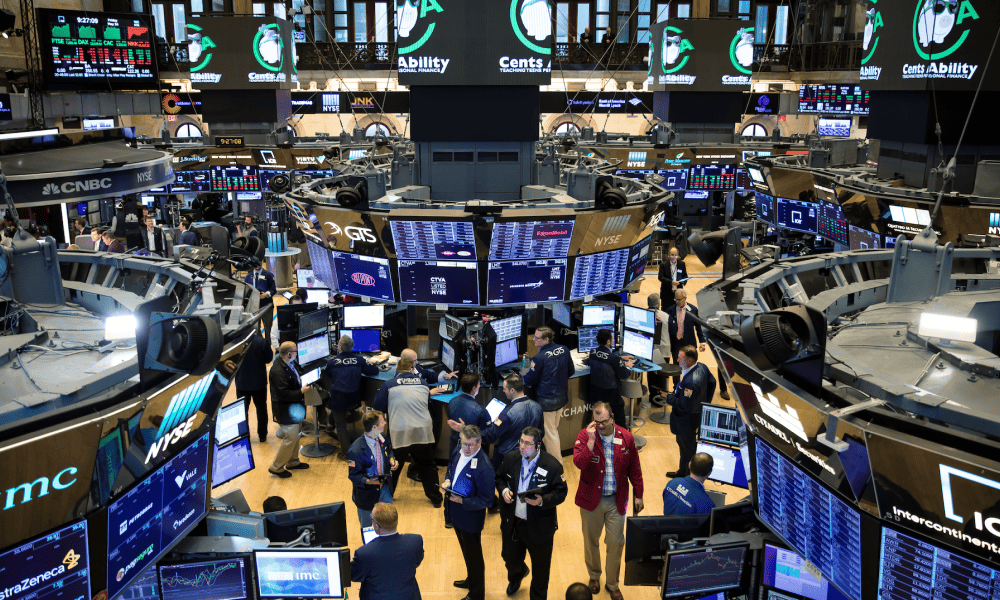
After a two-year freeze in the IPO market, the world's largest technology companies are once again preparing to go public. SpaceX filed its S-1 on May 20, Kraken is gearing up for its listing, ConsenSys has shifted its timeline to the fall, and OURA filed confidentially on May 21. According to analyst estimates, the 12 most-watched expected IPOs of 2026 represent a combined potential market capitalization of around $3.1T – a historic record for a single year.
Context
From 2022 through 2024, the U.S. IPO market was effectively closed. In 2022, fewer than 90 companies listed on NYSE and Nasdaq – compared with 270 the year before. 2023 was marginally better, but volumes remained at 2009–2010 levels. The first signs of a thaw emerged in 2024: Reddit (RDDT), Astera Labs (ALAB), Rubrik (RBRK), and Ibotta (IBTA) went public, and Instacart recovered from its weak 2023 debut. The window properly opened in 2025.
There are three key reasons:
- First. The Fed's rate-cutting cycle. In September 2024, the Federal Reserve began an easing cycle after 11 rate hikes starting in March 2022. By the spring of 2026, the policy rate had declined to a range of 3.5–4%. That's a baseline condition for IPO activity: when yields on risk-free assets (U.S. Treasuries, corporate bonds) drop, capital rotates back into riskier segments.
- Second. The AI effect. Nvidia, Microsoft, Anthropic, and other AI-boom leaders have demonstrated that the industry is now consistently generating profit. That has restored investor appetite for technology IPOs – particularly for companies with durable revenue. By analyst estimates, AI companies account for 8 of the 12 largest expected IPOs of 2026 and roughly 92% of the pipeline's combined potential value. 2026 is already being called the most AI-concentrated IPO year on record.
- Third. The accumulated backlog. Over two and a half years of a closed window, more than 100 issuers had built up in the queue – ready to list but holding back due to weak market conditions. Many filed S-1s confidentially and waited for the right moment.
Top Candidates of 2026
Space and AI Infrastructure
- SpaceX. The biggest IPO of the year and potentially the largest listing in stock market history. The company filed its public S-1 with the SEC on May 20, 2026; the roadshow is set for June 4, with the listing expected on June 12 on Nasdaq under the ticker SPCX. Target valuation – $1.75–2T, with up to $80B in capital raise. The deal is led by 23 banks, with Goldman Sachs, Morgan Stanley, JPMorgan, BofA Securities, and Citigroup as the lead bookrunners.
- OpenAI. Maker of ChatGPT. Target IPO valuation around $1T, with the listing window pointing to late 2026 or 2027. CFO Sarah Friar has previously named 2027 as the more likely year. Potential capital raise – $60B+.
- Anthropic. OpenAI's main rival in the race for large language model leadership. Target valuation around $300B, with the listing window pointing to Q4 2026. By analyst estimates, the deal could raise up to $60B.
- Databricks. A data platform for enterprises with integrated AI tools. Target valuation $134B, with Q3 2026 as the reference window.
- Cerebras Systems. AI-chip startup and a competitor to Nvidia in the accelerator segment. The company filed an S-1 in 2024 but delayed the offering on regulatory complications. A renewed attempt is expected in 2025–2026.
Crypto
- Kraken. Crypto exchange founded in 2011. The company filed a confidential S-1 with the SEC in November 2025, and at Consensus Miami on May 5, 2026, co-CEO Arjun Sethi publicly stated that Kraken is "80% ready for IPO." Target valuation $20B, with the listing window pointing to the second half of 2026.
- ConsenSys (MetaMask). Creator of the largest Web3 wallet, founded in 2014 by Ethereum co-founder Joe Lubin. According to CoinDesk, the IPO has been pushed to the fall of 2026. The bookrunners are JPMorgan and Goldman Sachs.
Analysts at Bernstein and Forge Global expect a valuation in the $7–12B range.
- Abra. Crypto finance platform that announced a Nasdaq listing via SPAC merger. Valuation $750M, ticker ABRX.
Fintech
- Stripe. One of the largest payment processors in the world, founded in 2010. Widely viewed as the most anticipated fintech IPO of the past decade. Annual revenue exceeds $14B, with the latest internal tender offer valuing the company at around $90B.
- Revolut. UK-based neobank. Valuation around $75B, on the top-12 list of expected 2026 IPOs.
- Klarna. Already went public in 2025 – one of the largest fintech IPOs of the year.
Communication Platforms
- Discord. Communication platform with more than 200M monthly active users. Filed a confidential S-1 in January 2026 and completed a 1-for-10 forward stock split in February. Bookrunners – Goldman Sachs and JPMorgan. The valuation range under discussion – $15–25B.
MedTech and Consumer
- OURA. Maker of wearable biometric devices (smart rings). Filed a confidential S-1 on May 21, 2026 – one of the freshest names in the pipeline. Target valuation has not been disclosed; the listing is expected in the second half of the year.
- Neuralink. Elon Musk's brain-computer interface startup. Series E in 2025 closed at a $9.6B valuation. Secondary-market trades now run at a 350%+ premium – implied valuation exceeds $43B. A direct IPO is not expected in 2026, but the pre-IPO position is considered one of the most attractive in healthcare-tech.
Defense Technology
- Anduril. Defense AI startup and competitor to Palantir and Lockheed Martin. Valuation $20B+, an IPO candidate for 2026–2027.
- Dataminr. Real-time AI intelligence platform serving the U.S. Department of Defense, NATO, and two-thirds of the Fortune 50. In 2026, the company crossed $200M in ARR and raised $300M in fresh funding.
HR Platforms
- Rippling. HR platform led by Parker Conrad. Valuation $13–15B, an IPO candidate for 2026–2027.
Historical Parallel: 2020 vs 2026
To understand the logic of 2026, it helps to look back at 2020. In 2020, after the initial COVID shock and the Fed's rapid response (rates cut to zero, QE relaunch), the IPO market exploded. Over 12 months, a record number of companies went public: Airbnb, Snowflake, DoorDash, Palantir, Asana, Unity, Wish. Most posted strong debuts – many gained 50–100% on day one. But within 12–18 months, the majority of these stocks had fallen below their IPO price. Snowflake, Wish, Asana, Peloton, Coinbase (2021) – all went through corrections. The end result was the prolonged IPO downturn of 2022–2023.
2026 may repeat this cycle, but in a more measured form. The key difference – companies going public now are noticeably more mature. The average age of SpaceX (24 years), Stripe (16 years), Kraken (15 years), and Discord (13 years) at the time of listing is around 17 years. In 2020, the average was 9–10 years. That means that on day one of trading, these companies are showing real operating profitability rather than only revenue growth.
For investors, this is a favorable signal. Companies that have gone through a longer private path before listing statistically show lower volatility in their first year of public trading.
The Year of Mega-Listings and AI as the Main Narrative
A defining feature of the 2026 pipeline is the unusually high concentration of market capitalization in a small group of the largest names. If SpaceX, OpenAI, and Anthropic actually complete their IPOs this year, those three companies will account for roughly 80% of all capital raised in U.S. markets.
By analyst consensus, those three listings could either "reignite" the entire IPO market or absorb the bulk of institutional demand – leaving smaller issuers with little room for allocation. That explains the caution shown by ConsenSys, Kraken, and Ledger: listing in the same window as the giants is disadvantageous – institutional capital will be distributed unevenly.
Beyond that, AI concentration is worth keeping in mind: if you also include AI-infrastructure companies (SpaceX through xAI, Databricks, Cerebras, Anduril) in this group, then the AI narrative accounts for the overwhelming majority of the year's expected capitalization. Excessive concentration in a single theme makes the portfolio vulnerable to any shift in the AI story.
Why This Matters for Pre-IPO Investors
An open IPO window means pre-IPO holders finally get liquidity.
Over the past 2–3 years, private holders who entered SPV deals have been locked into their positions. Lock-up periods kept extending, the secondary market operated at low activity, and companies kept pushing back their listings. Against that backdrop, a systemic frustration set in across the industry: the thesis "pre-IPO no longer works" was getting louder.
When the window opens, accumulated positions finally convert into real money. A holder who entered an SPV in Stripe in 2021 at a $95B valuation and lived through the down round to $50B in 2023 could – at a 2026 IPO valuation of $90B – exit the position with a minimal loss or even a small gain.
New deals into an open window also become more attractive. Pre-IPO positions opened in 2025–2026 for companies listing in 2027–2028 can offer exposure to the final stage of growth before public-market liquidity.
Access Through Regolith
Regolith provides access to pre-IPO positions in companies actively preparing for their IPO. The platform offers deals in Kraken, Discord, ConsenSys/MetaMask, Abra, Dataminr, OpenSea, BitPay, QwilMessenger.
The lock-up period for all pre-IPO positions on Regolith is 93 days following the IPO date. After that period ends, the shares are sold on the open market and proceeds are distributed among holders pro-rata to their share of the deal.
For investors, 2026 may turn out to be one of the best entry points into pre-IPO over the past five years. The window is open, the companies are mature, liquidity is moving. But this is not a call to buy aggressively. It is a call to understand the market moment before making a decision.
Risks
The window could close faster than expected. If the Fed reopens a rate-hiking cycle – driven by an inflation return, geopolitical escalation, or an energy shock – the IPO market could freeze within weeks.
Not every IPO will be successful. Of the 100 companies that go public in 2026–2027, a significant share will trade below their offer price 12 months later. The historical pattern is consistent – the 10 largest IPOs in history have, on average, lost 31% in their first year of trading.
Private valuations may sit above the IPO price. A down round from the last private round to the public listing is a frequent occurrence. The classic example is Instacart 2023: a private valuation of $39B, IPO priced at $9.9B.
Lock-up period. Even after a successful IPO, holders of pre-IPO positions cannot sell shares immediately. The Regolith standard is 93 days; other platforms can run 180 days or more.
Concentration in the AI segment. The overwhelming share of the IPO pipeline's capitalization comes from AI companies. Any negative shift in the AI narrative – regulatory pressure, technological limits, or intensified competition – would hit the entire segment at once.
Bottom Line
An open IPO window is a rare moment for pre-IPO holders. It does not open on a calendar. The previous window ran 12–18 months (2020–2021); how long the current one lasts cannot be predicted in advance.
For an investor, the key question is which specific names to enter and at what valuation. A favorable market moment does not eliminate the need for careful diligence on every individual deal.
The Regolith platform offers pre-IPO deals in companies actively preparing for IPO. Before participating, review the documents for the specific deal, the terms, the lock-up period, and the expected horizon to listing.
This material is for informational and educational purposes only and does not constitute investment advice, an offer, or a solicitation to buy or sell any securities. Investing involves risk, including the possible loss of capital. Past performance does not guarantee future results. Investors should independently review all relevant documents and make their own decisions.
