

SpaceX Enters the Home Stretch Before Its IPO: Key Dates to Watch in May and June
According to the timeline Bloomberg and Reuters published in early April, SpaceX is expected to file its public S-1 by the end of the week of May 18–22, with a roadshow for institutional clients set to kick off on June 8. No changes to the schedule have been reported publicly, and this week is shaping up to be a key checkpoint – the market is now watching for confirmation that the deal is moving without delays.
The Road to the Public Market
When Elon Musk founded SpaceX in March 2002, the company had a single mission: cut the cost of launches and make space commercially accessible. By the time of the first successful Falcon 1 flight in September 2008, SpaceX was still a private, loss-making venture into which Musk had poured most of the proceeds from selling his stake in PayPal.
Since then, the company has completed over 460 launches; the Crew Dragon spacecraft restored America's ability to fly astronauts to orbit; Starlink has grown into a satellite network with more than 5 million subscribers; and SpaceX secured a NASA contract for the Artemis lunar program. Over twenty-four years, the valuation has climbed from tens of millions of dollars at inception to a targeted $1.75T in the current S-1.
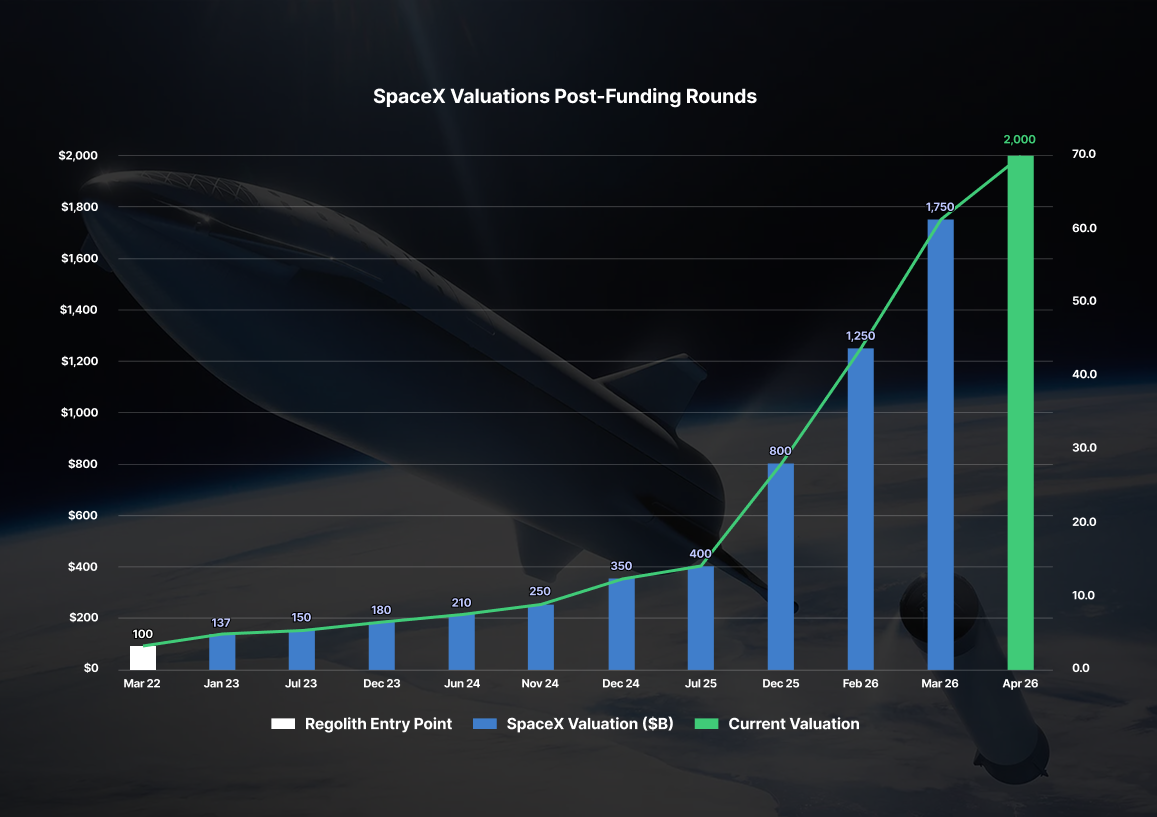
A SpaceX IPO was first seriously discussed back in 2021–2022. At the time, the conversation centered solely on Starlink as a standalone deal – Musk had stated he would take the satellite division public once it became consistently profitable. By 2025, however, the picture had shifted: after SpaceX absorbed xAI in February 2026 at a combined $1.25T valuation, it became clear that Starlink alone would not be enough. The decision was made to take the entire ecosystem public.
What's Expected in May–June
The confidential S-1 was filed on April 1. Under SEC rules, the public version of a registration statement must be available for at least 15 days before marketing to investors can begin. Based on that timeline, the financial press has set the deadline for the public S-1 at the week of May 18. To stay on track for a June 8 roadshow, the prospectus must hit the public docket no later than May 22.
Expected Key Dates
(based on the April timeline from Bloomberg and Reuters; subject to change once the public S-1 is filed)
- May 18–22 – the public S-1 is released. The market gets its first full look at the company's financials.
- The day before the roadshow – a meeting with 125 financial analysts from the 21 banks working the deal. Their initiation reports and forecasts will heavily shape the order book.
- June 8 – the roadshow opens for pension funds, insurance companies and sovereign wealth funds. SpaceX management and the bookrunners begin a global series of meetings across the U.S., Europe, the Middle East and Asia.
- June 11 – a separate event for 1,500 retail clients, part of the strategy to allocate up to 30% of the deal to retail. A historic precedent: on the largest IPO ever, up to a third of the book is set to go to individuals.
- Late June – early July – expected start of public trading.
Deal Parameters
Capital raise: $40B–$75B. The upper end would make SpaceX the largest public listing in stock market history. The current record belongs to Saudi Aramco, which raised $29.4B in 2019. By comparison: Alibaba raised $25B in its 2014 IPO; Visa, $19.6B in 2008. In other words, at the top of its range, SpaceX would more than double the Aramco record.
Target valuation: $1.75T, confirmed both by Bloomberg's April reporting and Reuters' review of the confidential S-1. At that level, SpaceX would slot in as the fifth most valuable public company in the world, ahead of Berkshire Hathaway, Walmart and Tesla. Only Apple, Microsoft, NVIDIA, Saudi Aramco and Alphabet would still rank higher.
Deal structure. Musk has opted to take the entire company public in one offering rather than separate listings. The deal will include SpaceX, Starlink, the NASA Artemis lunar program, X (the social platform) and xAI (the AI lab behind the Grok chatbot).
The SpaceX–xAI combination was completed in February 2026 at a combined $1.25T valuation.
Retail allocation. Up to 30% of the shares will go to retail – three times the standard Wall Street allocation, which typically runs in the 8–10% range. Two factors explain the decision: first, Musk has historically built loyal retail bases (as he did with Tesla); second, a deal of this size needs broad demand – without a retail leg, the 21 banks simply could not place the full size of the book.
Dual-class share structure will keep majority voting power with Musk after the listing. The structure is standard for founder-led technology companies (Meta, Alphabet, Snap, Palantir, Roblox). In practice, this means Musk retains full control over the company's strategy regardless of how much equity is held by public shareholders.
Bookrunners
The offering is being run by 21 banks under the code name Project Apex. The lead bookrunners:
- Morgan Stanley
- Goldman Sachs
- JPMorgan
- Bank of America
- Citigroup
The syndicate also includes major European banks (Deutsche Bank, Barclays, BNP Paribas) and Asian houses (Nomura, Mizuho). Total fees across the 21 banks are estimated by analysts to exceed $400M – comparable to the annual revenue of a mid-tier investment bank.
Project Apex is the largest banking consortium ever assembled for a single offering. For context: Saudi Aramco's IPO had 25 banks, but the deal size was 1.5 times smaller.
Financials From the Confidential S-1
According to Reuters' review:
- 2025 revenue – $18.7B (up more than 40% year over year)
- Total net loss after xAI consolidation – $4.9B
- Starlink – $4.42B in operating income
- xAI – $6.4B in operating loss
Starlink remains the profitable engine of the business, with a growing subscriber base, steady revenue from government contracts and high per-subscriber margins. The launch segment is also in positive territory – NASA contracts, U.S. Department of Defense work and commercial launches provide a reliable cash flow. xAI, by contrast, is in a heavy spending phase. The company is putting capital into data centers (including one of the largest AI campuses in Memphis, Tennessee), GPU infrastructure, research talent and model training. Musk's logic for the combination is forward-looking: AI infrastructure and orbital data will work in synergy, especially in the planned orbital AI data centers.
In its filing, SpaceX explicitly flags the risk: orbital AI data center projects "involve significant technical complexity and rely on unproven technologies that may not reach commercial viability." This is the company's first formal public risk disclosure on the topic.
Market Context
Ron Baron, founder of Baron Capital and one of the largest private holders of SpaceX, said on CNBC on May 12 that the company "will become the largest by market capitalization on the planet" after the listing. Baron Capital has held SpaceX since 2017 through Baron Partners Fund and Baron Focused Growth Fund. By his base case, the company could be worth $4T within five years.
According to financial media reports, sovereign wealth funds and large pension funds are already lining up orders for the offering. Names that have publicly expressed interest include the Saudi Public Investment Fund (PIF), Mubadala (UAE), GIC (Singapore), the Qatar Investment Authority and Norges Bank (Norway).
That said, historical context matters: on average, the 10 largest IPOs in history have fallen 31% in their first year of trading. Aramco dropped 25% in the first six months post-IPO. Facebook lost 50% in its first year. Alibaba, after an initial pop, traded below the offer price for two years. These examples illustrate that large IPOs have historically gone through periods of significant price swings after listing.
Inside the Deal: SpaceX's Four Pillars
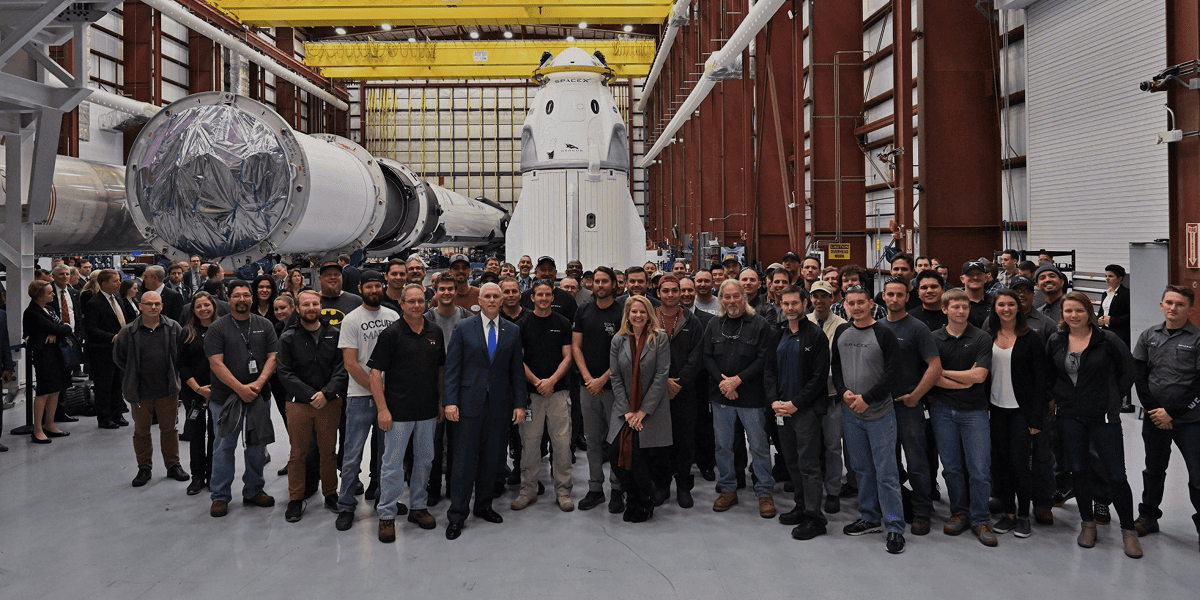
- Cargo and crew launches to orbit. SpaceX's core commercial segment, anchored by NASA contracts, U.S. defense work and commercial missions. Falcon 9 has become the most reliable rocket in history (more than 350 consecutive successful launches). Crew Dragon has delivered more than 60 astronauts to the International Space Station.
- Starlink satellite internet. The most profitable business line, with coverage in over 100 countries and more than 5 million subscribers. Government contracts on Starlink – including U.S. Department of Defense and NATO use cases – provide a steady, long-duration revenue stream.
- The Artemis lunar program. SpaceX is building Starship HLS for NASA – the landing system for returning humans to the Moon. The Artemis III contract is worth $2.9B, with an additional contract for Artemis IV already in place. The first crewed lunar landing under Artemis III is scheduled for 2027.
- The xAI AI stack. The Grok chatbot, data centers and frontier AI research. The combination with SpaceX gives xAI access to capital and infrastructure, while SpaceX gains AI capabilities for the development of orbital data centers and autonomous Starship navigation.
What This IPO Means for the Market
If the deal prices at the targeted valuation, it will rank as the largest IPO in stock market history – both by total capital raised and by company market capitalization at the time of listing.
The spillover effect on adjacent industries will be significant. By Wall Street estimates, $75B of fresh capital will drive a wave of secondary demand – for equipment, materials, infrastructure, AI chips and related services. Expected beneficiaries include NVIDIA (GPUs for xAI), Linde (industrial gases for Starship), satellite component manufacturers and data center operators.
There's also a separate angle for the crypto market: according to the S-1, SpaceX holds around 27,000 BTC on its balance sheet – roughly $2.1B at current prices. Once public, SpaceX shares will effectively become an indirect proxy for bitcoin exposure, similar to how Strategy (formerly MicroStrategy) shares have functioned for several years.
Pre-IPO SpaceX and Other Positions on the Regolith Platform
There is currently no open SpaceX allocation on the Regolith platform. Access to the position is available from $100,000 on an individual basis – terms are discussed with your manager.
At the same time, the platform still offers pre-IPO positions in other companies moving toward the public market:
- Kraken – 80% ready for IPO, listing expected in Q3 2026
- Discord – filed S-1 with the SEC
- ConsenSys / MetaMask – engaged Goldman Sachs and JPMorgan as advisors
- Abra – announced Nasdaq listing via SPAC merger at a $750M valuation
- Dataminr – appointed a CFO with public market readiness focus
A pre-IPO position is an entry into a company before its public listing.
Once the company goes public, holders are positioned to realize the difference between the entry price and the market valuation at the time of listing.
