

OpenAI’s 700 Math Papers Spark Debate Among Researchers
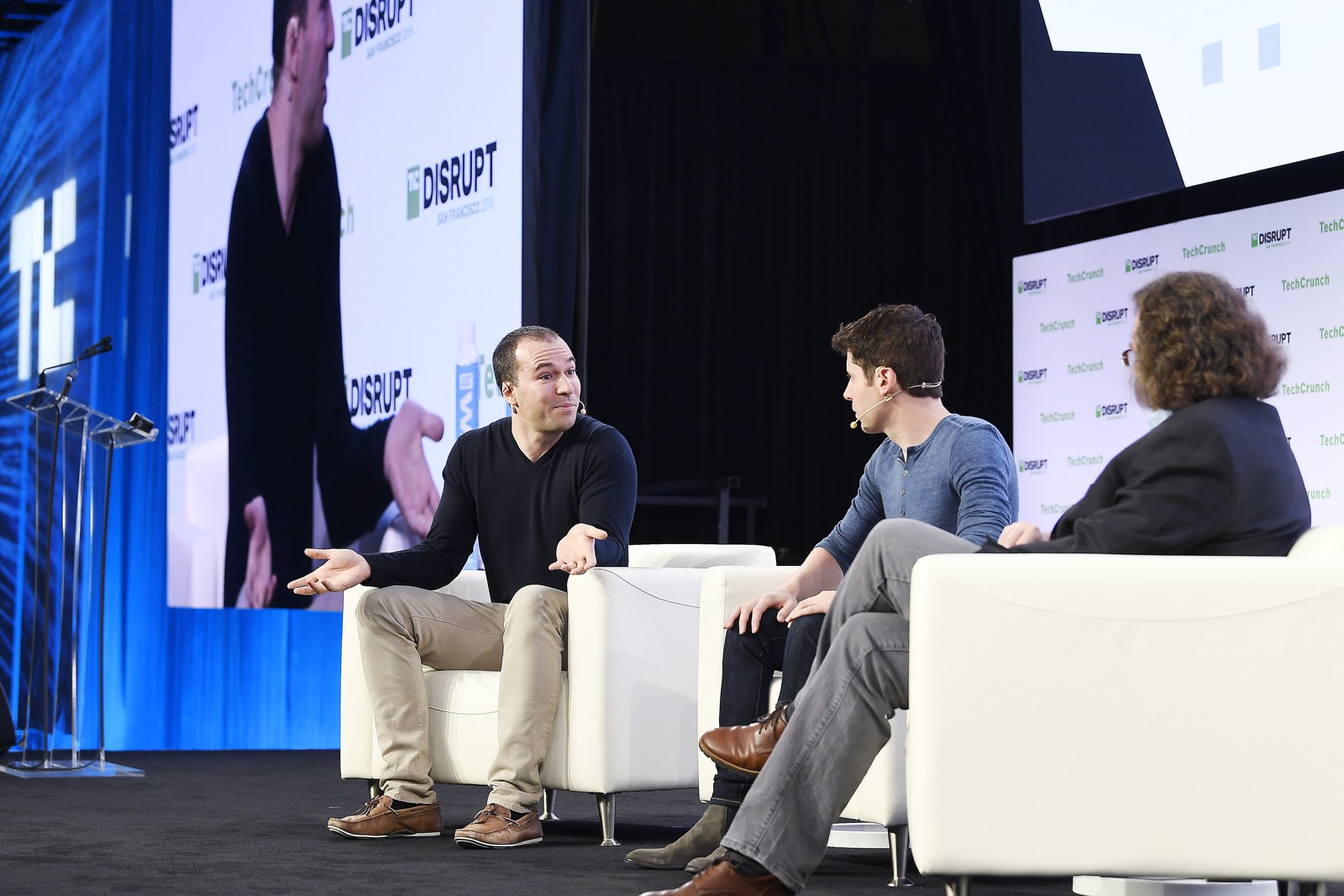
Greg Brockman, Sam Altman and Frederic Lardinois at TechCrunch Disrupt. Steve Jennings / Getty Images for TechCrunch. Source · CC BY 2.0.
OpenAI has published more than 700 mathematical papers produced by a new AI model. The company invited researchers to examine the results, identify errors and build on promising ideas. The release was followed by the withdrawal of three manuscripts and calls from some mathematicians to stop collaborating with the lab.
The story took another turn on October 15, when OpenAI announced a $5 million contribution to a Simons Foundation initiative to help researchers study AI-generated results. Combined support from the foundation, OpenAI and Anthropic will total $15 million in funding and resources. The initiative aims to help the scientific community evaluate models’ achievements and learn to use new tools.
For OpenAI, mathematics offers a way to demonstrate AI’s research capabilities. Scientists need proofs they can verify, understand and apply. The October release highlighted the difficulty of reconciling the speed of producing new material with the demands of scientific research.
Illustration accompanying OpenAI’s announcement of AI-generated mathematical results, October 6, 2026. © OpenAI.
Hundreds of Math Papers
On October 6, the company released a collection of research produced by an internal model. It had tested the model on around 4,000 mathematical problems, then selected results for publication. The model itself is not yet publicly available.
The collection initially contained 722 manuscripts. Following three withdrawals, the catalog now lists 719 papers organized into 372 groups. Several papers may address the same problem, presenting the main proof, supporting results or an alternative approach.
An Error Affecting Three Papers
The first corrections appeared almost immediately. In its October 7 change log, OpenAI reported a sign error in a paper on algebraic geometry. The error invalidated a key argument on which two other papers relied.
The company withdrew all three manuscripts. It also revised 14 other papers, correcting proofs and clarifying assumptions and references.
The mathematical claims themselves may still be correct. Establishing them will require a replacement for the flawed argument and a check that the conclusions still hold after the corrections. If the proof cannot be repaired, researchers will need a different approach to the original problems.
The openai/math repository, which hosts the manuscripts and supporting verification materials. OpenAI / GitHub.
Why Mathematicians Criticize OpenAI
On October 7, the Association for Human Mathematics called on mathematicians to stop collaborating with OpenAI. Its members criticized the release of hundreds of documents produced by a system to which the scientific community lacks full access. The statement appeared as a guest post on Terence Tao’s blog.
Before the release, the independent Advisory Group on Mathematics and Artificial Intelligence had recommended that labs pause testing advanced proprietary models on difficult mathematical problems until those tools become available to the community.
The group’s other recommendations include clear exposition, appropriate references to earlier research, disclosure of how results were obtained, and funding for the specialists who will study them. The authors also emphasize responsibility for the content of publications.
The dispute also concerns the allocation of resources. An AI lab controls the model and computing power, while independent researchers need time and funding to assess its claims. Access to the tools affects their ability to reproduce the research and develop the ideas it produces.
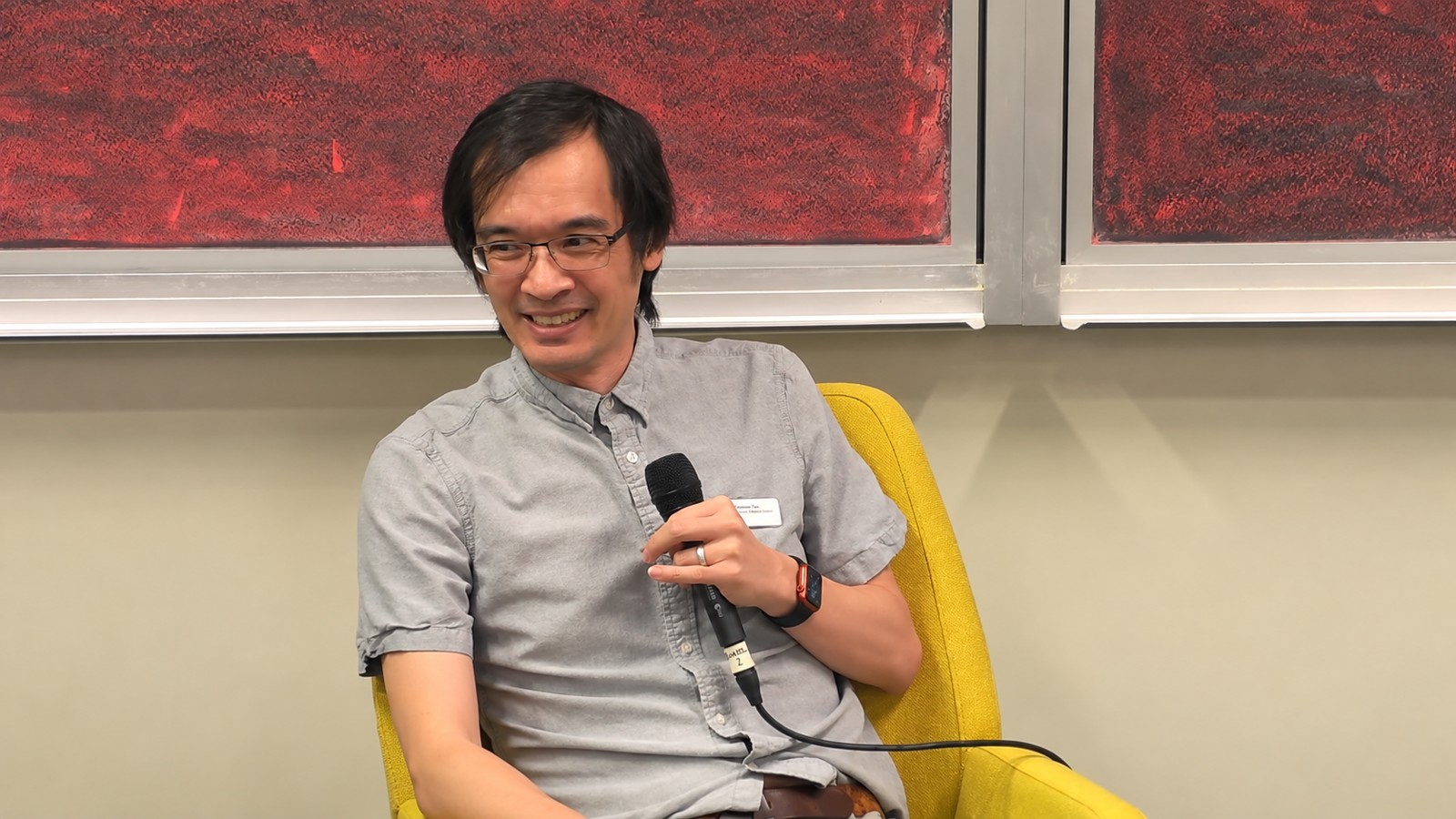
Terence Tao is a professor at the University of California, Los Angeles. Pictured at an IPAM event on mathematics and AI on March 4, 2026. Source · CC BY 4.0.
Checking Proofs with Lean
OpenAI uses Lean to verify some of the proofs. Definitions and arguments are expressed in a strict formal language, allowing a computer to check each logical step.
This approach helps identify errors that can be difficult to spot through ordinary reading. But translating mathematical meaning from a research paper into a formal representation remains a separate task.
In an analysis published on October 9, mathematician Thomas Hales explains why that translation needs expert scrutiny. Researchers must ensure that the formal version expresses the precise claim being made, with the correct definitions and assumptions. Otherwise, a computer may correctly verify a proof of a different problem.
Alexander Bastounis, Fabian Circelli and Anders Hansen raised this concern in an October 6 preprint. In their assessment, the formalization of OpenAI’s proposed Navier–Stokes proof does not match its natural-language presentation. This is the authors’ assessment, rather than a final judgment by the mathematical community.
A Millennium Problem in Dispute
Interest in the October collection was heightened by OpenAI’s earlier announcement. On September 8, the company presented a model-generated proposed solution to the Navier–Stokes problem, one of the seven Millennium Prize Problems.
These equations describe the motion of liquids and gases. They are used in atmospheric research, aerodynamics and other fields that involve calculating fluid flows.
The mathematical problem concerns how solutions behave in three dimensions. Can an initially smooth flow remain smooth indefinitely, or can it develop a singularity under certain conditions?
According to OpenAI, its model constructed an example in which, under a smooth external force, velocity becomes unbounded in a finite time. This is a property of the mathematical model; a real fluid does not accelerate to infinite speed.
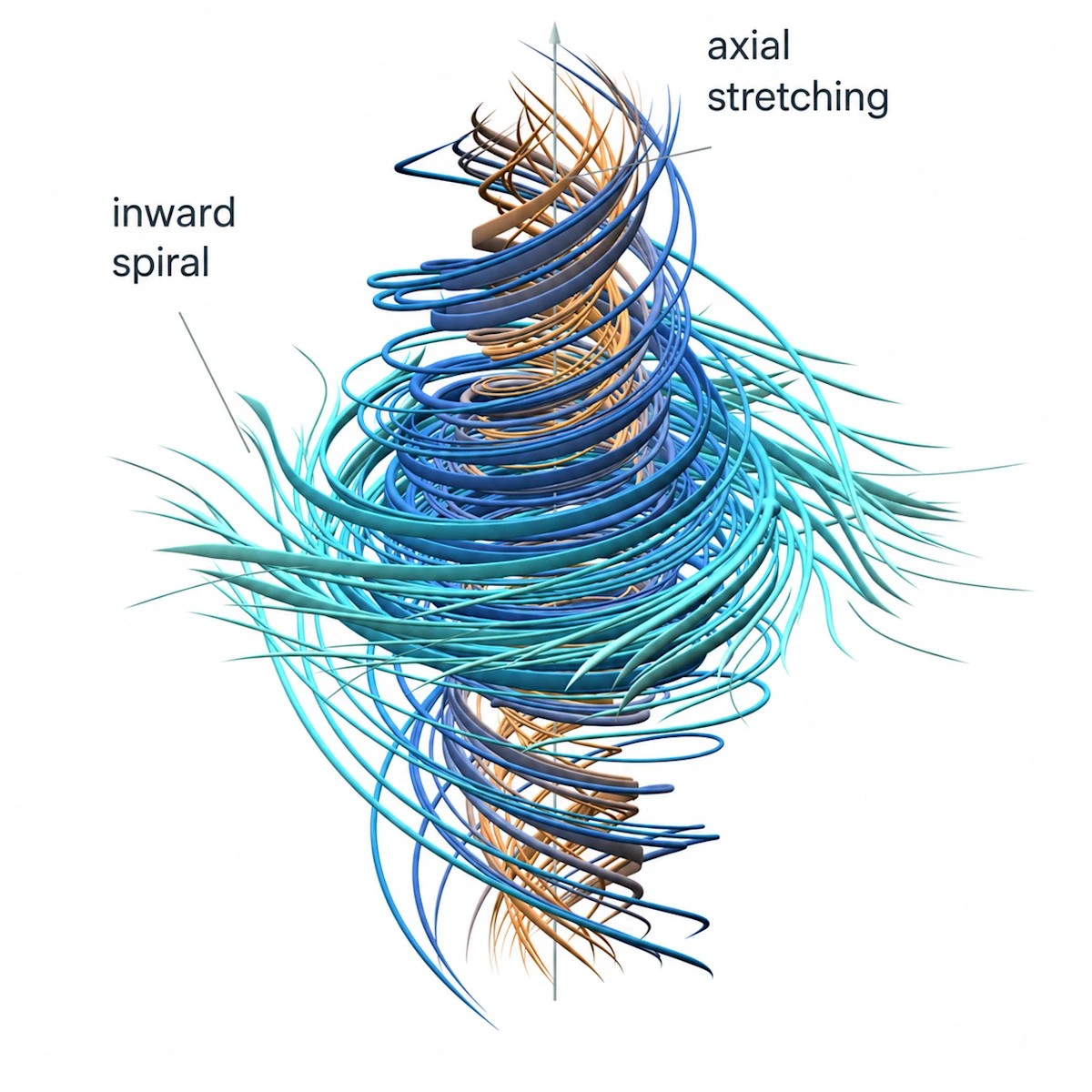
Visualization of vortex motion from OpenAI’s publication on the Navier–Stokes problem. © OpenAI.
On September 11, the Clay Mathematics Institute, which established the Millennium Prize Problems, welcomed the announcement of a possible solution and stressed that its process for evaluating the result and assigning credit would be deliberately unhurried. OpenAI’s publication, subsequent scrutiny and formal recognition of the achievement are separate stages.
Early Reviews of the Results
Alongside the criticism, researchers have begun examining which parts of the collection could be useful in further work.
On October 12, a review of 38 groups of problems from OpenAI’s collection appeared on arXiv. Its author, Ying Xie, identifies mathematical techniques, constructions and intermediate results that could be studied and potentially used in other papers.
The author sets out the review’s limits: it does not validate all the underlying proofs or establish priority for discoveries. Assessments of the novelty of individual techniques also remain provisional.
Even a paper that needs corrections can offer something useful. A promising technique may help with another proof. Its value will become clearer as independent researchers test and apply it.
$5 Million for Research
The Simons Foundation initiative announced on October 15 is intended to provide resources for this work. The foundation will independently manage and allocate the funding, including through an open call for proposals.
Support will go toward research meetings, special programs, the study of AI-generated results and learning to use new tools. OpenAI and Anthropic will also provide access to models and computing resources for foundation-supported researchers. This does not automatically make the same internal mathematics model available to everyone.
For AI companies, such collaboration could help establish their tools in scientific research. Researchers will be able to judge their usefulness by whether they can reproduce results, correct errors and apply the methods they uncover.
The October release already has measurable outcomes: hundreds of manuscripts, three withdrawals and a new funding initiative. Its scientific contribution will emerge through proofs that withstand scrutiny and ideas that other researchers can build on.
