

Regolith applies to Y Combinator: a look inside the world's most famous accelerator

Every few months, thousands of startups from around the world apply to Y Combinator – the accelerator that helped companies like Airbnb, Stripe, Coinbase, Reddit, and Dropbox grow. For many founders, it's a chance to pitch their product to one of the most influential technology ecosystems in the world and gain access to a community of entrepreneurs, investors, and experts who have built global companies.
In the spring of 2026, Regolith joined them, applying to the Summer 2026 batch. Why does Y Combinator draw so much attention? Why do thousands of teams compete every year for a place in the program? And what could taking part in an accelerator like this mean for an investment platform like Regolith?
To answer that, it helps to understand how Y Combinator came about, how it reshaped the venture market, and why its alumni keep shaping the technology industry two decades after it was founded.
The legend that began with a summer side project
Y Combinator launched in 2005 as a bold experiment. Paul Graham, together with Jessica Livingston, Robert Morris, and Trevor Blackwell, decided to break from the usual venture model. Instead of making one large bet, they put small sums into several startups at once, gathered the founders in one place, and spent three months helping them build a product, find their first users, and prepare to raise capital.
The program ended with Demo Day – the day teams presented their projects to investors.
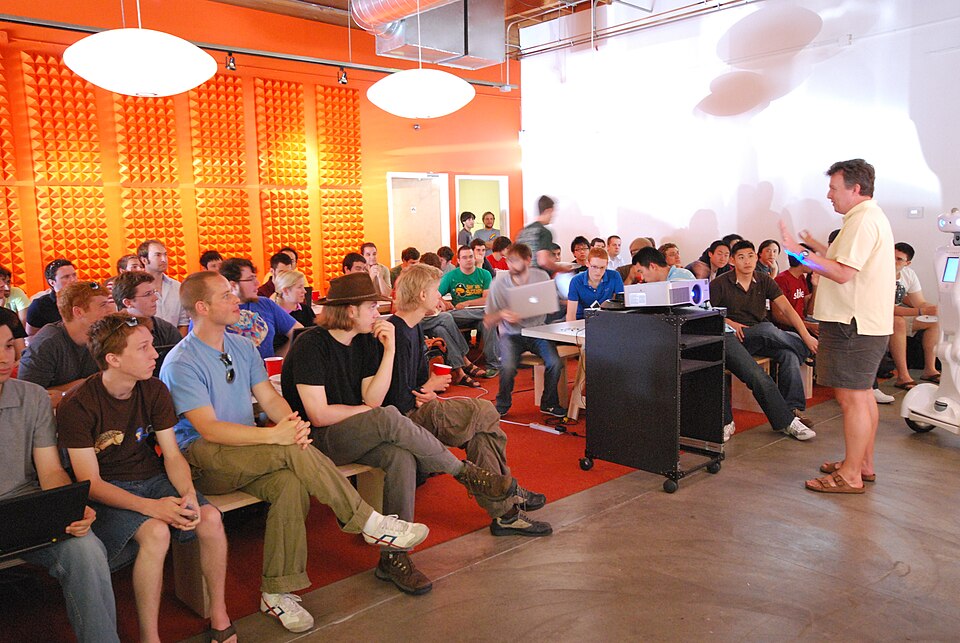
What began as an experiment eventually changed the entire industry. Paul Graham articulated a principle that became one of Silicon Valley's guiding ideas: "Make something people want." On the strength of that approach, Y Combinator grew into an ecosystem that combines capital, expertise, a founder community, and access to investors. For startups, getting into YC became at once a mark of quality, an entry into the strongest founder network, and a direct line to investors.
The unicorn factory
Many of the world's best-known technology companies once looked like projects that were hard to believe in.
In 2009, Airbnb founders Brian Chesky and Joe Gebbia were in serious financial trouble. To keep working on their short-term rental service, they even sold themed boxes of cereal during the US presidential campaign. When the team got into Y Combinator, the product had few users and plenty of skeptics. Today, Airbnb serves millions of guests worldwide and is valued in the tens of billions of dollars.
A similar story played out with Stripe. Brothers Patrick and John Collison set out to make accepting online payments easier for developers. At first glance the idea didn't look revolutionary – payment systems already existed. But Stripe turned a complex integration into a few lines of code. Over time, the company became one of the internet's most important financial rails, reaching a valuation of more than $90 billion on the private market.
Coinbase is another Y Combinator alum. In the early 2010s, cryptocurrencies were still a niche phenomenon, and Bitcoin itself was seen more as an experiment for enthusiasts. Even so, founder Brian Armstrong saw the potential of a new financial system. Today, Coinbase is the largest publicly traded crypto exchange in the US and one of the key players in the digital-asset industry.
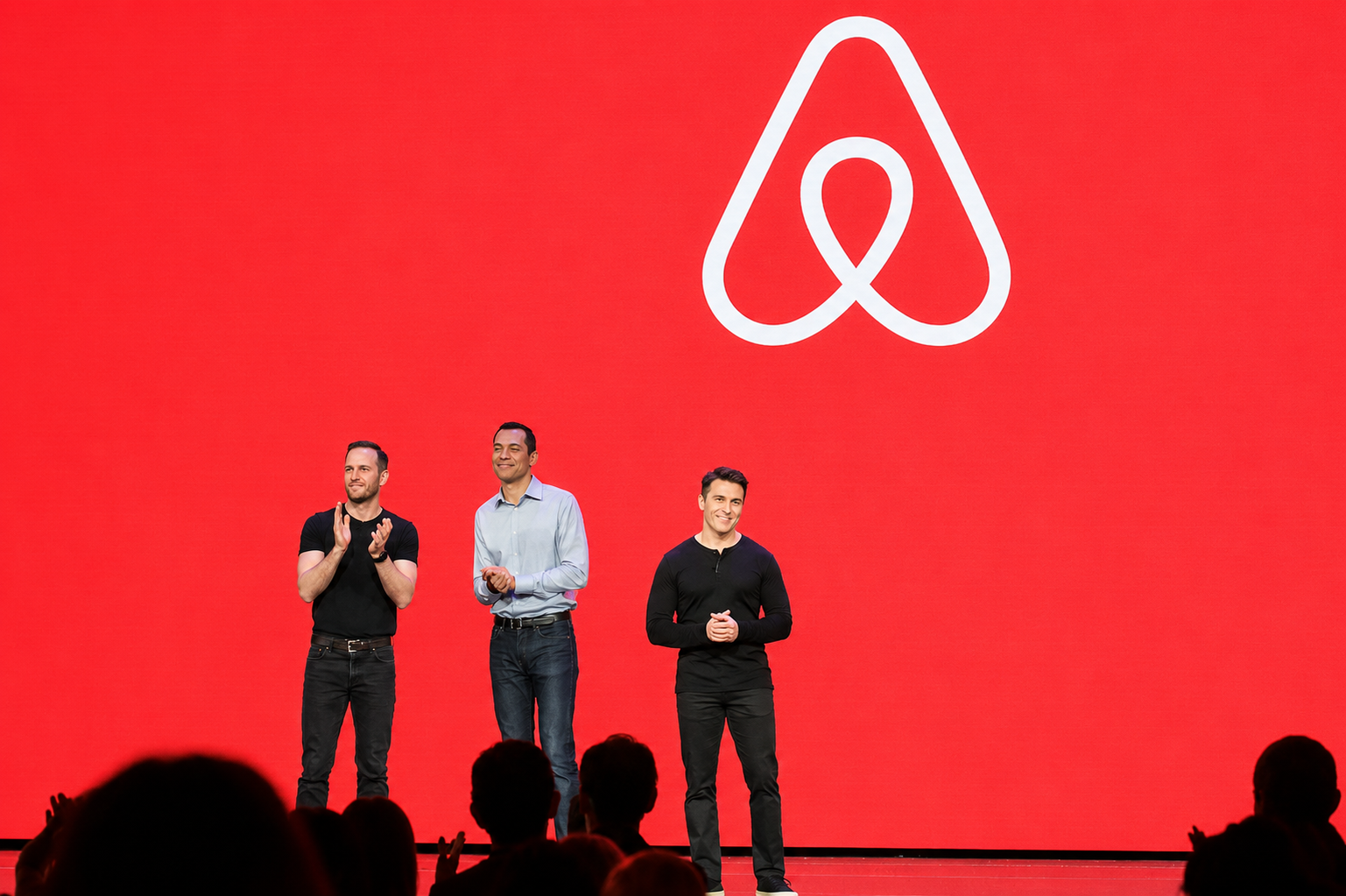
Over the years, the program has also been home to Reddit, DoorDash, Instacart, Brex, Deel, and dozens of other companies that went on to lead their markets. Each of these stories began the same way: a small team, limited resources, and an idea the market had yet to prove.
That is why the Y Combinator alumni list is often read as a kind of chronicle of the technology industry over the past two decades. Many of the companies that define the modern economy were once startups taking their first steps inside the accelerator's program.
How Y Combinator works in 2026
Over two decades, Y Combinator has gone from a small experiment to one of the most influential institutions in the venture market.
Today the accelerator is led by Garry Tan – a YC alum, founder of Posterous, and an early investor in companies like Coinbase, Instacart, and Rippling. Under his leadership, Y Combinator keeps adapting to new technology cycles. Where past batches were dominated by marketplaces, SaaS platforms, and fintech, today a large share of each new cohort is made up of artificial-intelligence startups. Many of them build AI infrastructure, developer tools, enterprise solutions, and products powered by large language models.
The accelerator's philosophy, however, stays the same: find talented founders early and help them turn ideas into a scalable business. It is this approach that keeps Y Combinator one of the key magnets for entrepreneurs and investors worldwide.

Here is how it works now:
- Funding. A standard Y Combinator deal invests $500,000 in each company. Of that, $125,000 buys a 7% stake, and another $375,000 comes through a SAFE that converts into equity at the next funding round. For many startups, that is enough to focus entirely on building the product and winning their first customers.
- The program. Founders go through an intensive program of about 11 weeks. During that time, teams work with the accelerator's partners and mentors, refine the product, test hypotheses, meet successful entrepreneurs, and prepare to scale.
- Scale. Y Combinator now runs four batches a year: Winter, Spring, Summer, and Fall. Each brings together hundreds of startups from around the world, making YC the largest technology-startup accelerator.
- Demo Day. Each batch culminates in Demo Day – an event where startups present to hundreds of venture funds, angel investors, and institutional investors. For many companies, that day becomes the launch point for their first major funding.
- Competition. Getting in is extremely hard. Each batch draws tens of thousands of applications, and only about one percent of teams make it through. In selectivity it rivals admission to the world's top universities, and for many founders an invitation to YC is one of the strongest validations of a company's early potential.
That is why taking part in Y Combinator is treated by the market as a mark of quality. Behind it stands not only funding, but the trust of one of the most experienced teams in the startup world – a team that reviews tens of thousands of projects each year and selects only a few.
The network that rewrote the economy
Over twenty years, thousands of startups have passed through Y Combinator. Many didn't just build a successful business – they became part of the daily lives of hundreds of millions of people. Today it's hard to imagine the modern internet without Stripe, renting a home without Airbnb, the crypto industry without Coinbase, or the delivery market without DoorDash and Instacart.
The combined value of the companies that have gone through Y Combinator exceeds $600 billion. Among them are more than 100 companies valued above $1 billion and dozens of public businesses. To put it in perspective: if YC's alumni were a country, the value they have created would outrank the economies of many nations.
But the most interesting part begins after graduation. A founder who gets into YC gains more than investors and contacts. They land inside a community where yesterday's graduates become each other's customers, partners, employers, and investors. First sales may come from another founder in the YC network, the next round from a graduate of an earlier batch, and a key hire through a recommendation from someone who has already walked the same path.
Over time, a self-contained economic system has formed around the accelerator. Companies in the YC ecosystem buy each other's products, invest in one another, and help launch new projects. That's why many entrepreneurs see Y Combinator's main asset as neither the funding nor even Demo Day. The most valuable part of the program often turns out to be access to a community of people who have already built billion-dollar companies and are ready to share that experience with those just starting out.

What taking part in YC means for Regolith
For Regolith, applying to Y Combinator is a step toward the company's next stage. The accelerator is known not only for access to capital, but for the chance to work with one of the strongest entrepreneurial and technology ecosystems in the world.
Regolith grew out of a simple observation: diversification and investing in alternative assets remain an important part of long-term wealth, yet many opportunities are still hard for an individual investor to reach. Private-company deals, Pre-IPO investments, alternative assets, and real estate often require significant capital, a complex legal structure, and access to the professional market.
Since 2016, the Regolith team has worked to make these tools more accessible. Over that time, an ecosystem of investment solutions has formed around the platform, spanning Pre-IPO deals, the stock market, dividend funds, crypto strategies, real estate, and other alternative directions. Today Regolith brings different instruments together on a single platform, giving investors access to opportunities once available only to a narrow circle of market participants.
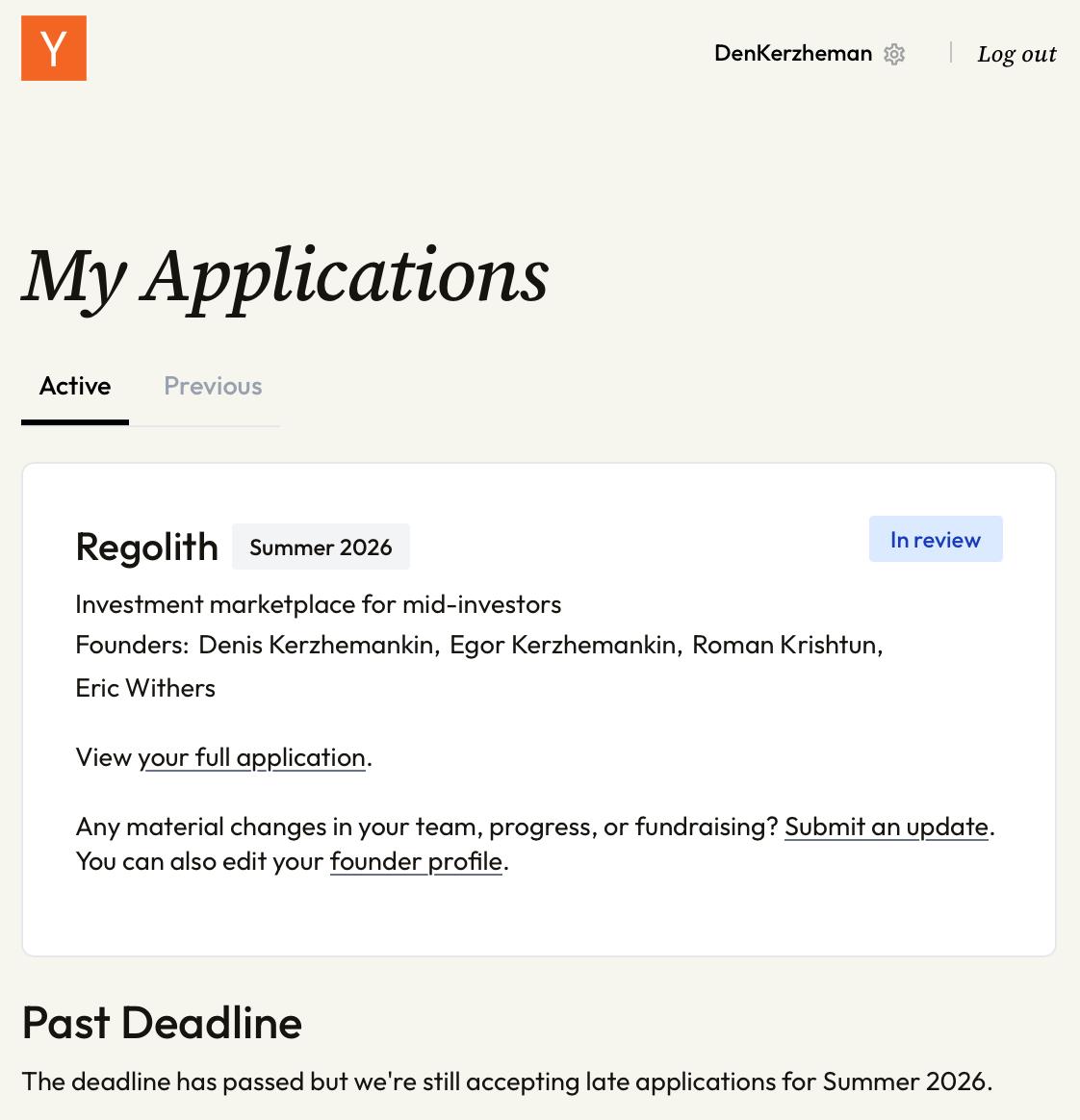
The next stage is developing the product itself. For technology companies, this is exactly where the Y Combinator environment is most valuable. It helps teams test hypotheses faster, refine the user experience, build scaling processes, and get feedback from entrepreneurs who have already created global companies.
For now, Regolith's application is under review. A decision on an interview invitation is expected in June.
Whatever the outcome, the application itself reflects the company's direction. Regolith sees itself not only as an investment platform, but as a technology product that aims to grow by the standards of the world's leading fintech companies and to build infrastructure for investors in the global market.
Sometimes the biggest stories begin with a single submitted application.
