

When Quantity Turns Into Quality: Why the Regolith Portfolio Is Moving Toward IPO
In venture investing, most deals don’t deliver returns. Out of ten investments, eight may fail to generate meaningful outcomes. But one or two successful companies can offset the entire portfolio and deliver outsized returns. That’s how venture capital works—and why investors closely track which companies are approaching an IPO.
At the moment, several companies in the Regolith portfolio have moved into a more advanced stage: filing S-1 forms with the SEC, hiring legal advisors, and engaging investment banks. These are concrete steps that typically mark the transition toward public markets.

Abra: From Mobile Wallet to Nasdaq
Abra is an example of how a simple idea can grow into a full-scale financial service. It began as a mobile wallet for transfers, with blockchain used as the underlying infrastructure. The core idea was straightforward: remove friction from payments and make transfers as easy as sending a message.
Over time, the company expanded the product. Investment tools were added to the wallet, and Abra gradually evolved into a digital asset platform. Today, it is no longer a single-purpose service, but an ecosystem where users can store, exchange, and use cryptocurrencies.
The next step is the public market. Abra has announced plans to list on Nasdaq through a SPAC merger with New Providence Acquisition Corp. III. This structure typically shortens the path to listing and allows a company to enter the market faster than through a traditional IPO.
The transaction is valued at around $750 million. For Regolith, this marks an important stage: the fund holds a stake in Abra, and once the company becomes publicly traded, it moves into a new phase defined by public valuation and market liquidity.

SpaceX: From Rockets to a Scaled Business
SpaceX is no longer just about space. It is a company that simultaneously controls a major share of the launch market and is building a global telecom infrastructure through Starlink. In effect, this is a multi-revenue business operating at a scale comparable to large public technology companies.
At the same time, SpaceX has long remained a closed story for investors. Access to its shares was limited, and opportunities to enter at an early stage were rare. Regolith entered the position at around $79 per share. Today, shares on the secondary market are trading at around $851 — an increase of roughly 977% since entry.
Interest in a potential IPO has intensified as indirect signals have started to emerge. One of the clearest is the company’s engagement of Gibson Dunn and Davis Polk — firms that regularly advise on the largest technology listings. Their involvement is typically associated with the transition into an active preparation phase.
In the market, moves like these are generally seen as evidence that a company is beginning to build the structure required for public market readiness. This does not guarantee a near-term listing, but it does suggest that the process is already underway.
.png)
Discord: From Gaming Chat to Global Communication Platform
Discord began as a communication tool for gamers—a fast and reliable voice and text chat used during online gameplay. The key turning point came later, when the platform expanded beyond gaming and evolved into a community infrastructure.
During the pandemic, Discord significantly broadened its role. It became a space for study groups, professional communities, crypto discussions, and investment clubs. In effect, it developed into a universal platform for interest-based communication, no longer tied to a single use case.
Today, Discord serves hundreds of millions of users and operates on a model built around subscription and engagement, rather than traditional advertising. The company has also deliberately avoided acquisition: reports indicated a potential $10 billion offer from Microsoft, which Discord declined in favor of remaining independent and continuing its expansion.
The company is now taking the next step. According to Reuters, Discord has confidentially filed an S-1 with the SEC—a standard part of IPO preparation. While the process is not yet public, the filing itself signals that the company is moving into the final stage before a potential listing.
.jpg)
ConsenSys: A Core Player in the Crypto Ecosystem
If you’ve interacted with Ethereum, you’ve likely used MetaMask—a key product that places ConsenSys at the center of the Ethereum ecosystem. It is not just a widely used wallet, but a critical access point for users interacting with decentralized applications.
However, the company is far more than a single product. ConsenSys functions as Web3 infrastructure, supporting thousands of decentralized applications and providing the underlying tools for developers and users across the ecosystem. In effect, investing in ConsenSys represents exposure to the broader evolution of Web3 technologies.
The company is following a conventional path toward public market readiness. It has engaged major investment banks, including Goldman Sachs and JPMorgan. When institutions of this scale are involved, it is typically seen as a signal of preparation for the next stage of development.
These steps may indicate a transition toward a more mature phase, potentially including a public listing. For investors, this is less about near-term outcomes and more about business maturity and structural readiness. Interest in ConsenSys is driven by its role in the Ethereum ecosystem and its position within Web3 infrastructure, with investors assessing both opportunity and risk.
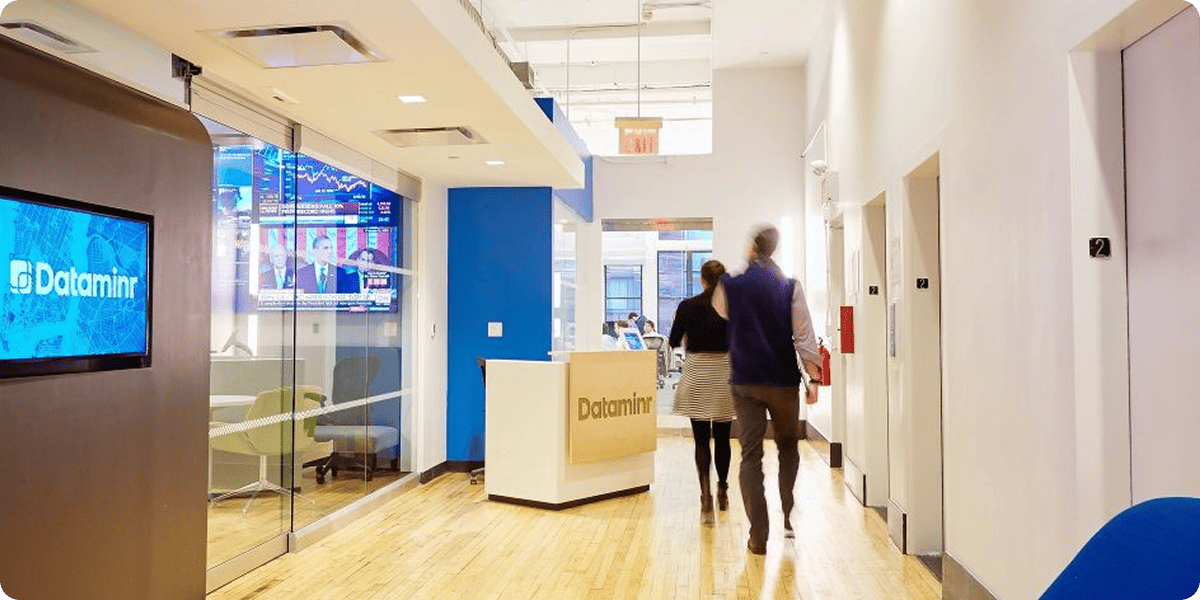
Dataminr: AI for Real-Time Global Intelligence
Dataminr operates at the intersection of artificial intelligence and real-time data analysis. Its platform processes information from news, social media, and sensor networks to detect critical events as they unfold—from natural disasters to geopolitical developments.
Its clients include governments, major media organizations, and Fortune 500 companies. In environments where timing is critical, Dataminr’s solutions support faster and more informed decisions.
The company has taken a meaningful step in strengthening its leadership team with the appointment of CFO Tiffany Buchanan, who brings experience in preparing companies for public markets. This reflects a focus on building a stronger structure for the next phase of development.
In her statement, she noted that she was “excited to join Dataminr at such a pivotal moment for both the company and the broader AI ecosystem,” and emphasized her intention to work with CEO Ted Bailey and the leadership team to “build and maximize long-term value for clients, partners, and shareholders.”

Kraken: When Timing Becomes Strategy
Kraken is one of the longest-standing and most respected exchanges in the crypto market, known for its conservative approach to security and compliance.
The company has been preparing for a public listing and has already filed an S-1. However, the process is currently paused. This is not unusual in conditions of market volatility, particularly in the crypto sector, where timing can significantly impact valuation.
Rather than rushing to market, Kraken appears to be taking a strategic approach—waiting for more favorable conditions to achieve a stronger outcome. This positions the company as a ready IPO candidate once the environment stabilizes.
In effect, Kraken has already completed much of the groundwork required for listing and is now waiting for the right timing to proceed.
Why This Matters for Investors
It is relatively rare to see multiple companies within a single portfolio simultaneously approaching a public listing. In venture capital, this is widely seen as a portfolio maturity signal.
For investors who entered at the Pre-IPO stage through Regolith, this represents a transition from unrealized gains to potential liquidity. The risks taken at earlier stages begin to translate into market-based outcomes.
Participating in Pre-IPO deals requires more than identifying promising technology. It involves selecting companies capable of building scalable operations, attracting talent, working with top-tier financial institutions, and navigating regulatory requirements—essentially, having strong selection expertise.
Recent developments across the Regolith portfolio suggest that these conditions are being met. The companies are not only growing, but steadily progressing toward the public market, supported by structured preparation.
Venture investing is a long-term process. What we are seeing now is a stage where several of those bets are approaching the realization phase.
